For diaspora communities, a crisis back home doesn’t end when the headlines fade. Researchers are increasingly documenting the specific psychological toll of watching disaster unfold from a distance, in real time.


For diaspora communities, a crisis back home doesn’t end when the headlines fade. Researchers are increasingly documenting the specific psychological toll of watching disaster unfold from a distance, in real time.
There’s a specific kind of exhaustion that doesn’t show up on a standard symptom checklist, the one that comes from checking your phone at 3 a.m. because a flood, an earthquake, or a war is unfolding somewhere you used to call home, somewhere your family still does. You refresh a group chat. You scan a news app in a language that isn’t quite the one your coworkers speak. You close the tab, go to a meeting, and act like nothing happened, because to everyone around you, nothing did. Researchers are only now starting to put a name to this experience, and what they’re finding suggests it’s a far more serious and measurable psychological burden than “worrying about home” makes it sound.
A team of Canadian researchers studying diaspora workers has proposed calling this phenomenon “diaspora distress”, defined as the psychological burden carried by people living in one country while their homeland, along with the family, friends and memories embedded there, remains under active geopolitical threat. Their ongoing study follows workers like a participant they call Rostam, an Iranian Canadian who no longer sleeps through the night. His phone buzzes at 2 a.m., and he’s awake before the sound even finishes, aware it might be his parents calling from Tehran on a connection the researchers describe as unreliable, sporadic, and sometimes cut off mid-sentence. He has learned not to miss those calls, because the next one may not come for days. By 4 a.m., after the conflict between the US, Israel and Iran escalated sharply in late February, he has often already been awake for two hours, a pattern the researchers identify clinically as hypervigilance, the body monitoring a threat it cannot act on and refusing to stand down regardless of how exhausted the mind becomes.
What makes diaspora distress distinct from ordinary worry, according to the framework, is the absence of resolution. Grief has a fixed point, a death, a diagnosis, a loss that has already happened and can be named and mourned collectively, with recognized social rituals built around it. Diaspora distress offers no equivalent ritual, because the loss being anticipated may or may not ever arrive, and the uncertainty itself becomes the thing a person has to carry, sometimes for years at a stretch. Aitak Sorahi, an Iranian Canadian who spoke to the Canadian Press as President Trump threatened to escalate the Iran conflict further, struggled even to describe what she was experiencing. “I don’t even know how to describe my feeling,” she said, “because I don’t have a name for it.” That absence of vocabulary, researchers argue, is itself part of the problem, an experience so specific and so under-discussed that people living through it often can’t locate the words for what’s happening to them, let alone explain it to colleagues or friends who haven’t lived anything comparable.
The scale of the psychological toll, once measured directly, has surprised even researchers working in the field. A 2025 study found higher rates of severe depression, anxiety and post-traumatic stress disorder among diaspora Tigrayans living in Australia than among people who remained inside the actual war zone in northern Ethiopia. That finding runs directly counter to intuition, that distance from danger should correlate with better mental health outcomes, and researchers have offered a specific explanation for the gap. People inside a conflict zone often suppress their own fear in order to protect family members living through the same danger alongside them, a shared context that offers at least some measure of collective coping, while diaspora members typically cannot meaningfully assist those in immediate danger, producing a distinct and profound sense of helplessness, compounded by the fact that people around them in their host country frequently fail to recognize the fear and distress being quietly carried underneath an outwardly normal routine.
Also Read: Bryan Kohberger Seeks to Withdraw Guilty Plea in Idaho Student Murders, Claims He Was “Duped”
This dynamic is far from limited to any single community or conflict. The Canadian researchers note that beyond the roughly 200,000-person Iranian community captured in the country’s 2021 census, many other diaspora populations, including Ukrainians, Palestinians, Sudanese, Afghans and Syrians, are navigating strikingly similar psychological terrain in parallel. Separately, clinicians studying Middle Eastern diaspora populations more broadly have documented a consistent cluster of symptoms across these groups: sleep disturbance, somatic complaints, worsening of pre-existing anxiety or depression, moral distress, survivor guilt, and specifically, impaired daily functioning linked to compulsive news consumption and nocturnal monitoring of unfolding events. That last detail is clinically significant. This isn’t simply a population of people who feel sad about news from home. It’s a population whose sleep, concentration and daily functioning are being measurably disrupted by an inability to stop checking, even when checking provides no new information and no actual way to help. Following crisis coverage online can trigger anxiety and PTSD-like symptoms even in individuals who are, by every physical measure, entirely safe themselves, a finding that runs directly against the instinct many people have to minimize their own distress on the grounds that “at least I’m not the one in danger.”
There’s also a workplace dimension to this that tends to go almost entirely unacknowledged by employers and institutions. Diaspora employees experiencing this kind of distress rarely signal it in ways that trigger organizational concern or support, managing at real personal cost as cognitive overload affects performance and disrupted attention shapes participation in meetings or coursework, while colleagues and managers routinely misread the underlying signs as something else entirely, declining engagement read as a shift in attitude and withdrawal interpreted as a personality change. In some cases, researchers note, people don’t withdraw at all, burying themselves further into work and appearing, by every visible metric, entirely fine, precisely because functioning normally in front of others has become its own kind of exhausting, ongoing performance. This dynamic compounds a separate, established body of research on code-switching, the constant calibration of self-presentation across cultural contexts, which has independently been shown to carry a measurable psychological toll on workers, contributing to stress, burnout and errors in judgment that accumulate quietly over months and years without ever surfacing in a formal performance review.
Also Read: Kris Jenner Announces the Death of Her Mother MJ at 91
Media itself plays a genuinely double-edged role throughout all of this, a tension scholars researching diaspora and migration, including media theorist Myria Georgiou, have examined for well over a decade. Diaspora communities often turn specifically to trusted international news platforms to make sense of a crisis unfolding at home, and that coverage can meaningfully improve understanding and even motivate constructive action such as participation in fundraising, organizing, or informed public discussion within diaspora networks. At the same time, because the media doesn’t just convey facts but actively frames and selects which details get emphasized and which get left out, the very coverage that informs also shapes, and at times distorts, how diaspora audiences come to understand what’s actually happening to the people they love. The resulting dependence on international coverage, frequently produced without a diaspora audience specifically in mind, means people are often left piecing together the emotional and factual reality of a crisis through a lens genuinely built for someone else’s understanding of the story entirely, one that may prioritize geopolitical framing over the granular, personal details a diaspora reader is actually searching for.
None of this suggests the answer is disengaging, checking less, or pretending distance grants an immunity it does not, in practice, actually provide. What the emerging research does suggest is that this experience deserves to be named and taken seriously in its own right, rather than folded quietly into “just worrying” and dismissed as an inevitable, uncomplicated feature of living far from home. The psychological burden identified by researchers is specific, it is now measurable across multiple communities and conflicts, and it does not resolve itself simply because the international news cycle eventually moves on to something else. For millions of people, myself included in that number more often than I’d like to admit, the news cycle moving on was never really the same thing as the worry ending.
This piece discusses mental health and psychological distress. If watching news from a home country in crisis is affecting your daily functioning, sleep, or wellbeing, it may help to speak with a therapist or counselor familiar with the experience of diaspora and immigrant communities specifically.


Hong Kong has added temperature checks and travel declarations for flights from Russia after a lab worker’s death in Siberia.
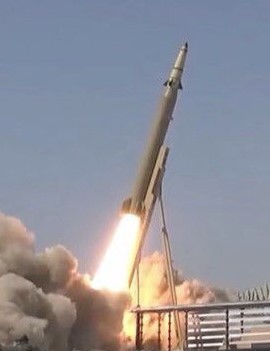
About 20 percent of the world’s oil passes through the Strait of Hormuz, where Iran and the US are trading threats.
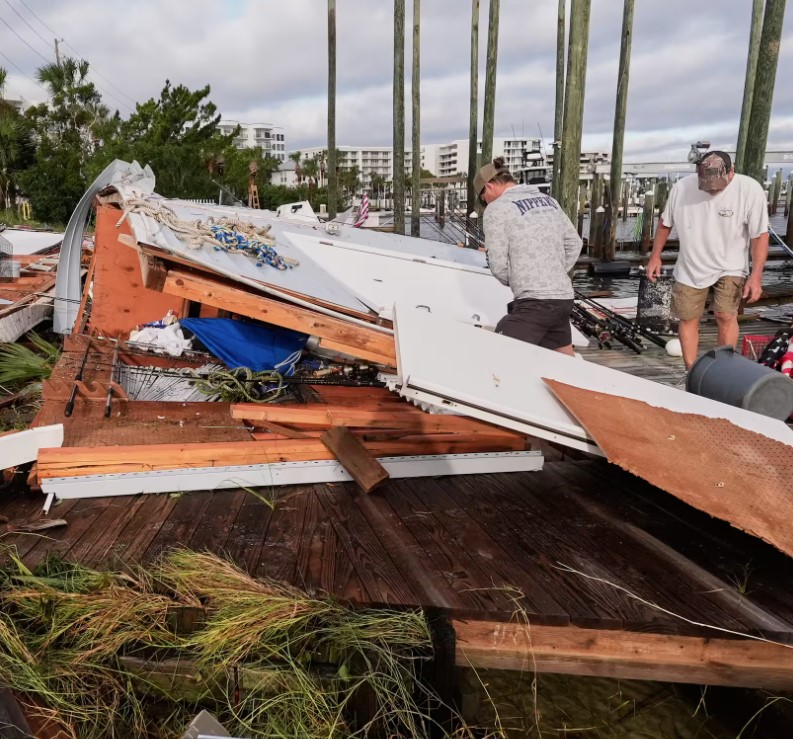
Hurricane Isaias made landfall near Destin, Florida, on Friday night as a Category 2 storm with 105 mph winds, leaving widespread damage, flooding and power outages across the northern Gulf Coast.
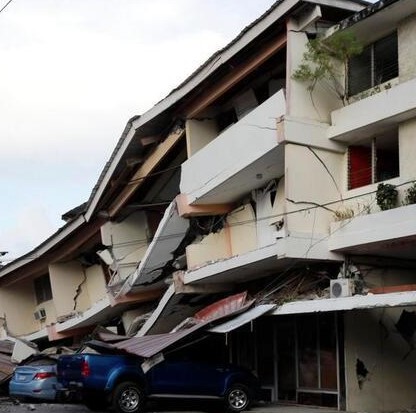
A magnitude 7.7 earthquake struck southern Panama on Friday, partially collapsing the San Juan Bautista cathedral in Penonomé and injuring at least 27 people, authorities said.