Michael Truell, the 25-year-old CEO of Cursor, led the company …

Michael Truell, the 25-year-old CEO of Cursor, led the company …
Michael Truell was eighteen when he spent a summer at Google working on language models for feed ranking. He had just finished his first year at MIT. Four years later, the company he built in a dorm room with three classmates would be acquired by Elon Musk’s SpaceX in a deal worth up to $60 billion, the largest venture-backed startup acquisition on record.
Truell grew up in New York City and attended the Horace Mann School, where he first met Aman Sanger, one of his eventual co-founders. He started coding at eleven, building his own mobile games, and by the time he reached MIT he was already the kind of student who got noticed. During his Google internship, he crossed paths with Ali Partovi, an early investor in Facebook and Airbnb, who was scouting talent for his Neo Scholars accelerator. Truell completed a coding test fast enough that Partovi marked him as someone worth backing on any project he chose to pursue. That instinct paid off. When Truell eventually started Cursor, Partovi became one of its first investors.
Also Read: Anthropic’s Soaring Valuation Signals a New AI Investment Race Ahead of Planned IPO
Cursor itself began as a reaction to frustration, not inspiration. In 2021, Truell and his MIT classmates Sualeh Asif, Arvid Lunnemark and Aman Sanger were trying to figure out where to put their shared interest in artificial intelligence, a full year before ChatGPT reshaped the industry’s sense of what was possible. They considered academia. They considered joining an established AI lab. Instead, they built their own thing, starting with an idea for a coding copilot aimed at mechanical engineers, chosen partly because the space seemed quiet and uncontested. That idea didn’t take. Neither did a message encryption project two of the co-founders were pursuing in parallel.
It took roughly six months before the team pivoted to AI-assisted coding, a category they had initially avoided because it looked too crowded. What changed their minds was simpler than strategy. They realized how genuinely excited they were about where coding was headed, and decided to commit fully rather than keep hedging across smaller ideas.
That commitment produced one of the fastest growth trajectories in recent Silicon Valley history. Cursor raised a $60 million Series A in June 2024. By the end of 2025, three additional funding rounds had brought in $3.3 billion, pushing the company’s valuation from $2.5 billion to $30 billion within a single year. It reached $100 million in annualized revenue about twenty months after launching its first product, a pace that outstripped comparable milestones at companies like Slack and Dropbox. By February 2026, annualized revenue had crossed $2 billion.
The product itself is a coding assistant built around its own development environment, designed to predict and generate code as users work rather than bolt AI onto an existing editor. With the recent launch of Cursor 3, the company pushed further into agentic coding, where the AI operates with broader autonomy under general user direction, a space where it now competes directly with Anthropic’s Claude Code. That competition has occasionally worked against Cursor. Developers and investors, including venture capitalist Chamath Palihapitiya, have publicly discussed shifting workloads toward Claude Code, citing cost and performance concerns.
Cursor’s customer base tells its own story. More than two-thirds of Fortune 500 companies use the product, according to company disclosures, and named clients include Salesforce, Nvidia, Samsung and Uber. Nvidia CEO Jensen Huang has been an especially visible advocate, crediting the tool with real productivity gains among the company’s engineers.
Also Read: Elon Musk Falls Below $1 Trillion as SpaceX Share Decline Erases Billions From Fortune
The SpaceX agreement, announced this year, gave the aerospace company the option to acquire Cursor outright for $60 billion or pay $10 billion to collaborate without a full buyout. SpaceX ultimately chose acquisition, closing the deal in June in an all-stock transaction. For Truell, now 25 and worth an estimated $1.3 billion, it marks the end of one chapter and, by his own account, only a step toward what he’s building next with Cursor’s underlying model, Composer.
Whatever comes after, the arc so far is unusual even by Silicon Valley standards: four MIT classmates, a series of ideas that didn’t work, and one that did, moving fast enough to outpace almost everything around it.
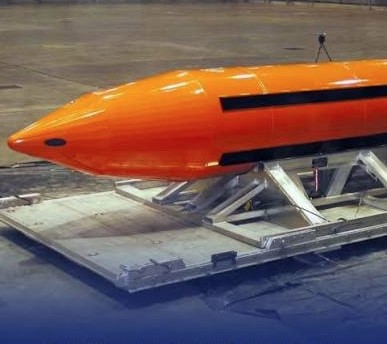
The GBU-43/B Massive Ordnance Air Blast bomb, the largest non-nuclear weapon in the US arsenal, is among the options reportedly drawn up for possible renewed strikes on Iran, according to CNN. The report has not been independently verified.
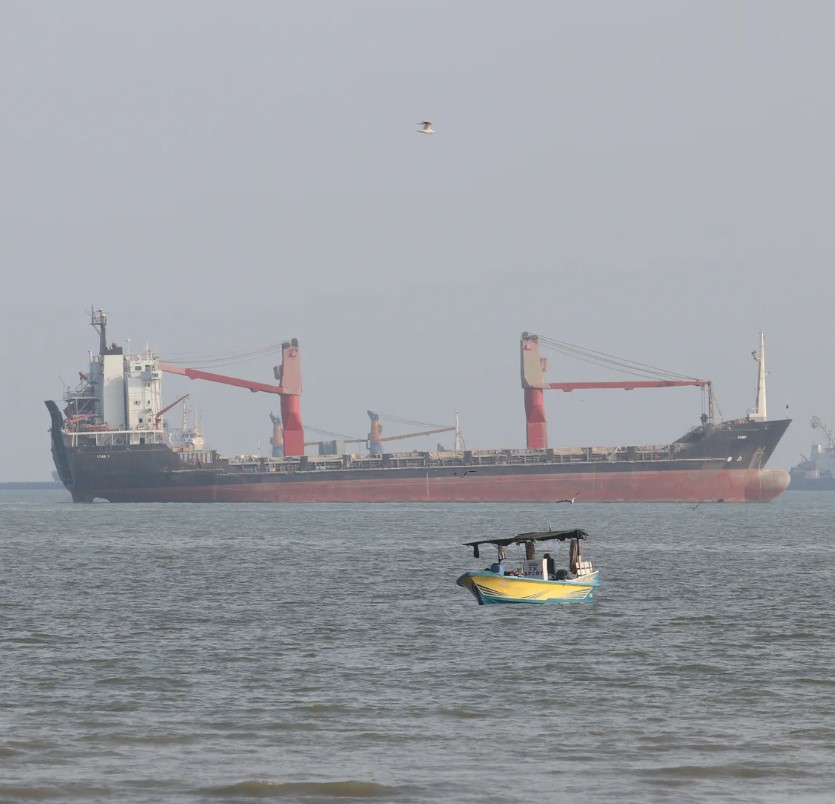
Iran’s Revolutionary Guard says a container ship carrying more than 2,500 containers sank near the Strait of Hormuz after hitting a naval mine, while shipping officials report two Singapore-registered vessels were hit by unknown projectiles.
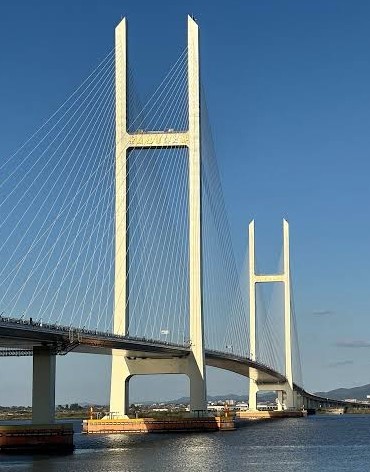
Trucks decked with flags crossed the 3-km New Yalu River Bridge on Thursday as China and North Korea officially opened their most significant land border crossing, 12 years after the bridge was completed.
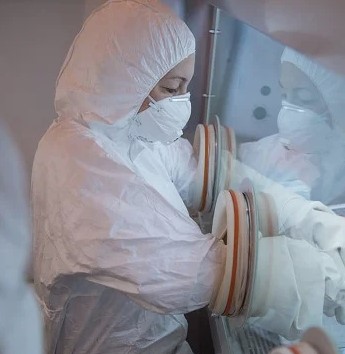
Hong Kong has added temperature checks and travel declarations for flights from Russia after a lab worker’s death in Siberia.