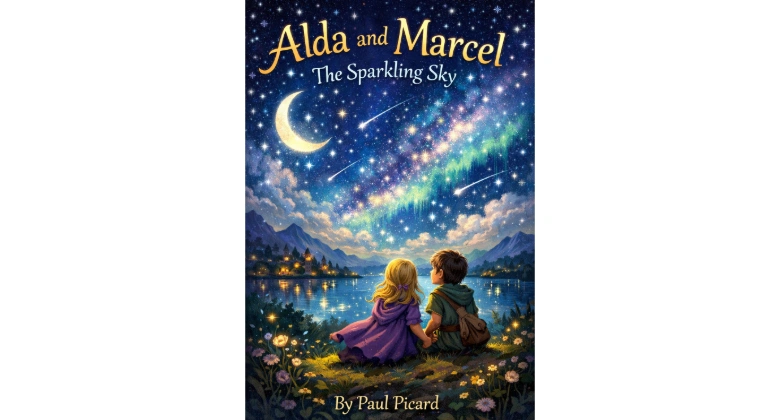
First Impressions: A Gentle Children’s Story Filled With Heart
Alda and Marcel: The Sparkling Sky opens like a bedtime story told slowly, with care and warmth. From the first pages, it is clear that this is not a loud or aggressive adventure book. Instead, it is a gentle, imaginative story that values friendship, kindness, courage, and emotional growth. The book invites young readers into a world where animals talk, joke, argue, and learn together, but where the emotional lessons feel very real and relatable.
The tone is playful but sincere. Even when danger appears, the story never feels cruel or frightening in a harmful way. It feels safe. This is important for a children’s book, especially one that explores fear, anxiety, and bravery. The forest setting, the nighttime adventures, and the recurring idea of the “sparkling sky” all work together to create a soft sense of wonder.
Right away, the author establishes the core emotional dynamic of the book. Alda the raccoon is energetic, mischievous, and fearless. Marcel the porcupine is gentle, thoughtful, and afraid of shadows. These two personalities balance each other beautifully, and their friendship becomes the emotional anchor of the entire story.
Alda and Marcel: A Friendship Built on Understanding
At the heart of this book is the friendship between Alda and Marcel. Their bond is introduced early, and it is clear that it has history and depth. Alda is not just Marcel’s friend. She is his protector, his encourager, and his emotional anchor.
The author explains Marcel’s fear of shadows in a way that young readers can understand without feeling overwhelmed. Marcel’s past experience with humans and being captured by animal control explains his fear in a compassionate way. The book says:
“Marcel was originally born in the Big City… The first thing he saw was a tall human shadow. He shakes if he even thinks about a shadow.”
This backstory gives emotional context to Marcel’s behavior. His fear is not silly or mocked. It is treated seriously, which teaches young readers empathy.
Alda’s response to Marcel’s fear is equally important. She does not tease him or push him too hard. She stays beside him. The line “Alda calmed Marcel down and has been side by side ever since” perfectly captures the quiet loyalty that defines their friendship.
Nighttime as a Safe Space
One interesting choice in this book is how nighttime is presented as a place of safety rather than danger. Alda and Marcel both prefer the night. Alda is more energetic and playful, while Marcel feels safer away from shadows.
This inversion is clever and emotionally meaningful. Many children fear the dark. This book gently suggests that darkness itself is not the enemy. Fear can come from experiences, not from the night itself.
The night becomes a space where Alda and Marcel can be themselves. They laugh, joke, explore, and plan adventures. This reframing of nighttime as comforting rather than scary is subtle but powerful.
Humor and Dialogue: Lighthearted but Purposeful
The dialogue throughout the book is simple, playful, and often funny. Alda’s jokes, Paulie’s teasing, and Marcel’s literal thinking create natural humor that young readers will enjoy.
Alda’s joke about catching a rabbit is a good example:
“How do you catch a rabbit? Unique up on them.”
This kind of humor feels age appropriate and adds charm without distracting from the story. It also reinforces Alda’s playful personality and Marcel’s occasional frustration, which feels very real in close friendships.
Paulie the skunk adds another layer of humor and tension. Marcel does not like Paulie very much, but he tolerates him because Alda likes him. This dynamic reflects real social situations children face when friends have different personalities.
The Farm Scene: Adventure and Consequences
The visit to Farmer Henry’s chicken coop is one of the most action filled parts of the story. It combines humor, danger, and teamwork in a way that keeps the story moving.
The planning, sneaking, and nervous excitement are described clearly. The reader can imagine Alda sneaking under the coop, Marcel worrying, and Paulie waiting nearby. The presence of Gerry the rooster and the sleeping animals adds tension.
When Alda sneezes and wakes the rooster, everything escalates quickly. Farmer Henry appears, the dogs are released, and panic follows. This scene introduces consequences without being overly scary.
Paulie’s decision to spray Farmer Henry to save Alda adds both humor and bravery. Alda escaping with the eggs and swallowing them while running is silly but satisfying. The line “Ahhh, finally get to eat Breakfast!” adds lightness after danger.
The Pit: Facing Fear Through Choice
The sand pit is one of the most symbolic locations in the book. It represents a difficult choice. Jump into the unknown or face a known threat. Marcel choosing to go into the pit shows growth and bravery, even though he is afraid.
Marcel’s honesty stands out here. He admits he is too slow to escape through the field. He does not pretend to be brave. Instead, he chooses the option that gives him the best chance.
This moment teaches children that bravery does not mean fearlessness. It means making the best choice you can while still being scared.
The Turtles: Unexpected Help and Community
The appearance of the turtles is a turning point in the story. Marcel’s fear of water and inability to swim add new tension. His rolling toward the pond feels genuinely frightening.
The turtles forming a wall to stop him is a beautiful image. It shows how help can come from unexpected places. The turtles are calm, kind, and helpful, offering assistance without judgment.
Courtney, Tera, Sam, Paris, and Alex expand the story’s sense of community. The forest feels alive and interconnected. Everyone plays a role in helping one another.
The idea of riding on turtle shells across the pond is imaginative and gentle. It adds fantasy while reinforcing the theme that no one gets through challenges alone.
The Beaver Dam: Everyday Life and Belonging
The visit to the Berube Beaver Dam adds warmth and humor. The beavers feel like a family, complete with parents, children, and everyday disagreements.
Jeff’s frustration over missing acorn spice is funny and relatable. It mirrors small family conflicts children see at home. These scenes slow the story down and allow readers to breathe after the excitement.
Marcel eating fresh trees and finally feeling less hungry is a quiet moment of care. It shows that his needs matter, even though he is often quieter than the others.
Bubba the Bear: Fear Turned Into Courage
Bubba the black bear represents Marcel’s biggest fear. The warning about Bubba raises tension long before he appears. Marcel’s quills popping out shows his anxiety clearly.
When Bubba finally appears, the scene moves quickly. Alda and Paulie are not fast enough to escape. Marcel is left behind. This sets up the most important emotional moment in the book.
Marcel chooses to act. He charges Bubba from behind, using his quills to protect his friends. This moment is powerful because Marcel has been afraid his entire life.
The author writes that Marcel thinks, “I am not going to let Bubba hurt my friends.” This internal decision matters more than the action itself. Marcel is no longer defined by fear.
Bubba’s reaction, crying and running away, shifts the power dynamic. Fear does not disappear, but it changes.
Forgiveness and Friendship
Later, when Bubba appears again at the Big Rock, the story takes an important emotional turn. Alda encourages Marcel and Paulie to speak to Bubba rather than avoid him.
Bubba apologizing and becoming part of the group shows that conflict does not have to end in permanent division. This is a valuable lesson for children.
The act of removing Marcel’s quills from Bubba’s behind is symbolic. Pain is acknowledged. Healing happens. Friendship is chosen.
The Big Rock: Community and Celebration
The Big Rock scene is rich and detailed. Animals from all over the forest gather. The author takes time to name them, describe their habits, and explain their routines.
This long list of characters creates a feeling of community and safety. Even predators are present, but rules protect everyone. The Big Rock is neutral ground.
The recurring idea that different groups visit on different days adds realism and rhythm to the world.
The Sparkling Sky: Meaning Revealed
The sparkling sky is revealed to be fireworks. This reveal is gentle and joyful. It does not diminish the magic. Instead, it reframes it.
The most powerful moment comes when the fireworks create shadows. Marcel realizes that what he feared has become something beautiful.
The four shadows representing Alda, Marcel, Paulie, and Bubba symbolize growth, unity, and transformation. Marcel’s declaration that he will go out in the sunlight the next morning shows complete emotional change.
Themes and Messages
This book explores fear, friendship, courage, forgiveness, and belonging. It teaches children that fear can be faced, that friends matter, and that community makes us stronger.
The language is simple, the message is clear, and the emotional arc is satisfying. The story does not preach. It shows.
Writing Style and Overall Impact
The writing is simple and conversational. While there are grammatical imperfections, they do not harm the emotional impact. In fact, the informal tone makes the story feel more like an oral tale shared aloud.
The paragraphs are long and detailed, which suits the storytelling style. The repetition of names and actions helps young readers follow along.
Final Thoughts
Alda and Marcel: The Sparkling Sky is a heartfelt children’s story that blends adventure with emotional growth. It celebrates friendship, courage, and the idea that fear does not define who we become.
The story ends with joy, laughter, and transformation, leaving young readers with a sense of hope and safety.
“From that day on, in the forest, Alda, Marcel, Paulie, and Bubba were always called the Four Shadows.”