Protesters broke into the construction site of a planned Microsoft data centre in Amsterdam’s Sloterdijk district on November 6, 2026, climbing cranes and unfurling banners in the first of what organisers say are dozens of actions across Europe.

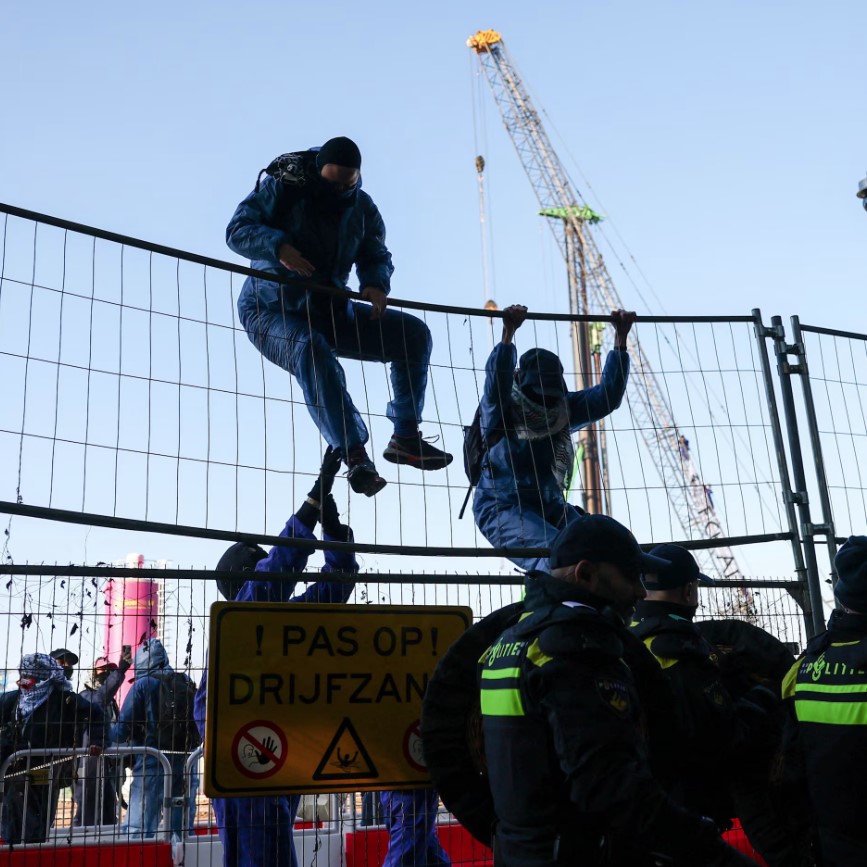
Protesters broke into the construction site of a planned Microsoft data centre in Amsterdam’s Sloterdijk district on November 6, 2026, climbing cranes and unfurling banners in the first of what organisers say are dozens of actions across Europe.
Protesters broke into the construction site of a planned Microsoft data centre in Amsterdam on Friday, climbing cranes, setting off flares and clashing with police, in the opening action of a two-day campaign against large data centres across Europe.
Several hundred activists occupied the site in the city’s Sloterdijk district, according to Al Jazeera. Estimates varied. Gizmodo reported that more than 100 people entered the site, while a campaigner from the group Fossil Free Netherlands told Bloomberg that about 400 took part. Protesters broke through fences, climbed construction cranes and sprayed graffiti. One banner read “Microsoft Powered Genocide.” By late afternoon, police were escorting activists off the site, though some remained, local media reported.
The protest was organised by the Dutch activist collective Geef Tegengas, whose name translates as “Push Back,” alongside Fossielvrij NL. Campaigners say they oppose the development because of its expected electricity consumption, its effect on housing plans and concerns about Microsoft’s activities. Nathan Timmer, a spokesperson for Geef Tegengas, told the local broadcaster AT5 that demonstrators aimed to stop construction. “We don’t want it to be built. Nobody needs it,” he told reporters, adding that the group would continue protesting until construction is halted.
The project, owned by the developer Pure Data Centres and intended for Microsoft, involves three towers about 85 metres high and an investment of more than $1 billion, according to Yahoo News. Protesters argue that the facilities could consume as much electricity as all Amsterdam households combined. That claim has not been independently verified. Banners also denounced artificial intelligence and Microsoft’s alleged involvement in the war in Gaza, which are the protesters’ allegations rather than established findings.
Both companies responded cautiously. Pure Data Centres said it respectfully asked those on site to leave safely and to engage in dialogue about the development and any concerns, according to Reuters as reported by Tom’s Hardware. Microsoft said it understood the strong feelings people have and respected their right to peaceful expression, but did not condone unlawful action.
Also Read: AI-Discovered PHP Flaw Puts Up to 70% of Websites at Risk, Prompting Emergency Patches and Shutdowns
The Amsterdam action is part of a broader campaign. The “Stop Dirty Data Centers” coalition is planning actions in 16 countries on November 6 and 7, including Amsterdam, Dublin, Warsaw and another Microsoft site in Denmark, and a map on its website shows actions planned at 85 locations across Europe. Gizmodo described the Amsterdam occupation as the group’s second at the site. The coalition is calling for “an immediate moratorium on large data centres in Europe.” Its website urges elected leaders to adopt moratoria at local, national and European level that pause data centre construction until “the people” have democratically decided what is needed to ensure AI and data centres serve people and the planet.
Data centres, the facilities that handle the large processing workloads associated with artificial intelligence, face resistance around the world because of the vast amount of computing power, electricity and water they use, Al Jazeera noted. The industry has expanded rapidly as technology companies invest tens of billions of dollars in AI infrastructure, and local communities have increasingly raised concerns about energy prices, grid capacity, water supplies and land use. In Amsterdam, the concern includes competition with housing plans for space and power, according to the campaigners.
The protests also arrive at a politically charged moment for the technology sector. ABC News noted that the US midterm elections ushered in a wave of Democrats promising to clamp down on data centres. Shares of companies linked to artificial intelligence and data centres fell sharply after the vote, as investors weighed the possibility of tighter rules. The Amsterdam occupation shows that the backlash is not confined to the United States, and that activists in Europe are using direct action, as well as calls for legislation, to press their case.
Supporters of data centres argue that the facilities are essential infrastructure for cloud services, businesses and public services, as well as AI, and that they bring investment and jobs. Developers often say that newer sites are designed to be more efficient and to use renewable power, though campaigners dispute that this offsets the overall demand. The Amsterdam companies have not given details of the project’s power supply in the reports reviewed.
What happens next depends on authorities and the companies. Police removed many protesters on Friday, but the groups have said they will continue, and more actions are scheduled this weekend in other countries. Whether any of the planned moratoria gain political traction will depend on how governments balance AI investment against local objections. For now, the images from Sloterdijk, with activists on cranes above a half-built data centre, have become a symbol of a growing argument over who benefits from the AI boom and who bears its costs.

Protesters broke into the construction site of a planned Microsoft data centre in Amsterdam’s Sloterdijk district on November 6, 2026, climbing cranes and unfurling banners in the first of what organisers say are dozens of actions across Europe.

Protesters rally in Asunción on November 5, 2026, as lawmakers moved to impeach President Santiago Peña, whom they blame for the bank crisis triggered by the collapse of digital lender Ueno, which left millions of customers unable to access their accounts.

Democrats won control of both the House and Senate on Tuesday, flipping seven Republican-held Senate seats and five governorships in a midterm election seen as a rebuke of President Trump’s agenda.

Binance, the world’s largest cryptocurrency exchange, says hackers used a fake job interview and an internal AI tool to steal about $6.3 billion in a record crypto heist.