Two critical vulnerabilities in PHP, found with the help of AI models and dubbed PHP2Shell, prompted emergency patches and temporary website shutdowns around the world this week.



Two critical vulnerabilities in PHP, found with the help of AI models and dubbed PHP2Shell, prompted emergency patches and temporary website shutdowns around the world this week.
Governments and companies around the world scrambled this week to fix two critical security flaws in PHP, a programming technology that powers up to 70 percent of websites, after researchers using artificial intelligence found weaknesses that could let attackers take over web servers.
The vulnerabilities, collectively nicknamed PHP2Shell and tracked as CVE-2026-109618 and CVE-2026-109619, involve the way PHP handles computer memory. The PHP project disclosed them on Wednesday, October 21, and issued an emergency patch, urging website operators to install it immediately or take their sites offline until they could. According to researchers, an attacker who exploits the flaws could run malicious code on a vulnerable server, gain access to its files and database, and potentially compromise visitors.
The discovery was made in August by Ryan Austin of the cybersecurity firm Calif, who used OpenAI’s GPT-5.6 Sol model to examine PHP’s underlying code, the Wall Street Journal reported. OpenAI, Google-owned Wiz and Calif later said they had used a mix of OpenAI’s model and Google’s Gemini 4 Argon to find and demonstrate the flaws, which they said had sat in PHP code for more than a decade without being exploited. Fortune reported that the Calif team was “not expecting to find anything critical,” since PHP has been closely examined by the security community for years.
OpenAI described the issue in a blog post as “one of the most impactful security issues in recent memory.” Wiz researchers wrote that the findings rank among the most severe ever discovered in PHP, and arguably in software history. They said that demonstrating the exploit required an exceptionally complex chain of steps, at the edge of what human researchers could practically achieve, and that frontier AI models substantially lowered that barrier. Wiz co-founder Ami Luttwak said the complexity might have kept the flaws hidden indefinitely without AI.
The disclosure was kept secret for weeks on purpose. Researchers feared that publicising the flaws before a patch was ready would give attackers time to build their own AI-assisted exploits, the Journal reported. OpenAI then brought together a coalition of PHP maintainers, researchers and security providers to prepare the fix. According to the report, some servers could be compromised in seconds with AI assistance, while more complicated systems might take several hours.
Concern grew quickly once the flaws became public. Fortune reported that one company said the vulnerability was already being broadly exploited in the wild and that it had seen attempts by hackers in the days before the disclosure. The US National Security Agency and Europe’s cybersecurity agency advised companies to take immediate action, and warnings also came from agencies including the FBI, according to news summaries.
Also Read: Nvidia Unveils Platform to Stop AI Agents From “Going Rogue” After String of Security Incidents
The effects were visible on the ground. Governments and companies took websites offline while they applied fixes, including services in France, the Netherlands and Australia, along with systems linked to Wikipedia. Canada’s Artificial Intelligence Minister Evan Solomon said some government websites had been taken down temporarily as a precaution. Greg Brockman, OpenAI’s president, said PHP was his first programming language.
The 70 percent figure refers to the share of websites that use PHP. How many are actually vulnerable depends on the version of the software and how each site is configured, and many sites will be protected quickly if their hosting providers apply the update. The larger worry is the long tail of unpatched sites, including small businesses and older systems that are rarely updated.
The episode has been described by some security experts as an “AI inflection point.” AI tools helped defenders find a decade-old bug that human researchers had missed. But the same tools could also help attackers build working exploits faster, which shrinks the window between a public disclosure and a wave of attacks. Defenders are hoping that the coordinated, secret preparation of a patch gave them a head start. Whether enough of the internet updates in time is the question that will decide how serious this becomes.
The incident also adds to a wider debate about the role of AI in cybersecurity. Frontier AI labs have increasingly pointed to security research as one of their models’ most valuable uses, while safety researchers have warned that the same capabilities could be misused. This case shows both sides at once, and it is likely to be cited by supporters of tighter controls as well as by those who argue that AI-powered defence is the best answer to AI-powered attack.
For now, the practical advice is simple: website owners should update PHP to the patched version, check with their hosting providers, and monitor their servers for unusual activity. Security teams will spend the coming days checking logs for signs of exploitation, and researchers will keep watching how quickly the patched versions spread across the internet.

Two critical vulnerabilities in PHP, found with the help of AI models and dubbed PHP2Shell, prompted emergency patches and temporary website shutdowns around the world this week.
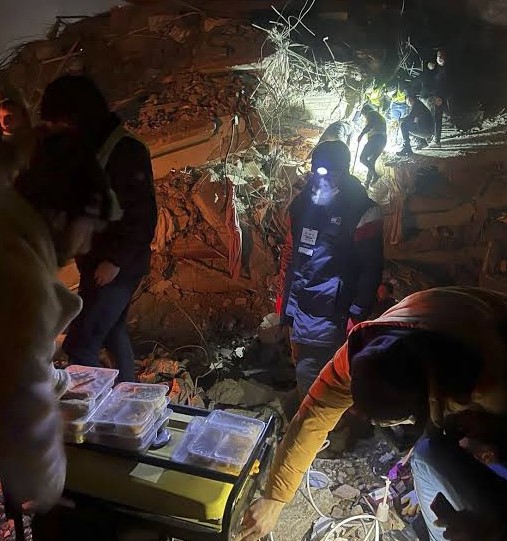
A magnitude 7.0 earthquake struck a remote, high-altitude area of northern Tibet on Thursday night, killing at least 16 people and collapsing more than 300 houses, according to Chinese state media.

A New Mexico judge ordered Meta to pay the state $25 billion on Wednesday after a jury found the company misled consumers about data privacy, in one of the largest financial penalties in US history.
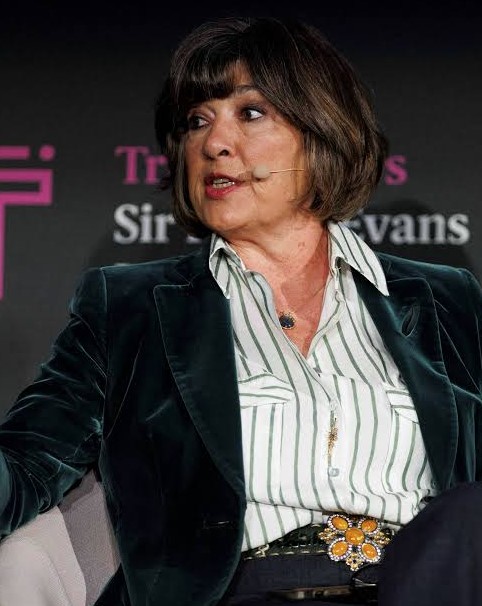
Christiane Amanpour, 68, announced on Monday that she will leave CNN at the end of June 2027 after 43 years, scaling back her show to once a week from early 2027.