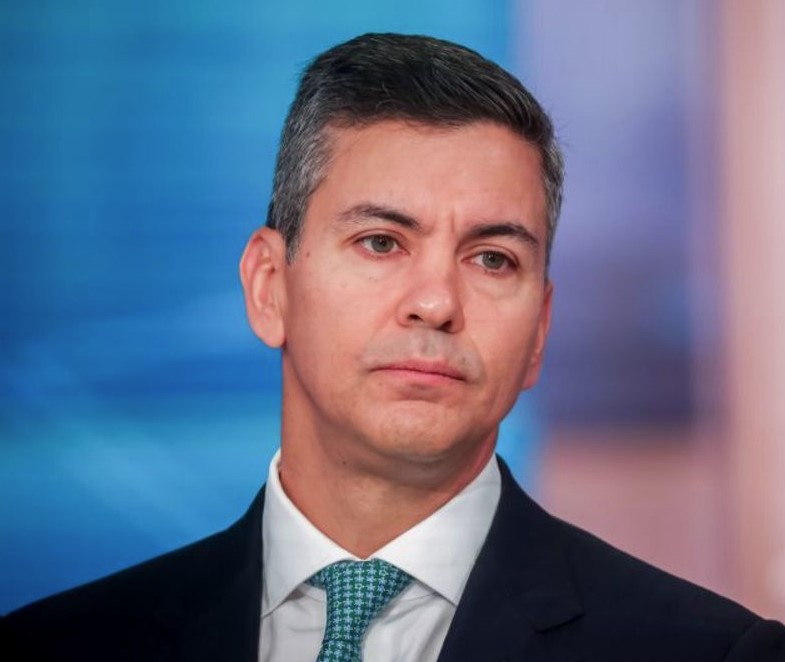
Paraguayan President Santiago Peña resigned on Thursday, and lawmakers impeached him minutes later, after the collapse of a major digital bank left millions of people unable to reach their savings, wages and pensions, and cost him the support of his own party. Prosecutors have opened three criminal investigations, and Congress was due to vote on Friday on whether to accept his resignation.
How the crisis began. Paraguay’s central bank seized Ueno Bank on Tuesday, November 3, after finding that its solvency ratio had fallen below half the legal minimum, according to reporting by the Latin Times. The bank was placed into resolution proceedings, a process meant to establish its real net worth, protect its assets and organise repayment of deposits under Paraguayan law. Ueno had grown quickly from a niche local fintech into a mid-sized bank with roughly 2.9 million customers, in a trajectory compared to digital lenders such as Monzo and Nubank, and managed about $850 million in public funds, according to BigGo Finance. NBC News reported that nearly half the population was left without access to bank accounts.
The central bank said the intervention aimed to protect depositors and preserve the stability of the financial system. It plans to move customers’ accounts, together with any assets that still hold value, to other banks before liquidating what remains, according to CBC.
Protecting depositors. Most customers are covered by deposit insurance, which guarantees up to 228.3 million guaraníes, about $38,000, per person, enough to fully cover about 97 percent of Ueno’s depositors, according to preliminary estimates cited by BigGo. Under a law rushed through Congress on Wednesday, a state guarantee fund must repay stranded depositors within five business days, starting Thursday with small accounts of up to about $1,600 held by customers with no debts to Ueno, AP reported. Peña approved emergency payouts on Wednesday and named a new central bank chief.
Arrests and the Peña link. Authorities detained eight senior Ueno executives, including founder Miguel Vázquez, who chairs the controlling shareholder Grupo Vázquez, and bank president Juan Manuel Gustale. The central bank’s president, Carlos Carvallo, a former Ueno executive, resigned after the intervention.
The political fallout stems from Peña’s past ties to the group. He was a shareholder in Grupo Vázquez, which owned the bank until March 2025, according to NBC News. Peña says he sold his shares in March of last year, and he has expressed contrition. He offered an apology but stopped short of accepting responsibility for the crisis, CBC reported. Before the crisis, Peña, a former International Monetary Fund economist, was a prominent ally of the Trump administration and was welcomed in Washington only weeks ago, according to AP.
Also Read: Democrats Win Both House and Senate in Sweeping Midterm Victory, Flipping Seven Senate Seats and Five Governorships
Protests. On Wednesday, hundreds of retirees, depositors, students and workers marched towards Congress in Asunción. Some carried signs calling Peña “the enemy of savers,” and riot police fired pepper spray and rubber pellets to push back the crowds. On Thursday, hundreds of Ueno employees and workers from Grupo Vázquez companies protested outside the Labor Ministry, demanding unpaid wages and severance, with some burning their credit cards. The ministry estimates that the collapse has affected about 7,000 direct and indirect jobs.
The resignation and impeachment. In a video posted to X, Peña said he was stepping down for “the stability of our country, social peace and the need to preserve our democratic institutions.” Minutes later, the lower house voted 78-0 to impeach him, sending the charges to the Senate. The chamber rejected a motion to impeach Vice President Pedro Alliana, who is next in line. Paraguay’s sovereign bond prices fell after the resignation, NBC reported.
Peña’s own movement turned against him. His mentor, Colorado Party leader and former president Horacio Cartes, backed impeachment, saying the party would not side with “the plundering of public and private funds and pensioners’ money.” Congressional leaders were set to vote on Friday on whether to accept the resignation, which would allow Alliana to be sworn in and serve the rest of the term, which ends in August 2028, without waiting for a Senate trial. If Congress does not accept the resignation, a trial could delay the transition.
Criminal investigations. Attorney General Emiliano Rolón Fernández ordered three criminal investigations into the crisis, including allegations involving Peña and other current and former government officials. They will examine oversight of the bank, how authorities handled its failure and the placement of public funds in the lender, AP reported. Prosecutors have said they will seek charges against Peña, according to AP. As of the latest reports reviewed, no formal charges had been announced, and the allegations have not been tested in court. Peña has said he will cooperate with investigators and act with respect for the Constitution.
Also Read: Anthropic CEO Says AI’s “Exponential” Growth Is a Warning Sign: “We Need to Slow Down”
What remains unclear. The reports do not fully explain how Ueno’s finances deteriorated, or why regulators did not act sooner. They also do not say how much of the public money held at the bank can be recovered, or whether the guarantee fund can cover the claims. Those questions are at the centre of the investigations.
The crisis is the most serious in Peña’s three years in office. He had previously survived a wave of youth-led protests in late 2025 that called for his removal. This time, the loss of his party’s backing and the scale of the disruption to everyday life, from payrolls to pensions, made his position untenable.
For Paraguayans, the immediate concern is getting their money back. The next days will show whether the guarantee payments proceed smoothly, whether the bank’s remaining assets can cover other claims, and who takes over as president. Beyond that, the investigations will decide whether the failure of a single digital bank becomes a criminal case against a former head of state.