From her American Eagle jeans ad to her recent Novig campaign, Sydney Sweeney keeps finding herself at the center of controversy, raising the question of whether the pattern is coincidence or calculation.




From her American Eagle jeans ad to her recent Novig campaign, Sydney Sweeney keeps finding herself at the center of controversy, raising the question of whether the pattern is coincidence or calculation.
There’s a version of bad luck that happens once. Then there’s whatever this is. In just over a year, Sydney Sweeney has been at the center of not one but two major ad controversies, first over a denim campaign whose wordplay read to many as a wink toward a very specific, very loaded idea of “good genes,” and now over a nearly nude sports betting ad that critics say sexualizes sports rather than celebrates it. Two data points don’t make a pattern on their own. But two data points involving the same person, the same basic structure of controversy, and the same muted response each time, start to look less like coincidence and more like a formula somebody, somewhere, has figured out works.
It seems unlikely Sweeney sat down and mapped out a five-year plan to become the internet’s most reliable outrage generator. That would give both her and the advertising industry too much credit for coordination. A simpler, less conspiratorial explanation gets most of the way to the same place: at some point, either Sweeney or the people around her noticed that controversy sells, and stopped being afraid of it. That’s not the same as deliberately engineering outrage. It’s closer to no longer flinching when it shows up, and possibly leaning into the kind of campaigns most other A-list actresses would have their teams veto before the concept ever left the pitch deck.
Look at what actually happened after the American Eagle backlash. The campaign got compared to propaganda by some critics. It also, by all accounts, meaningfully boosted the brand’s sales and visibility. That outcome matters more than it gets credit for, because it’s the single data point that explains everything that came after it. Had the “Great Jeans” campaign bombed commercially while generating backlash, a Novig ad this September seems far less likely to have followed. Instead, the controversy and the commercial success arrived together, inseparably, and the lesson anyone paying attention would have taken from that isn’t “avoid controversy.” It’s “controversy doesn’t cost you anything if the product still moves.”
That’s the more interesting part of this story, arguably more than the specific content of either ad. An entire attention economy has been built that no longer meaningfully distinguishes between “people are talking about this because they love it” and “people are talking about this because they’re furious about it.” Engagement is engagement. A quote-tweet calling something “disgusting” drives the same algorithmic visibility as a quote-tweet calling it iconic. Once that became true, and it’s been true for a while now, the actual strategic move for anyone selling something wasn’t to avoid offending people. It was to stop treating offense as a cost at all.
Also Read: Sydney Sweeney’s New Novig Ad Sparks Backlash Over Nudity, Sports Betting
What makes Sweeney specifically interesting as a case study is how consistent her response has stayed across both controversies. No apology followed either time. No ad was pulled either time. Her public comments have followed almost the same shape each time too: mild surprise that people reacted the way they did, a gentle reassertion that she meant no harm, and then, notably, silence on anything resembling the actual substance of the criticism. After the jeans ad, she said she was “honestly surprised by the reaction” and didn’t support the interpretations people attached to it. After the Novig ad, her defense was that the concept was simple and playful, full stop, nothing more to see here. That’s not the response of someone caught off guard by backlash. That’s the response of someone, or a team around someone, who has clearly decided the correct move is to never fully engage with the criticism, because doing so would mean acknowledging it as legitimate, and legitimizing it is the one thing that could actually kill the momentum.
Fairness matters here too, because there’s a real possibility this reads intention into something that’s actually just a byproduct of who Sweeney is as a public figure. She’s an equity holder in Novig, not just a spokesperson, which means her financial incentives and her personal brand risk are now genuinely tangled together in a way that wasn’t true of the jeans ad. It’s entirely possible she genuinely believed the Novig concept was clever and sports-focused rather than provocative, and simply misjudged how it would land, the same way plenty of people involved in plenty of ad campaigns misjudge tone. Not every controversy is a strategy. Sometimes it’s just a creative team with a blind spot, or a celebrity trusting people whose judgment turned out to be worse than expected.
But even if that’s true this time, it stops mattering once the pattern repeats. Whether or not Sweeney or her team deliberately courts backlash, both have now watched controversy translate into sales and visibility twice in a row, and few people with a functioning business brain walk away from that observation unchanged. The next campaign doesn’t need to be planned as controversial to be shaped, consciously or not, by the knowledge that controversy has never actually hurt her before. That’s the uncomfortable thing about outrage as a marketing tool: intention isn’t required the first time for it to become the incentive the second time.
So is Sydney Sweeney deliberately stirring controversy because she knows it works? That’s difficult to prove definitively, and Sweeney herself might struggle to answer it honestly at this point, the line between “this is who someone genuinely is” and “this is what someone has learned gets rewarded” gets blurry fast once a person is famous enough. What seems clearer is that the distinction barely matters anymore. Intentional or not, the outcome is identical: another controversy, another news cycle, another sales bump, and another round of the exact same conversation happening right now, asking whether this was calculated, while the ad keeps running either way.


Two critical vulnerabilities in PHP, found with the help of AI models and dubbed PHP2Shell, prompted emergency patches and temporary website shutdowns around the world this week.

A magnitude 7.0 earthquake struck a remote, high-altitude area of northern Tibet on Thursday night, killing at least 16 people and collapsing more than 300 houses, according to Chinese state media.
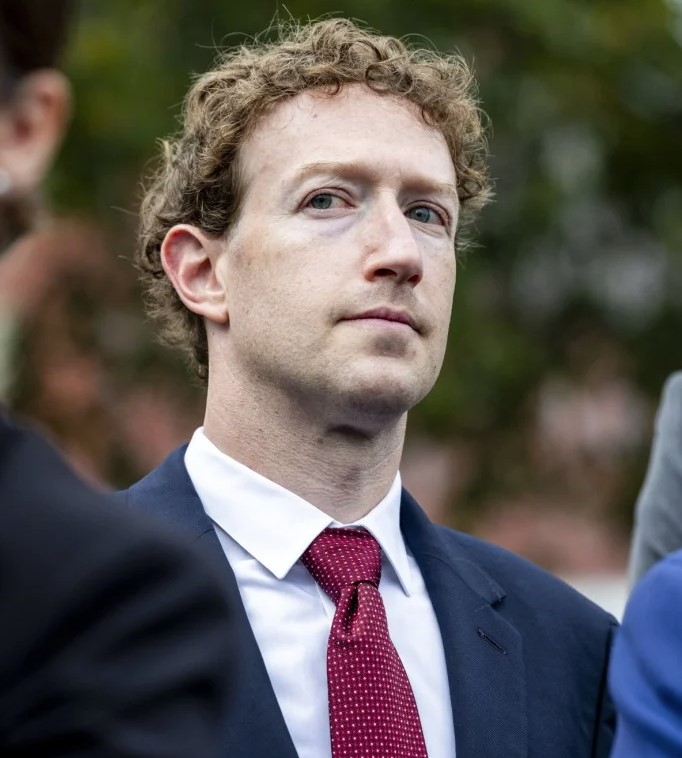
A New Mexico judge ordered Meta to pay the state $25 billion on Wednesday after a jury found the company misled consumers about data privacy, in one of the largest financial penalties in US history.
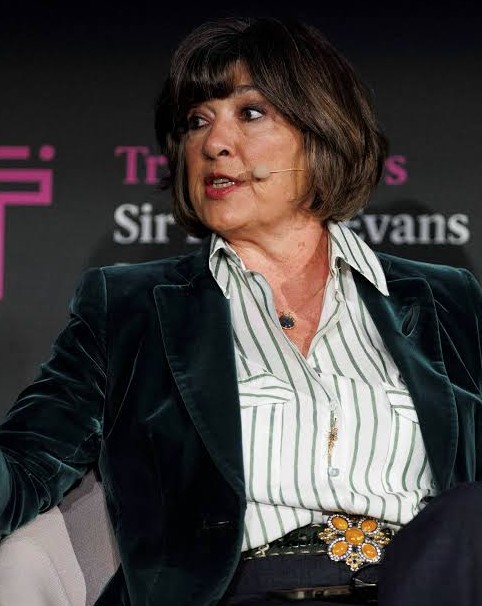
Christiane Amanpour, 68, announced on Monday that she will leave CNN at the end of June 2027 after 43 years, scaling back her show to once a week from early 2027.