
Sydney Sweeney is facing criticism over her latest ad campaign for sports prediction market Novig, with critics arguing it sexualizes sports rather than centering athlete achievement.



Sydney Sweeney is facing renewed backlash over a new advertising campaign, just over a year after her American Eagle “Great Jeans” ad sparked widespread controversy. This time, the actress is fronting a campaign for sports prediction market Novig, appearing nearly nude in a commercial that has divided viewers online.
Novig and Sweeney jointly shared the ad on Instagram on Wednesday, September 9, marking the platform’s first campaign since launching. In the spot, titled “Just Sports,” Sweeney poses using various pieces of sports equipment, footballs, basketballs and hockey gear, to cover herself while performing different athletic movements throughout the roughly one-minute clip. “Think you know sports? Prove it,” she says in the ad. “Novig is just sports. So they wanted to show just sports.” At the end of the commercial, she repeats the single word “sports” while continuing to pose, a moment that quickly became one of the most-clipped and mocked segments of the ad online. Sweeney is not simply a paid spokesperson for the campaign; she is also an equity holder and strategic partner in Novig, and has said she was involved in developing the creative concept from its earliest stages, describing herself as part of the “creative conversations from the very beginning” in comments to Complex.
Reaction to the ad has been sharply split, playing out across social media in real time as the clip racked up millions of views within its first days online. Critics called the campaign “disgusting,” “pathetic” and “inappropriate,” with some specifically objecting to using nudity to promote a gambling-adjacent product aimed at a broad audience. Several women pushed back on the campaign’s framing in particular, arguing that female athletes and sports marketing more broadly should center talent rather than sexualized imagery, with one widely shared comment arguing that women in sports are fighting to be recognized as serious athletes, not for their bodies. Critics noted the irony of a campaign built around “just sports” choosing imagery that arguably drew more attention to Sweeney’s body than to any actual athletic skill or achievement, a tension that became the central thread running through most of the backlash. One commenter wrote that the ad made it feel as though women “can’t sell or be a normal girl if she doesn’t use her body as a tool,” while another described the pairing of sex appeal and sports betting more bluntly, writing that “selling gambling by selling sex” reflected poorly on broader cultural standards.
Other viewers defended the ad or treated it as tongue-in-cheek rather than genuinely objectionable, with one popular reaction reading, “Confirmed: Sydney Sweeney knows ball,” while another questioned why the ad appeared to be running in heavy rotation on television throughout the day. One viewer described having to tell their children to look away from the screen when the ad aired unexpectedly during a family viewing session, illustrating just how widely the commercial was airing across mainstream channels rather than staying confined to online platforms. Despite the criticism, several commentators noted that the ad’s sheer visibility and virality suggested the campaign was, by conventional marketing metrics at least, succeeding in generating exactly the kind of attention Novig was likely hoping for as a newly launched platform trying to establish brand recognition.
Sweeney has defended the campaign directly, describing its purpose as narrower and more playful than critics have suggested. “The concept is simple: cut through the noise and put the focus entirely on sports,” she said in a statement. “The campaign brings that idea to life with confidence, humor and a playful edge.” She has also pointed to Novig’s specific positioning within the sports prediction market space as part of her reasoning for joining the company. According to Novig CEO Jacob Fortinsky, Sweeney had expressed discomfort with rival prediction markets that allow users to bet on details of her personal life, including, in one instance he cited, the color of her underwear. Novig’s decision to focus exclusively on sports markets, rather than politics, celebrity news or other personal categories, was reportedly part of what appealed to her about the partnership. Sweeney has separately noted that the platform does not allow betting on “wars or deaths” or political outcomes, framing the company’s narrower scope as a deliberate point of differentiation from competitors in the increasingly crowded prediction market space.
Also Read: Why Sydney Sweeney Represents the Modern Idea of Talent and Intelligence
The controversy closely echoes the fallout from Sweeney’s American Eagle campaign roughly a year earlier. That ad, built around the tagline “Sydney Sweeney Has Great Jeans,” a play on words referencing “great genes,” drew significant backlash after some viewers interpreted the wordplay, combined with Sweeney’s appearance, as an implicit celebration of a particular racial and physical ideal, with some critics going so far as to compare the campaign’s framing to historical propaganda. Sweeney addressed that backlash publicly in an interview with People magazine, saying she was “honestly surprised by the reaction” and had participated in the campaign simply because she liked the jeans and the brand. “I don’t support the views some people chose to connect to the campaign,” she said at the time. “Many have assigned motives and labels to me that just aren’t true.” She later added, “I’m against hate,” while acknowledging that staying largely silent through the earlier controversy may have “only widened the divide” rather than resolved it, a rare moment of Sweeney directly reflecting on how her silence had been perceived. Despite the backlash, that campaign was widely credited with boosting American Eagle’s sales and visibility, a commercial outcome that some marketing analysts have since pointed to as evidence that controversy, even negative controversy, can function as an effective tool for brand awareness in the current media environment.
Sweeney has generally avoided directly engaging with political interpretations of her campaigns, a pattern that has itself become a point of criticism from some corners, with detractors arguing that her repeated refusal to comment on the political readings of her ad work amounts to its own kind of statement. The recurring criticism across both campaigns points to a broader, ongoing debate in sports marketing about how female athletes and sports-adjacent public figures are visually represented, and whether campaigns fronted by non-athlete celebrities like Sweeney inadvertently reinforce the same body-focused standards that actual professional athletes have spent years pushing back against in their own sponsorship deals and public image battles. That tension has become especially pointed in recent years as women’s sports have seen a genuine surge in mainstream visibility and investment, with advocates arguing that campaigns like Novig’s risk undercutting that progress by framing sports-adjacent content around a non-athlete’s body rather than the achievements of the athletes the sport itself is built around.
Whether the Novig backlash follows a similar trajectory to the American Eagle controversy, fading into broader conversation about marketing and sales performance rather than lasting reputational damage, remains to be seen. For now, the ad continues to circulate widely online, drawing both strong criticism and enthusiastic engagement in roughly equal measure, a dynamic that has arguably defined Sweeney’s advertising ventures over the past year more than any single campaign’s specific content, and one that Novig, as a young company chasing visibility in a competitive market, may ultimately consider a net win regardless of the tone of the conversation surrounding it.


Two critical vulnerabilities in PHP, found with the help of AI models and dubbed PHP2Shell, prompted emergency patches and temporary website shutdowns around the world this week.

A magnitude 7.0 earthquake struck a remote, high-altitude area of northern Tibet on Thursday night, killing at least 16 people and collapsing more than 300 houses, according to Chinese state media.

A New Mexico judge ordered Meta to pay the state $25 billion on Wednesday after a jury found the company misled consumers about data privacy, in one of the largest financial penalties in US history.
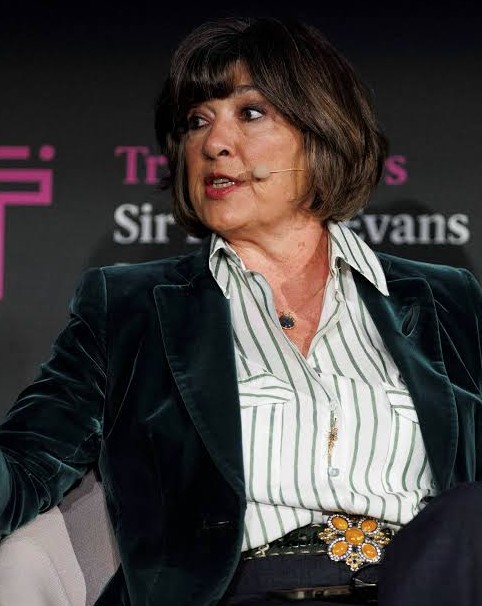
Christiane Amanpour, 68, announced on Monday that she will leave CNN at the end of June 2027 after 43 years, scaling back her show to once a week from early 2027.