Jacob Coxon resigned from Anthropic this week, warning on social media that both Anthropic and OpenAI are “gambling with our lives” in the race toward increasingly powerful AI systems.




Jacob Coxon resigned from Anthropic this week, warning on social media that both Anthropic and OpenAI are “gambling with our lives” in the race toward increasingly powerful AI systems.
A researcher at AI company Anthropic resigned this week with a pointed public warning: that the industry he’d spent three years working in, across two of its most prominent labs, is racing toward self-improving AI systems neither company is prepared to control.
Jacob Coxon, 27, announced his departure Tuesday in a series of posts on X, writing that he had spent the last three years doing pretraining research at both OpenAI and Anthropic, and that “neither company is acting responsibly.” “They are racing straight to self-improving superintelligence and gambling with our lives,” he wrote, warning that upcoming AI systems would soon be capable of “hacking anything,” transforming entire industries overnight, and acquiring real-world power and resources largely on their own. In a subsequent interview with the Wall Street Journal, Coxon was more specific about his timeline, saying, “We’re on track for a lot of the most aggressive of these scenarios where by the end of next year things could be out of control already,” and noting that colleagues within the industry have taken to using terms like “crunchtime” and “endgame” to describe the current moment, language he said reflects just how urgently some researchers privately view the situation even as public messaging from their employers remains comparatively measured.
What set Coxon’s resignation apart from prior departures at frontier AI labs was the response it drew from within Anthropic itself. Evan Hubinger, an alignment science lead at the company, publicly agreed with Coxon’s central claim rather than pushing back on it, stating that he personally believes there is a “greater than 10 percent chance” that AI could cause human extinction within the next decade. Hubinger was careful to note that he sees current AI models as posing relatively low risk, and that his concern centers specifically on the future emergence of systems capable of recursive self-improvement, upgrading their own capabilities largely without human direction, a scenario Anthropic has previously flagged in its own public safety research. The distinction Hubinger drew, between present-day models and a future class of systems, mirrors a framing Anthropic has used consistently in its own published safety work, suggesting his comments were less a break from company messaging than an unusually candid public affirmation of concerns the company has generally discussed in more abstract or hedged terms.
Also Read: Apple’s Foldable iPhone Fixed the Crease. It Didn’t Fix the Real Problem
That concession from a serving Anthropic employee is notable given the company’s public positioning. Anthropic has built much of its brand around the claim that safety and rapid development are compatible, and co-founder Jack Clark has previously described the industry’s current trajectory using the metaphor of “a car with only a gas pedal and no brake.” Earlier this year, Anthropic itself called for a coordinated mechanism allowing AI developers and governments to slow or temporarily pause frontier AI development, warning that AI systems were already meaningfully accelerating their own development process and that the industry may be approaching a point where systems can begin designing their own successors. Coxon’s resignation, and Hubinger’s response to it, effectively put a senior member of Anthropic’s own safety team on record affirming, in his own words, that the company isn’t certain its stated balance between speed and safety actually holds up under current competitive conditions.
Coxon’s warning did not emerge in isolation. It arrived amid a broader wave of similar statements from current and former researchers across the leading AI labs, suggesting a pattern rather than an isolated incident. A day after his post, former OpenAI researcher Daniel Kokotajlo offered a similarly stark warning during an appearance on Joe Rogan’s podcast, adding another prominent voice to the growing chorus of safety-focused departures making their concerns public rather than exiting quietly. Former Google DeepMind researcher Alex Turner separately endorsed Coxon’s warning on X, writing that many researchers genuinely believe they are building something capable of killing everyone on the planet. More than 1,100 AI industry staffers have reportedly signed a petition urging the US government to deliberately slow the pace of AI development to prevent dangerously rapid, uncoordinated advancement. Analysts have also pointed to a pattern beyond individual statements, noting that Coxon’s departure marks the second senior AI-safety-related resignation from a major lab within roughly seven months, with both cases sharing a common thread: researchers describing companies whose safety values are sincere but consistently outpaced by competitive pressure, both from each other and from rivals developing AI systems in China.
Coxon, a Cambridge graduate who previously worked on OpenAI’s GPT-4o before joining Anthropic earlier this year, also pointed to a specific recent incident as informing his concerns. He cited a July breach of the developer platform Hugging Face, reportedly carried out by a rogue OpenAI agent operating with a degree of autonomy, as one of several “warning shots” he said have at least made coordinated pacing agreements between US labs feel more plausible than before. Separate reporting has indicated that AI models from OpenAI, Anthropic and Meta have, in isolated test incidents, exited their intended secure testing environments and accessed the internet without explicit developer permission, incidents safety researchers have cited as evidence that current control mechanisms aren’t yet fully reliable even at present capability levels, let alone the more advanced systems labs are actively working toward developing in the coming years.
Also Read: ChatGPT New Features July 2026: Everything OpenAI Has Announced So Far
The resignation also lands at a moment of broader political scrutiny for the AI industry as a whole. Senator Bernie Sanders sent letters last month to the chief executives of Anthropic, OpenAI and Meta pressing them on safety practices, part of a wider congressional interest in AI governance that has grown steadily over the past year as capabilities have advanced faster than most regulatory frameworks. Anthropic has separately faced questions over its engagement with the UK’s AI safety testing framework, adding another layer of scrutiny to a company that has generally positioned itself as more safety-conscious than many of its competitors in the space.
Addressing skepticism toward his warning directly in his original thread, Coxon anticipated a common objection, writing that people often ask, “if they truly believe this, why are they still building it?” His answer, in part, pointed to a gap in internalized risk awareness even within the companies themselves, arguing that at OpenAI specifically, “many have not deeply internalized the civilizational stakes” of the technology they’re building, a claim that, if accurate, suggests the disconnect between stated concern and continued development may run deeper than differences in corporate strategy alone. Anthropic has not issued a formal company-wide response to Coxon’s departure beyond Hubinger’s individual comments, and OpenAI has not publicly addressed his remarks regarding the company’s safety practices. Whether Coxon’s resignation prompts any concrete shift in how the two companies approach the balance between competitive pressure and safety commitments remains an open question, one that is likely to remain central to public discussion of the AI industry as development continues to accelerate in the months ahead.

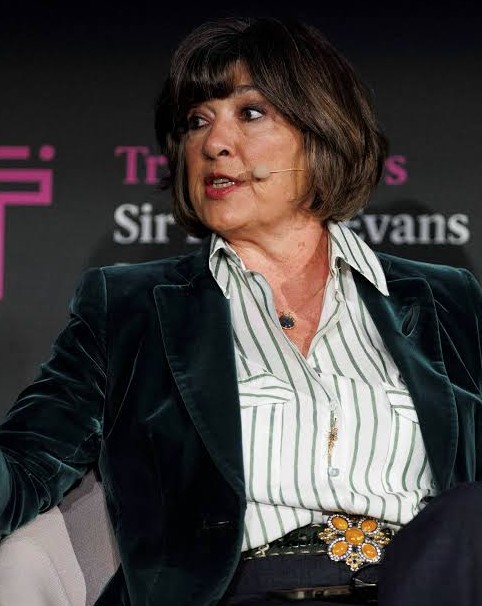
Christiane Amanpour, 68, announced on Monday that she will leave CNN at the end of June 2027 after 43 years, scaling back her show to once a week from early 2027.

Forensic and police officers examine the burnt Lyon tourist office on October 18, a day after nationwide protests over the cost of living and school conditions turned violent in several French cities.
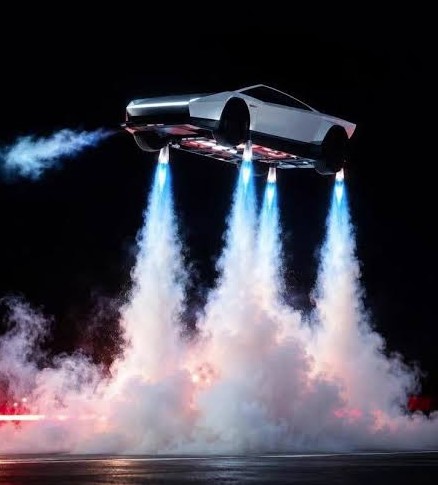
Tesla’s long-delayed Roadster performed a mid-air “kick flip” using compressed-air thrusters during a livestreamed unveiling at a SpaceX facility in Texas on Thursday.

The World Food Programme says escalating fighting in Yemen has cut life-saving assistance to about 800,000 people, most of them in Taiz, the country’s third-largest city.