Apple’s foldable iPhone, the Duo, starts at $1,999, arriving as the centerpiece of new CEO John Ternus’s first product launch since taking over from Tim Cook.



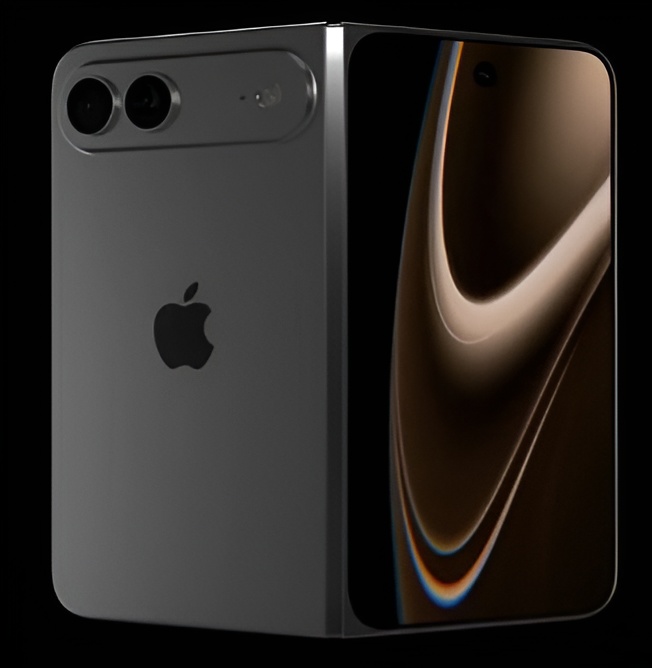
Apple’s foldable iPhone, the Duo, starts at $1,999, arriving as the centerpiece of new CEO John Ternus’s first product launch since taking over from Tim Cook.
Apple spent most of 2026 building toward a single moment: the first hardware keynote of the John Ternus era, and with it, the company’s long-delayed entry into foldable phones. On September 9, at the Steve Jobs Theater in Cupertino, that moment finally arrived. The verdict, once the initial excitement faded and reviewers actually got their hands on the device, is more complicated than Apple’s keynote suggested, and it says as much about where Apple stands in 2026 as it does about the phone itself.
To understand why this launch mattered so much, it helps to rewind. Ternus officially became Apple’s CEO on September 1, succeeding Tim Cook after a 15-year run that saw the company’s value swell to roughly $4.6 trillion, largely on the back of the iPhone. Ternus inherited that legacy alongside a considerably messier problem: a company that had visibly fallen behind on artificial intelligence. Apple’s AI features, first promised nearly two years earlier, had slipped repeatedly, drawing sustained criticism through 2025 and into 2026 as rivals shipped generative AI products Apple simply didn’t have an answer for. By the time Ternus took the stage for his first keynote as CEO, the pressure wasn’t just to unveil an exciting new product category. It was to prove Apple could still execute at the level the company built its reputation on, hardware and software together, on schedule.
On the hardware side, Apple mostly delivered. The foldable iPhone, called the Duo and unveiled alongside updated iPhone 18 Pro and Pro Max models, brought a genuinely engineered approach to a category Samsung and Chinese manufacturers have been iterating on for years. Ternus, in his pitch, took a direct swing at the competition, arguing existing foldables felt “awkward” and “like two phones stuck together,” while positioning the Duo’s custom hinge, matched-aspect-ratio dual displays and titanium body as Apple’s answer to years of crease and durability complaints that have kept the category niche. On paper, the specs back up the ambition: a 48MP Fusion camera system, a new A20 Pro chip, a custom vapor chamber thermal system, and battery estimates ranging from 24 to 44 hours depending on usage. Early hands-on coverage largely credited Apple with meaningfully reducing the visible crease that has plagued rival foldables, a genuine engineering win.
But “reducing” isn’t “solving,” and the list of compromises reviewers came back with was longer than Apple’s keynote let on. Hands-on testing from outlets including The Verge and Digital Camera World identified seven concrete tradeoffs built into the device: no telephoto lens, extra weight and thickness compared to Samsung’s Galaxy Z Fold8, no Face ID, delayed Apple Pencil support that won’t work at launch, a crease that’s reduced but still visible, and a starting price that undercuts every other justification, because at $1,999 to $3,199, the foldable iPhone costs more than any standard iPhone Apple sells while asking buyers to accept a worse camera and no biometric face unlock to get there. One reviewer’s summary captured the general mood succinctly: people want one, but Apple made them give up more than they expected to get it.
Also Read: Nvidia in Talks for $250 Billion OpenAI Backstop as AI’s Money Machine Gets Even Stranger
That price problem isn’t just a domestic story either. In South Korea, the Duo undercuts nothing; it actually costs roughly 1 to 2 million won more than the comparable Galaxy Z Fold8 across matching storage tiers, a notable gap in a market where Samsung’s home-field advantage was already steep. A CNET survey found only about one in four US adults expressed any interest in a foldable iPhone at all, and among that group, average willingness to spend landed around $781, nowhere near Apple’s actual starting price. That gap between stated interest and Apple’s pricing suggests the Duo is likely to land as a premium niche product in its first year rather than the mass-market redefinition some of Apple’s marketing language implied.
Then there’s the AI problem, which is really the story underneath the story. Apple used the keynote to lean hard on Siri AI, a long-promised, long-delayed overhaul positioned as the centerpiece of what makes the foldable iPhone more than just a bigger screen, framed by Ternus as a “personal AI hub” built around on-device processing and privacy. The pitch sounds coherent. The execution, once again, doesn’t quite match it. Siri AI is launching only in beta, in English first, with additional languages following in October, a soft rollout that echoes the exact pattern of delayed, incremental AI shipping that has defined Apple’s last two years. Worse, the feature’s launch timeline in major markets including the EU and China remains unclear, and Apple confirmed a separate AI camera feature, Apple Reference Image, simply won’t be available in the EU or China at all, a regulatory and strategic gap that leaves large swaths of Apple’s global customer base watching Cupertino’s AI story unfold from the sidelines yet again.
That’s the real tension sitting inside this launch. The foldable iPhone is, by most technical measures, an impressively engineered first-generation device, arguably the most credible mainstream challenge to Samsung’s years of foldable dominance. But Apple didn’t just need to ship a good foldable this September. It needed this launch to demonstrate that the company’s execution problems, the ones that defined Cook’s final two years and that Ternus now owns entirely, were behind it. Instead, the keynote delivered genuinely strong hardware wrapped around a software story still running behind schedule, still incomplete outside the US, and still asking customers to trust that the AI features justifying a chunk of the price tag will actually arrive as promised.
Ternus called the launch “phenomenal” internally, and on pure engineering terms, there’s a real case for that. But the more honest read of September 9 is that Apple solved the crease and still hasn’t solved the pattern underneath it: promising an AI-powered future at the keynote, then asking customers to wait for the software to catch up to the hardware, market by market, feature by feature, months after they’ve already paid for the phone. Whether that pattern becomes Ternus’s defining early problem, the same way it became Cook’s late-tenure one, is the actual question this launch leaves unanswered. The foldable iPhone, impressive as it is, was never really the test. The AI story was.


Tesla’s long-delayed Roadster performed a mid-air “kick flip” using compressed-air thrusters during a livestreamed unveiling at a SpaceX facility in Texas on Thursday.

The World Food Programme says escalating fighting in Yemen has cut life-saving assistance to about 800,000 people, most of them in Taiz, the country’s third-largest city.

The GBU-43/B Massive Ordnance Air Blast bomb, the largest non-nuclear weapon in the US arsenal, is among the options reportedly drawn up for possible renewed strikes on Iran, according to CNN. The report has not been independently verified.

Iran’s Revolutionary Guard says a container ship carrying more than 2,500 containers sank near the Strait of Hormuz after hitting a naval mine, while shipping officials report two Singapore-registered vessels were hit by unknown projectiles.