The UK’s decision to sanction Israeli West Bank settlements and declare the occupation unlawful has triggered a diplomatic rupture with Israel and a warning of economic consequences from the United States.



The UK’s decision to sanction Israeli West Bank settlements and declare the occupation unlawful has triggered a diplomatic rupture with Israel and a warning of economic consequences from the United States.
The United Kingdom unveiled sweeping new measures targeting Israeli settlements in the West Bank this week, triggering an immediate diplomatic rupture with Israel and a sharp warning from the Trump administration that Britain could face economic consequences in the United States as a result.
Announcing the measures in the House of Commons, Foreign Secretary Ed Miliband said the British government now considers the occupation of the West Bank itself to be unlawful, a significant escalation beyond the UK’s previous position that only the settlements were illegal under international law. Miliband said Britain accepts the International Court of Justice’s advisory opinion on the matter and that this position should now be reflected in the UK’s economic relationship with the occupied territories. The measures include a full ban on imports of goods produced in Israeli settlements, restrictions on companies and individuals providing services such as construction, financing, real estate and advertising for settlement expansion, and a refusal of licenses for arms exports that materially contribute to the occupation, building on more than 30 arms licenses Britain had already suspended over weapons used in Gaza. Miliband told lawmakers the government believes there is “ethnic cleansing of Palestinians” occurring in parts of the West Bank, “perpetrated by settler terrorists,” and said the UK would no longer stay silent while, in his words, the Israeli government “turned a blind eye” to the violence, and in some cases, members of it had “made statements and taken actions to support the displacement of Palestinians.” He described the measures as something that “should be the prelude to justice.”
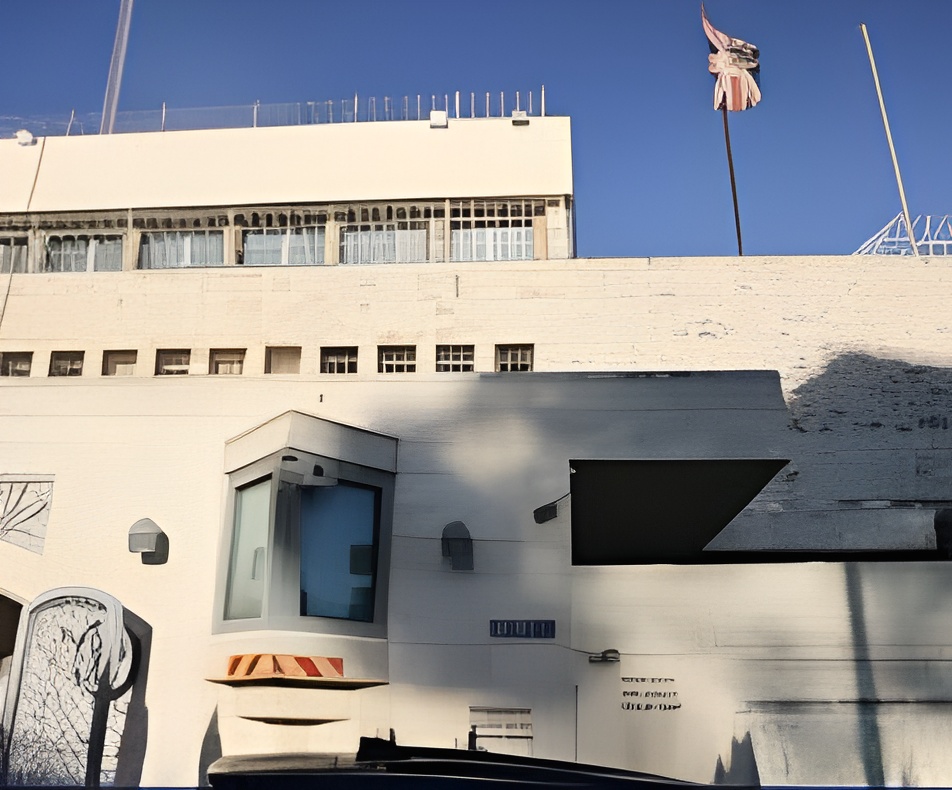
The response from Israel was swift and unambiguous. Israeli Foreign Minister Gideon Sa’ar announced Tuesday, with Prime Minister Benjamin Netanyahu’s approval, that Israel would close the British Consulate in Jerusalem and impose a series of countermeasures. Those measures include removing British representatives from the International Gaza Support Center in Kiryat Gat, ending British training programs for Palestinian Authority security forces in the West Bank, and denying entry to 12 British individuals, most of them sitting members of parliament, whom Israel accused of being “involved in antisemitic and anti-Israel activity.” None of the 12 barred individuals are currently members of the UK government, though the list’s inclusion of multiple sitting MPs has itself become a point of controversy in Westminster, with some lawmakers describing the entry ban as a disproportionate and politically motivated response to a policy disagreement.
The Trump administration weighed in forcefully as well, underscoring just how significant a rift the UK’s decision has opened within the broader Western alliance over Israel. US Ambassador to Israel Mike Huckabee, who had previously accused the British government of harboring “Jew hate” over Miliband’s earlier remarks on Gaza’s humanitarian situation, went further this week, describing the settlement sanctions as “irrational” and a form of “discrimination” against Israel and the Jewish people. Asked by the BBC whether the US would respond if the UK proceeded with the sanctions, Huckabee said, “I think without a doubt there will be,” warning of economic repercussions for Britain, though he did not specify precisely what form any American retaliation might take. Secretary of State Marco Rubio separately confirmed Washington’s position, saying plainly, “obviously we’re not going to do what the UK did,” and adding that the move carries implications for the administration’s efforts to advance its 20-point plan for Gaza and the broader “Board of Peace” initiative the US remains committed to pursuing alongside regional partners.
Also Read: How Microsoft Quietly Built a Second Company Inside Itself
The dispute has also touched on more sensitive territory involving antisemitism accusations, given that Miliband himself is Jewish, the son of refugees who fled Nazi-occupied Europe. Responding to criticism from Huckabee and others, Miliband said plainly, “Holding British Jews responsible for the actions of the Israeli government is anti-Semitism, plain and simple.” Britain’s Chief Rabbi, Sir Ephraim Mirvis, had separately met with Miliband in late August and urged him to reconsider the sanctions, reflecting genuine divisions within Britain’s own Jewish community over the policy, with some viewing it as a legitimate stand against settlement expansion and others viewing it as disproportionately targeting Israel relative to other geopolitical disputes. In his Commons statement, Miliband also sought to draw a clear distinction between the sanctions and Britain’s broader relationship with Israel, reaffirming Israel’s right to defend itself against terrorism, calling on Hamas to disarm and dismantle its infrastructure under the US-led Gaza plan, announcing separate sanctions against Hezbollah financing institution Al-Qard Al-Hassan, and confirming Britain would reimpose major economic sanctions on Iran while continuing security cooperation with Israel against shared regional threats, a framing intended to signal that the settlement sanctions were narrowly targeted rather than a wholesale rupture with Israel as a country.
The UK’s move was not taken in isolation. Britain acted as part of a coordinated push alongside France, Canada and other European partners, who together described what they called “unprecedented levels of settler violence and settlement expansion” in the West Bank, including Israel’s contested E1 project, which the coalition argues threatens the viability of any future Palestinian state. The E1 development, long a flashpoint in Israeli-Palestinian negotiations, would effectively bisect the West Bank geographically if fully built out, a consequence critics say would make a contiguous Palestinian state practically unworkable regardless of any future political settlement. The timing of the joint announcement carries additional significance, arriving just weeks before world leaders are set to gather for the UN General Assembly in New York, where the future of the two-state solution is expected to feature prominently on the agenda, and less than two months ahead of Israel’s own upcoming elections scheduled for late October.
The sanctions follow weeks of escalating rhetoric between London and Jerusalem that had been building steadily throughout the summer. Miliband had signaled the coming measures last week, telling lawmakers that Israel’s issuance of tenders for the E1 settlement represented “the crossing of a red line” and pledging at the time to set out “a comprehensive set of measures in the coming weeks.” Under Netanyahu’s ultranationalist coalition government, settlement construction across the West Bank has surged noticeably in recent years, a trend the international community has overwhelmingly characterized as illegal under international law and a significant obstacle to any future peace process, even as successive Israeli governments have maintained that Jewish communities in the West Bank have a legitimate historical and security-based claim to the territory.
Before the formal announcement, UK Work and Pensions Secretary Pat McFadden sought to clarify the scope of the measures, stating that the policy “isn’t intended to be a boycott of all Israeli goods,” an apparent effort to preempt criticism that the sanctions represented a broader economic move against Israel rather than a targeted response to settlement activity specifically. With Israel’s consulate closure now in effect and the Trump administration signaling potential economic retaliation against Britain, the diplomatic rift between two of the West’s closest historical allies shows no immediate sign of narrowing, and both governments appear to be preparing for a prolonged period of strained relations as the underlying disagreement over the future of the West Bank remains fundamentally unresolved.


Tesla’s long-delayed Roadster performed a mid-air “kick flip” using compressed-air thrusters during a livestreamed unveiling at a SpaceX facility in Texas on Thursday.

The World Food Programme says escalating fighting in Yemen has cut life-saving assistance to about 800,000 people, most of them in Taiz, the country’s third-largest city.

The GBU-43/B Massive Ordnance Air Blast bomb, the largest non-nuclear weapon in the US arsenal, is among the options reportedly drawn up for possible renewed strikes on Iran, according to CNN. The report has not been independently verified.
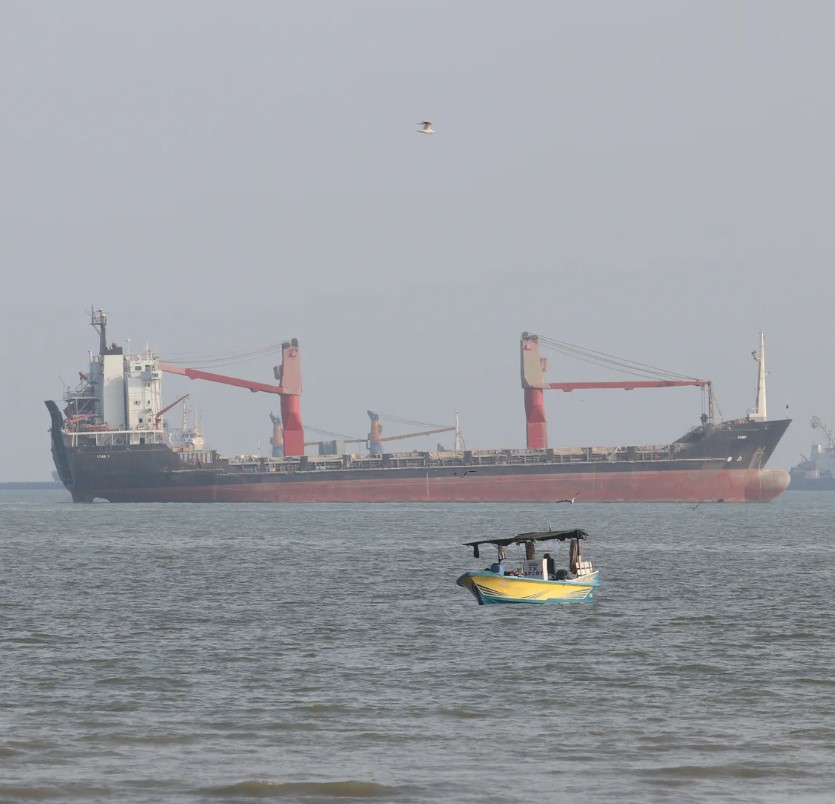
Iran’s Revolutionary Guard says a container ship carrying more than 2,500 containers sank near the Strait of Hormuz after hitting a naval mine, while shipping officials report two Singapore-registered vessels were hit by unknown projectiles.