Nvidia is reportedly in talks to guarantee $250 billion in financing for OpenAI’s planned 10-gigawatt data center campus in southern Ohio.


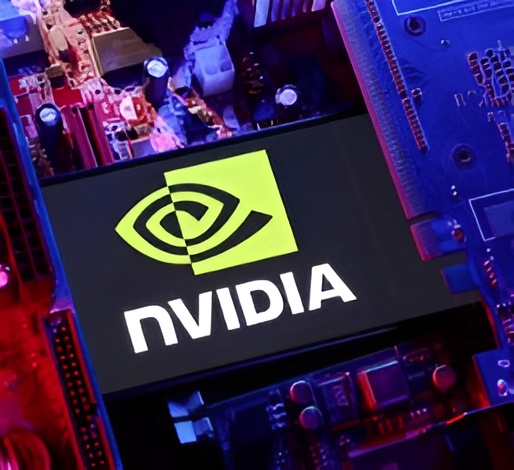
Nvidia is reportedly in talks to guarantee $250 billion in financing for OpenAI’s planned 10-gigawatt data center campus in southern Ohio.
Nvidia is in talks to provide a financial backstop of roughly $250 billion to help OpenAI lease and finance a massive AI data center campus in southern Ohio, according to a Wall Street Journal report citing people familiar with the matter, in a deal that would rank among the largest infrastructure financing arrangements in the industry’s short but explosive history.
The proposed guarantee would help OpenAI secure favorable financing terms for a planned 10-gigawatt AI campus despite the company lacking an investment-grade credit rating of its own, a detail that underscores just how central Nvidia has become to underwriting the entire AI buildout rather than simply supplying the chips that power it. The $250 billion guarantee would cover the data center lease and construction debt specifically, and would not include the cost of the Nvidia chips installed inside the facility. Separately, Nvidia is discussing financing OpenAI’s purchase of those chips in a deal that could be worth as much as $350 billion on its own, according to the report. Combined, the total project is expected to cost more than $500 billion once fully built out, a figure that would make it one of the single largest private infrastructure projects ever undertaken by any industry.
Also Read: Army Veteran Arrested After Setting Fire Outside NYC’s 26 Federal Plaza
The site itself is being developed by SB Energy, the energy subsidiary of Japan’s SoftBank Group, on the grounds of a decommissioned uranium enrichment plant in Piketon, Ohio, a location chosen in part for its existing grid infrastructure and available land. The first phase of the project, expected to deliver around 800 megawatts of capacity, is targeted for completion by 2028, with the full 10-gigawatt build-out, enough electricity to power several million homes, planned over the following years as demand for AI compute continues to accelerate. Microsoft, Google and Anthropic have also reportedly expressed interest in the site, though OpenAI is currently described as being in advanced talks and among the strongest contenders to secure the lease, having reportedly been in negotiations for several weeks already.
For OpenAI, landing the deal would mark a significant strategic shift. The company has so far relied heavily on renting computing infrastructure from partners including Microsoft, Amazon and Oracle, a dependency that has occasionally created friction as OpenAI’s compute needs have scaled far faster than any single provider could comfortably supply. A deal of this scale would represent a first step toward OpenAI controlling its own dedicated infrastructure rather than leasing capacity from other cloud providers, a move that would reduce its dependence on competitors who are themselves racing to build out their own AI capabilities and, in some cases, developing models that directly compete with OpenAI’s own products. For Nvidia, meanwhile, the arrangement guarantees years of future chip demand from one of its largest customers, reinforcing the increasingly circular financial relationships that have come to define the AI industry, where chipmakers, cloud providers and AI labs are simultaneously customers, investors and creditors to one another in ways that would have seemed unusual just a few years ago.
Also Read: Amazon Just Laid Off the People Building Its AI. That Should Terrify Every White-Collar Worker
Power, rather than capital, may prove to be the harder constraint on the project. The Journal reported that electricity for the site is expected to come from a natural gas power facility backed by a $33 billion Japanese investment tied to a recent US-Japan trade agreement, with the project’s power allocation effectively controlled by the US government. US Commerce Secretary Howard Lutnick has reportedly been directly involved in deciding which companies gain access to the site’s power capacity, with Anthropic, Microsoft and Google all said to have spoken with him in recent weeks about the project. That level of direct government involvement in allocating power to specific AI companies is itself a notable shift, reflecting how electricity access, not just chip supply, has become one of the defining bottlenecks of the AI buildout, arguably a bigger constraint at this point than either capital availability or chip manufacturing capacity.
Reuters said it could not immediately verify the Journal’s report, and Nvidia, OpenAI and the Commerce Department did not respond to requests for comment outside of regular business hours. Negotiations remain in early stages, according to people familiar with the discussions, and terms could still change substantially or the deal could collapse entirely before anything is finalized, a caveat that applies to most reporting on deals of this size and complexity at such an early stage.
The scale of the talks nonetheless illustrates how dramatically the AI industry’s financing model has shifted over the past year. Combined AI infrastructure spending across the industry is on track to top $700 billion in 2026 alone, with major players increasingly turning to debt markets, financing guarantees and circular investment arrangements to fund projects too large for even the wealthiest tech companies to pay for outright. This isn’t the first such arrangement between the two companies either; Nvidia has already committed to investing tens of billions directly into OpenAI as part of a separate data center partnership, and other similar mega-deals have proliferated across the sector this year, including Oracle’s roughly $40 billion commitment to buy Nvidia chips for OpenAI’s Stargate campus in Texas.
Investor Michael Burry, known for his early bet against the 2008 housing market, was among those who reacted skeptically to news of the talks, remarking that the industry appeared to be going “around and around” as chipmakers increasingly finance the very demand for their own products, an observation that has resonated with market watchers concerned about how much of the AI industry’s growth is being underwritten by a small handful of interconnected companies. Meta CEO Mark Zuckerberg, addressing the broader spending spree in a recent podcast appearance, offered a different read on the risk calculus at play, arguing that the bigger danger for major tech companies is moving too cautiously rather than too aggressively into AI infrastructure, even acknowledging that misspending hundreds of billions of dollars would be unfortunate but ultimately less damaging than falling behind. Whether that logic proves sound or overextended, the Nvidia-OpenAI talks suggest the industry’s next major battleground won’t just be about who builds the best models, but who can finance, power and control the physical infrastructure those models ultimately run on.

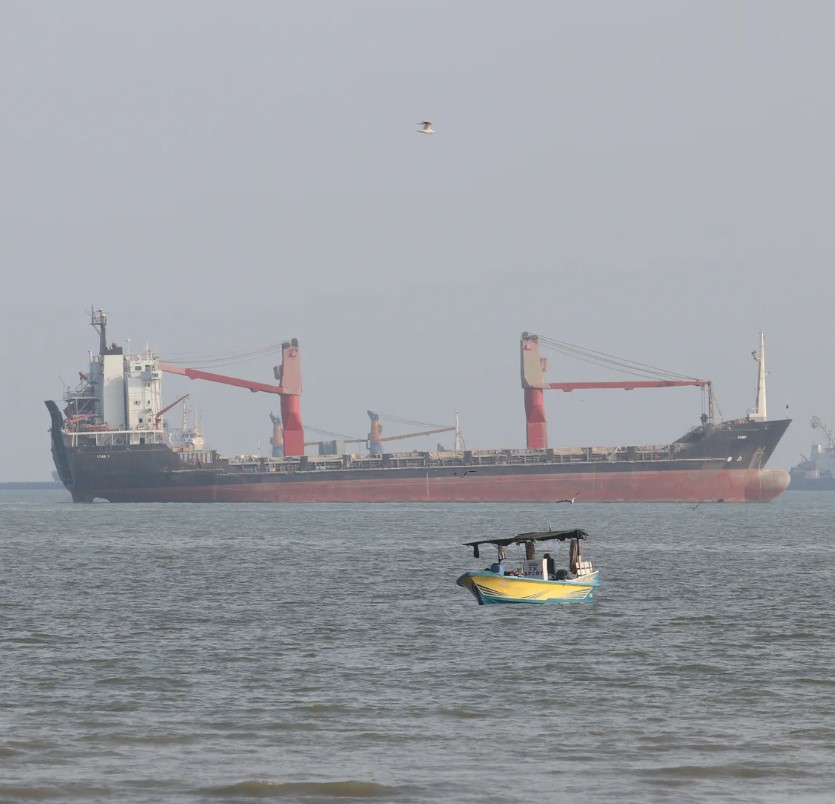
Iran’s Revolutionary Guard says a container ship carrying more than 2,500 containers sank near the Strait of Hormuz after hitting a naval mine, while shipping officials report two Singapore-registered vessels were hit by unknown projectiles.
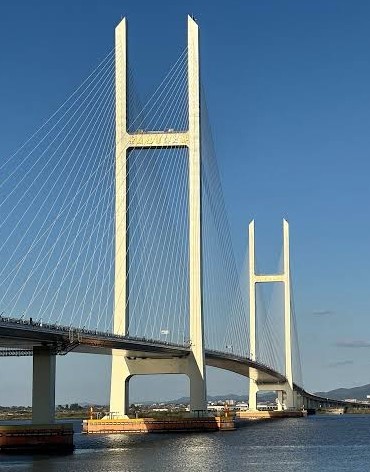
Trucks decked with flags crossed the 3-km New Yalu River Bridge on Thursday as China and North Korea officially opened their most significant land border crossing, 12 years after the bridge was completed.

Hong Kong has added temperature checks and travel declarations for flights from Russia after a lab worker’s death in Siberia.

About 20 percent of the world’s oil passes through the Strait of Hormuz, where Iran and the US are trading threats.