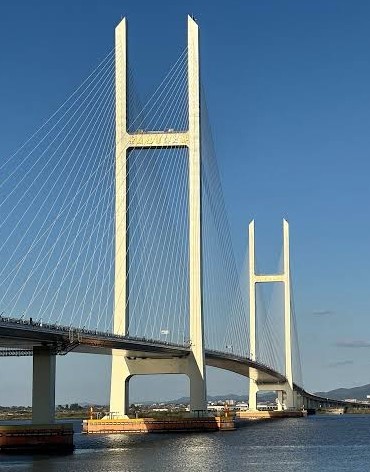
Trucks decked with flags crossed the 3-km New Yalu River Bridge on Thursday as China and North Korea officially opened their most significant land border crossing, 12 years after the bridge was completed.

Trucks decked with flags crossed the 3-km New Yalu River Bridge on Thursday as China and North Korea officially opened their most significant land border crossing, 12 years after the bridge was completed.
China and North Korea on Thursday officially opened their most significant land border crossing, the long-delayed New Yalu River Bridge, in a move aimed at reviving trade and commerce after years of strained relations and pandemic-era disruption.
The cable-stayed bridge links the Chinese city of Dandong, in Liaoning province, with Sinuiju in North Korea’s North Pyongan province. Trucks festooned with the flags of both countries drove across the structure, whose towering pylons were also decked in flags, while hundreds of people gathered on the Chinese side to watch. Chinese state news agency Xinhua reported that the two countries held a joint opening ceremony. As of Reuters’ report, North Korea’s state media had not yet covered the event.
The bridge is 3,026 metres long with four lanes for two-way traffic and a 28.5-metre-wide deck, according to Xinhua. It was designed to allow vessels of up to 3,000 tonnes to pass beneath. Construction was completed in 2014, after China invested about 2.2 billion yuan, but the crossing sat unused for 12 years. The facilities needed on the North Korean side were never finished in the early years, and relations between Beijing and Pyongyang later cooled, before the pandemic closed the border to most trade.
Until now, most goods have crossed about 10 kilometres upstream on the 83-year-old Sino-Korean Friendship Bridge, which carries a rail line and a single-lane road. The new bridge is intended as an alternative to that older crossing. Chinese officials described it as a “new landmark” of the traditional friendship between the two countries, according to Xinhua. Foreign ministry spokesperson Mao Ning had said a day earlier that the bridge is an important facility for connectivity between the neighbours.
Also Read: Hong Kong Steps Up Health Checks on Arrivals From Russia After Siberian Lab Worker’s Death
For Dandong, the opening is a welcome change. The city’s economy thrived in the early 2000s as the main gateway to North Korea’s isolated economy, and the delay was a setback for local businesses. Residents welcomed the opening, Reuters reported, with trucks lining up in the days before the ceremony as customs areas on the Chinese side saw increasing activity.
Analysts urged caution about what the bridge will change in practice. A trade expert quoted by Reuters said it does not signal an immediate return to pre-sanctions levels of trade, though it will help move heavy equipment, raw materials and energy products that North Korea needs for its development projects. Other analysts told South Korean broadcaster SBS that the effect is likely to be concentrated in certain cargo sectors for now. Some also raised concerns that the new route could contribute to weakening the enforcement of UN Security Council sanctions on North Korea, which restrict many categories of trade, a view that reflects the broader debate over how strictly those measures are applied.
The opening comes just over a month after North Korea and Russia opened their first road bridge, which Pyongyang praised as a sign of closer ties. Taken together, the two crossings point to a growing effort by North Korea to expand physical links with its two largest neighbours at a time when relations with the United States and South Korea remain tense.
The new bridge’s long wait also shows how politics can shape infrastructure. Completed in 2014 and left idle for more than a decade, it has become a symbol of how quickly the relationship between Beijing and Pyongyang can shift. Its opening suggests a new phase in that relationship, though how much trade will actually cross it, and under what rules, remains to be seen.
For now, the focus is on the first weeks of operation: the volume of trucks, the types of goods allowed across, and whether the bridge brings back the commercial buzz that once defined Dandong. How far it goes will depend on decisions made in Beijing and Pyongyang, and on how the international community responds.

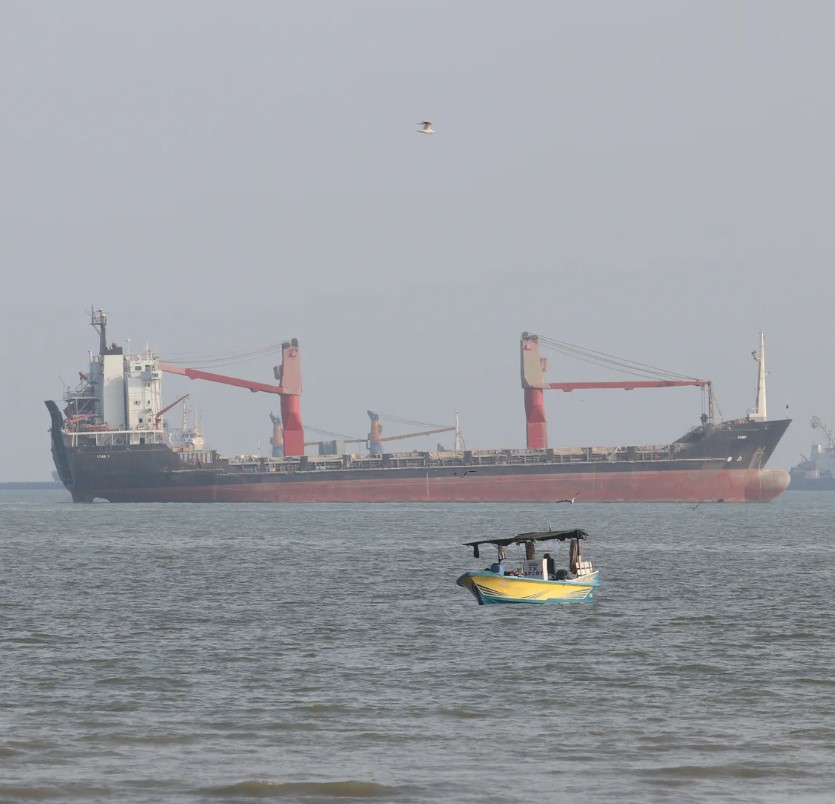
Iran’s Revolutionary Guard says a container ship carrying more than 2,500 containers sank near the Strait of Hormuz after hitting a naval mine, while shipping officials report two Singapore-registered vessels were hit by unknown projectiles.
Trucks decked with flags crossed the 3-km New Yalu River Bridge on Thursday as China and North Korea officially opened their most significant land border crossing, 12 years after the bridge was completed.

Hong Kong has added temperature checks and travel declarations for flights from Russia after a lab worker’s death in Siberia.
About 20 percent of the world’s oil passes through the Strait of Hormuz, where Iran and the US are trading threats.