Forensic and police officers examine the burnt Lyon tourist office on October 18, a day after nationwide protests over the cost of living and school conditions turned violent in several French cities.


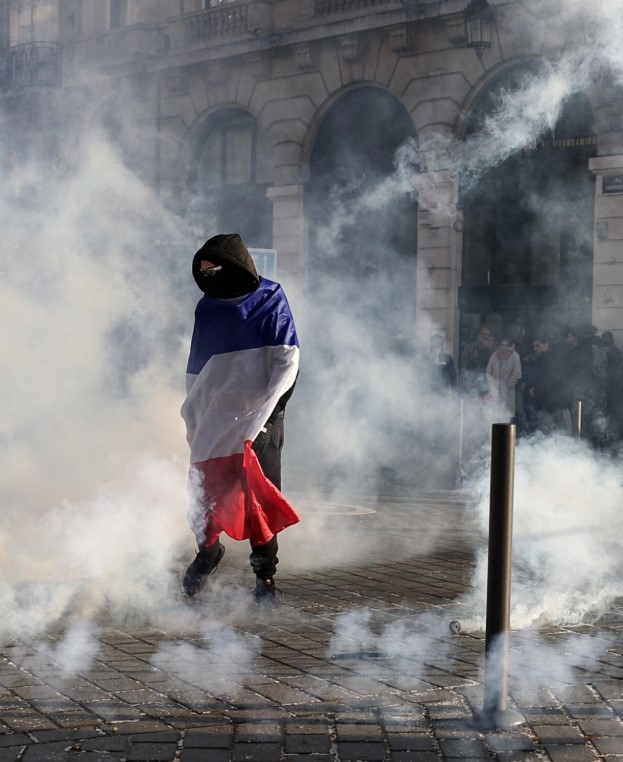
Forensic and police officers examine the burnt Lyon tourist office on October 18, a day after nationwide protests over the cost of living and school conditions turned violent in several French cities.
France announced curfews in several northern communes and banned gatherings in Marseille on Monday after a weekend of nationwide protests over living costs and school conditions turned violent in several cities. President Emmanuel Macron rejected an offer to resign from Interior Minister Laurent Nuñez, who admitted that police had “lost control.”
Hundreds of thousands of people marched in more than 140 French cities on Saturday, according to reports, with some estimates putting the figure above 500,000. Most marches were peaceful, but some escalated into riots and looting. The Interior Ministry said more than 2,300 people were arrested on Saturday, with other reports putting the number near 2,400, and that almost 1,000 police officers and gendarmes were injured. The scale of both figures made the weekend one of the most serious episodes of public disorder in France in recent years.
Property was damaged in several cities. Rioters targeted city halls in Lille, Marseille and Limoges, and the tourist office in Lyon was burnt. Stores on Paris’s Champs-Élysées had their windows smashed, and looting was reported in other cities. Injuries were also reported among protesters, Al Jazeera said. French Prime Minister Sébastien Lecornu said it was a “miracle” that no one was killed during the violence on Saturday. Police made further arrests in Paris on Sunday night, and Nuñez said about 350 people were detained in the capital on Sunday and overnight, as tensions continued into a second day.
The protests grew out of weeks of demonstrations by high school students against overcrowded classrooms, teacher shortages and underinvestment in education, described by Al Jazeera as the biggest youth-led protest movement in France in recent memory. Those demonstrations were largely peaceful, with students marching and blocking school entrances. They were later joined by people angry about the cost of living, rising fuel prices and the state of public services, as the economy weakens and national debt grows. Demonstrators have asked for lower living costs, better school conditions and more funding for public services, and have framed the two causes as part of the same problem: a state that, in their view, is not spending enough on the everyday needs of ordinary people.
In a televised address on Sunday, Macron voiced the public’s “anger” and “shame” over the rioting and condemned those who “sought to bring down the Republic,” while acknowledging that the demonstrators’ grievances were legitimate. He said the cost-of-living and fuel pressures stem from a conflict in the Persian Gulf in which France is not taking part but whose consequences it is suffering. He promised to hold rioters accountable. The speech tried to separate the peaceful majority of protesters from those responsible for the violence, a distinction that officials have returned to repeatedly since Saturday.
On Monday, Nuñez acknowledged that authorities had failed to foresee how large the riots would become and offered to step down. The Élysée said Macron declined the offer and told him instead to put an end to the barricades and looting and to be transparent about what the president called “intelligence and foresight failings.” Macron also asked Nuñez to examine how to make France’s streets safer and to bring those responsible for the violence to justice. Mayors of the country’s largest cities have demanded answers from the government about what they called a lack of preparation by security forces, raising the question of whether the police had enough information and resources to deal with protests of this size.
Authorities moved quickly to contain further unrest. In Lille in the north and three nearby communes, curfews were announced for Monday and Tuesday nights. In Marseille, officials banned all gatherings and protests from noon to 8 p.m. The Interior Ministry has not said whether more such measures will follow in other cities. Curfews and gathering bans are used in France only in exceptional circumstances, and civil liberties groups have in the past raised concerns about their use during periods of protest.
The scale of the arrests drew comparisons with earlier episodes. The tally approached the nearly 2,000 arrests recorded in a single day during the yellow vest protests in December 2018, which began over fuel prices and became a broader movement against Macron. Those protests forced the government into concessions, and the current unrest has revived questions about whether France is facing a similar crisis. Mass protests in France are often marred by violence on the fringes of otherwise peaceful marches, but the combination of a youth-led movement and anger over living costs is unusual. Similar cost-of-living protests have been reported in other European countries, including Italy, where looting was also reported in Milan.
The economic backdrop helps explain the anger. France is dealing with a weak economy and surging national debt, which has limited the government’s room to increase spending on schools and public services. Fuel prices have risen since the war involving Iran disrupted oil flows through the Gulf, and the effect has been felt at petrol stations and in household budgets across Europe. Protesters say the burden has fallen on ordinary families, while the government says it has limited tools to counter a price shock caused by events outside France’s control.
The timing is also politically sensitive. The unrest comes about six months before France’s next presidential election, and opposition parties and local officials are likely to use it to press the government on its handling of public order, education and living costs. The government faces a difficult balance: too soft a response risks looking weak on security, while too harsh a response risks hardening the movement and turning peaceful supporters against it. Macron, who cannot run again, has an interest in avoiding a spiral that could damage his party’s candidates in the vote.
For now, the immediate focus is on restoring order, prosecuting those who committed violence and responding to the demands raised on the streets. Students and unions have not said whether they will call further protests, but the combination of a youth-led movement and wider anger over the cost of living means the government will face pressure on both fronts in the weeks ahead. Whether Saturday’s violence marks the peak of the movement or the start of a longer confrontation will depend on how Paris responds to the grievances that brought hundreds of thousands of people into the streets in the first place.

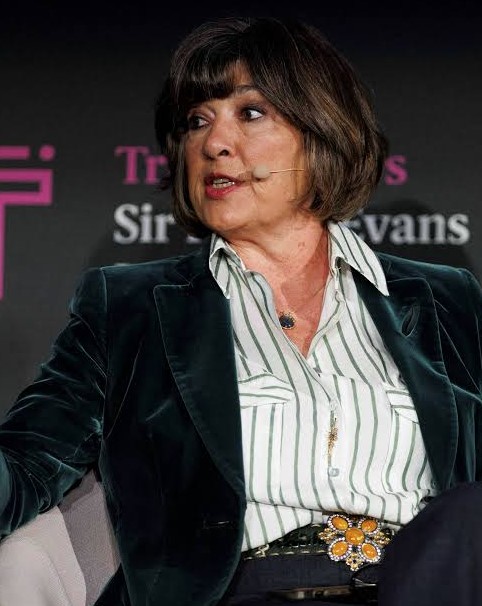
Christiane Amanpour, 68, announced on Monday that she will leave CNN at the end of June 2027 after 43 years, scaling back her show to once a week from early 2027.
Forensic and police officers examine the burnt Lyon tourist office on October 18, a day after nationwide protests over the cost of living and school conditions turned violent in several French cities.

Tesla’s long-delayed Roadster performed a mid-air “kick flip” using compressed-air thrusters during a livestreamed unveiling at a SpaceX facility in Texas on Thursday.

The World Food Programme says escalating fighting in Yemen has cut life-saving assistance to about 800,000 people, most of them in Taiz, the country’s third-largest city.