Tesla’s long-delayed Roadster performed a mid-air “kick flip” using compressed-air thrusters during a livestreamed unveiling at a SpaceX facility in Texas on Thursday.

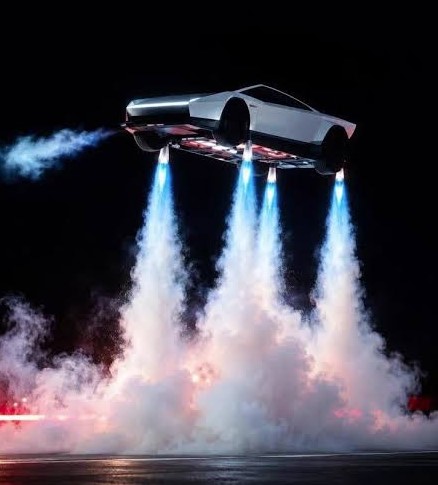
Tesla’s long-delayed Roadster performed a mid-air “kick flip” using compressed-air thrusters during a livestreamed unveiling at a SpaceX facility in Texas on Thursday.
Tesla unveiled its long-delayed next-generation Roadster on Thursday in a livestreamed event at a SpaceX test site in McGregor, Texas, where the electric sports car used built-in thrusters to launch off a ramp, flip in the air and land on its wheels. CEO Elon Musk said production would begin in 2028 but did not announce a price.
“Flying cars are real,” Musk told the audience. The white two-seater was developed in collaboration with SpaceX, Musk’s rocket company, and uses high-pressure air thrusters and a suction system that Tesla describes as “multi-mode.” The car arrived nearly a decade after Tesla first showed a prototype of the second-generation Roadster, a period marked by repeated missed deadlines.
In the demo, the Roadster drove onto a ramp that curled over so the car was upside down, appearing to cling to the surface using suction. It then left the end of the ramp, rotated 180 degrees in mid-air and landed on its wheels. The company called the manoeuvre a “kick flip” and performed it over other Tesla vehicles. Musk said the car relies on ultra-high-pressure air tanks to propel it into the air.
Musk noted that the demonstration was technically autonomous, “to make sure we don’t kill anyone,” and said that in the long term the Roadster would be the only manually driven car Tesla makes. He added that the project’s “success is not guaranteed” but that “it will probably work,” according to CBS News. Tesla also described the car’s thruster system as generating four to five times the force that tyres can provide, which the company says is what enables both the extreme acceleration and the flying manoeuvres.
The performance claims were bold. Musk said certain versions can accelerate from zero to 60 mph in less than one second and reach a top speed of more than 230 mph, and Tesla demonstrated a Roadster reaching 60 mph in under a second during the event. The car has a range of more than 480 kilometres, or about 300 miles, on a single charge. Most of these figures come from Tesla’s own presentation, and independent testing will not be possible until the car is built.
That range is less than half of what Musk promised in 2017, when the Roadster was first shown. The prototype was unveiled in November of that year as a surprise at the end of the company’s Semi truck event, with chief designer Franz von Holzhausen driving it out of the back of the truck. At the time, Tesla said the car would have four seats, a removable roof, a 0-60 mph time of 1.9 seconds, a top speed of 250 mph and a range of about 620 miles, with a base price of $200,000 and deliveries starting in 2020. The new Roadster is a two-seater.
Musk later added the idea of a SpaceX option package with around ten small rocket thrusters, and suggested the car might “even” be able to fly. Over the years, he repeatedly hinted that the unveiling would be unforgettable, including in a podcast interview in which he said viewers would have to wait for the demo to see whether Tesla was making an electric flying car. Thursday’s event was the first time the company showed a finished version of that idea.
Also Read: McLaren’s New Logo Isn’t New. It’s a Lesson From Jaguar’s Mistakes
Many questions remain. Tesla and Musk did not give a production price at the event, and very little mechanical detail was revealed, according to Edmunds. Tesla’s website lists a $5,000 deposit for would-be buyers to reserve a non-flying version of the Roadster, and it notes that the planned flying model is not approved for public road use. The flying configuration is therefore best understood as an option whose legality and safety would need to be worked out, rather than a feature that customers can expect to use on ordinary roads.
The safety question is a significant one. A car that can leave the ground even for a few seconds raises issues that conventional vehicles do not, from the risks to passengers and bystanders to the rules for where such a vehicle could operate. Tesla has not said how it would test or certify the flying feature, or which regulators it would approach. The company’s decision to run the demonstration autonomously and at a controlled SpaceX facility suggests that the technology is still at an early stage.
Reaction to the unveiling was mixed. Fans and some automotive reporters praised the spectacle and described the launch as a showpiece after years of silence about the project. Others pointed to the gap between what was promised in 2017 and what was delivered, and questioned how practical a flying car would be. Commentators also noted that thrusters using compressed air can keep a vehicle off the ground only for short bursts, which suggests the flying capability is intended for stunts and demonstrations rather than sustained flight.
The event also fits a wider pattern in Musk’s companies, where bold demonstrations often come well before final products. Tesla has used live events to reveal vehicles including the Cybertruck and the Semi, and the Roadster was long positioned as a halo car meant to show what the company could build. The partnership with SpaceX, which supplied the thruster technology, strengthens that image, though it also raises the question of how much of the engineering can be used in a car that must meet safety rules in many countries.
For now, Tesla has set a date and opened reservations, but little else. A 2028 production target means buyers will wait another two years, and the price, the final specifications and the regulatory status of the flying option remain unknown. Whether the Roadster becomes a mass-produced sports car, a rare collectible or a one-off demonstration will depend on answers Tesla has not yet given.

Tesla’s long-delayed Roadster performed a mid-air “kick flip” using compressed-air thrusters during a livestreamed unveiling at a SpaceX facility in Texas on Thursday.
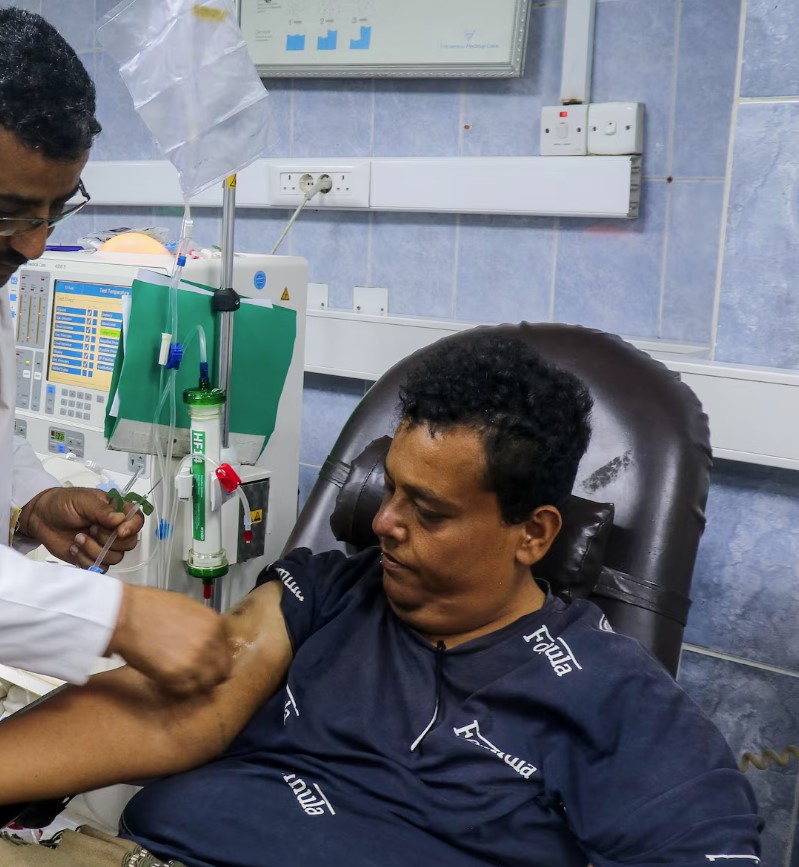
The World Food Programme says escalating fighting in Yemen has cut life-saving assistance to about 800,000 people, most of them in Taiz, the country’s third-largest city.
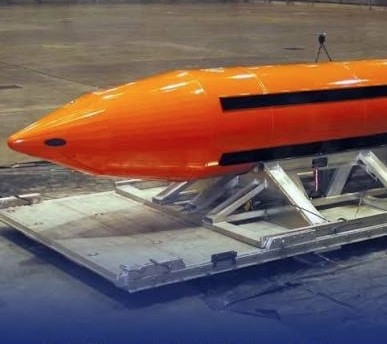
The GBU-43/B Massive Ordnance Air Blast bomb, the largest non-nuclear weapon in the US arsenal, is among the options reportedly drawn up for possible renewed strikes on Iran, according to CNN. The report has not been independently verified.
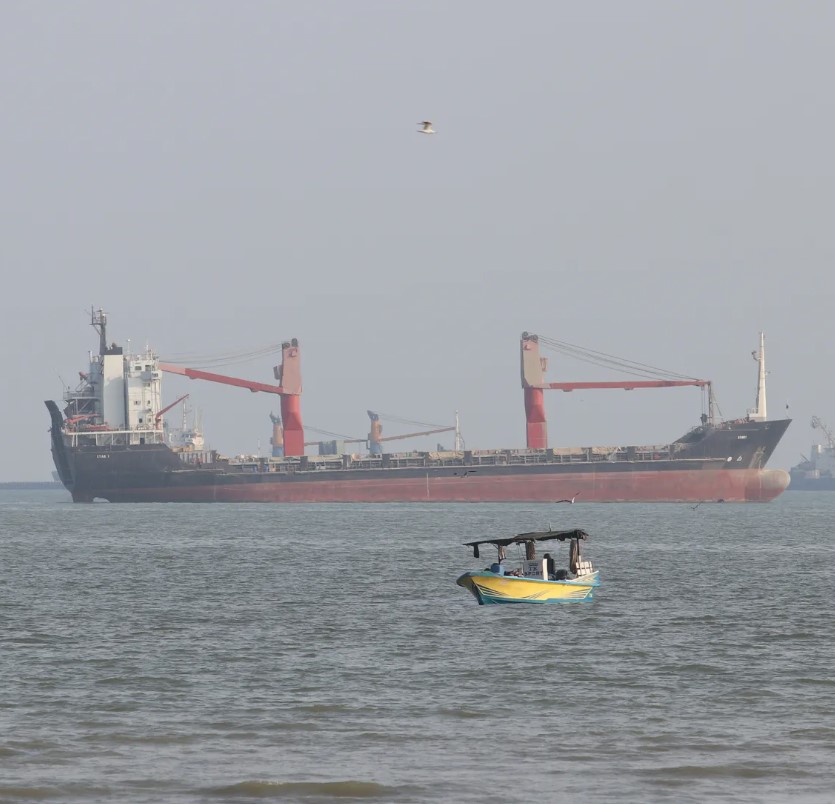
Iran’s Revolutionary Guard says a container ship carrying more than 2,500 containers sank near the Strait of Hormuz after hitting a naval mine, while shipping officials report two Singapore-registered vessels were hit by unknown projectiles.