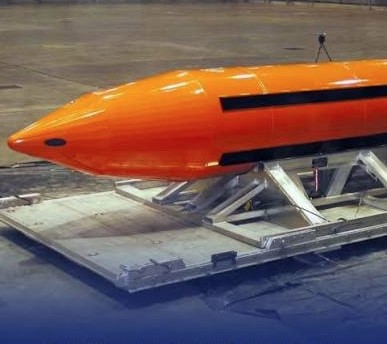
The GBU-43/B Massive Ordnance Air Blast bomb, the largest non-nuclear weapon in the US arsenal, is among the options reportedly drawn up for possible renewed strikes on Iran, according to CNN. The report has not been independently verified.
The GBU-43/B Massive Ordnance Air Blast bomb, the largest non-nuclear weapon in the US arsenal, is among the options reportedly drawn up for possible renewed strikes on Iran, according to CNN. The report has not been independently verified.
The US military has drawn up options for renewed strikes on Iran that include the possible use of the GBU-43/B Massive Ordnance Air Blast bomb, known as the “mother of all bombs,” CNN reported on Thursday, citing multiple US officials. Reuters and CNBC said they could not independently verify the report, and no decision to resume combat operations has been announced.
According to CNN, the plans call for the weapon to be used against Iranian energy infrastructure and nuclear sites, including a site known as Pickaxe Mountain, if President Donald Trump orders renewed combat. A US official told CNBC that the Defense Department plans for “a wide range of operational scenarios” to carry out presidential and Secretary-level direction, a standard description of contingency planning that does not indicate a decision has been made. Contingency planning of this kind is routine in the military and does not by itself mean an operation will take place.
The GBU-43/B is a 21,600-pound (9,800 kg) GPS-guided airburst weapon, the largest non-nuclear bomb in the US arsenal. It was developed during the Iraq War and explodes above the ground, sending a blast in all directions to affect surface targets over a wide area, rather than burrowing into the earth. Its only known combat use was in Afghanistan in April 2017, in a strike on tunnels used by Islamic State fighters in Nangarhar province. Afghan officials reported that dozens of militants were killed, a figure later put at 96, and said the target was a fortified tunnel complex used to stage attacks on government forces. It has never been used by the US against targets inside Iran.
CNN’s report said that even the officials familiar with the planning question whether the bomb would achieve Washington’s strategic goals. Some doubt it could penetrate deeply enough to destroy underground nuclear facilities, which are usually built to withstand such attacks. Its large blast radius could also put civilians at risk if used near populated areas. One source described the weapon to CNN as better suited to clearing large areas than to destroying hardened targets, and the military itself described it in 2003, during final testing, as having a partly psychological purpose. Those reservations suggest the discussion is as much about signalling as about military effectiveness.
The report arrives against a political backdrop. Trump said on October 8 that he would not order a resumption of US strikes on Iran before the November 3 midterm elections. Several of his advisers told CNN, however, that it remains unclear whether he will change his mind before Election Day. Any use of the bomb would mark a significant escalation in a conflict that began on February 28, when the United States and Israel launched strikes on Iran, and is now in its eighth month. The war has been at a deadlock in recent weeks, with neither side achieving its stated aims.
Tehran has responded defiantly. Iranian officials vowed to continue fighting for their demands, and parliament speaker Mohammad Baqer Qalibaf said, according to state-affiliated media, that Iran’s aim is to avoid an open-ended war. Iran has also reinforced protection at key energy and nuclear facilities, according to reports. Separately, the Times of Israel reported that Trump joked he may have killed “too many” Iranian leaders, while Tehran accused the United States of fomenting unrest inside Iran. Iranian officials have not commented directly on the CNN report.
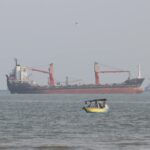
The war has also spread across the region in recent weeks. Attacks on shipping near the Strait of Hormuz have continued, with Iran’s Revolutionary Guard saying this week that a container ship sank after hitting a mine, while shipping officials reported that unknown projectiles hit two Singapore-registered vessels. ABC News cited about 20 reported attacks in the strait since the start of October. In Saudi Arabia, Houthi strikes on airports in Riyadh and Dammam have killed at least 12 people and halted flights, and the Saudi-led coalition has vowed a decisive response. Iran has denied directing the Houthis. Each of these developments has raised concern that a new phase of the war could draw in more countries.
Energy infrastructure is a particularly sensitive target. Iran sits on one of the world’s largest reserves of oil and gas, and its energy facilities are central to its economy and to global supply, which is why markets react to every escalation in the Gulf. Strikes on those sites could affect fuel prices far beyond the region, and would likely prompt retaliation against shipping and against US partners in the Gulf, a risk that planners are certain to weigh against any military benefit.
There are good reasons to treat the CNN report with caution. It relies on unnamed officials, no outlet has independently verified it, and military planners routinely prepare options they never use. A plan involving the largest non-nuclear weapon could also be intended to signal resolve to Tehran as much as to prepare for action. What the report does show is that Pentagon planning for renewed strikes is at an advanced stage, even as the White House says no decision has been made. It also shows how the approach of the midterms is shaping the timing of the debate, with political calculations running alongside military ones.
For now, the key questions are political rather than military. Will Trump hold to his pledge not to resume strikes before the midterms, and what would change his mind? Will Iran’s attacks on shipping or the Houthis’ strikes on Saudi Arabia push Washington toward action? And would a weapon with doubtful ability to reach buried targets, and a blast radius that raises civilian risk, actually advance the goals officials have described? The answers will shape whether the MOAB remains a line in a contingency plan or becomes part of the war.

The GBU-43/B Massive Ordnance Air Blast bomb, the largest non-nuclear weapon in the US arsenal, is among the options reportedly drawn up for possible renewed strikes on Iran, according to CNN. The report has not been independently verified.
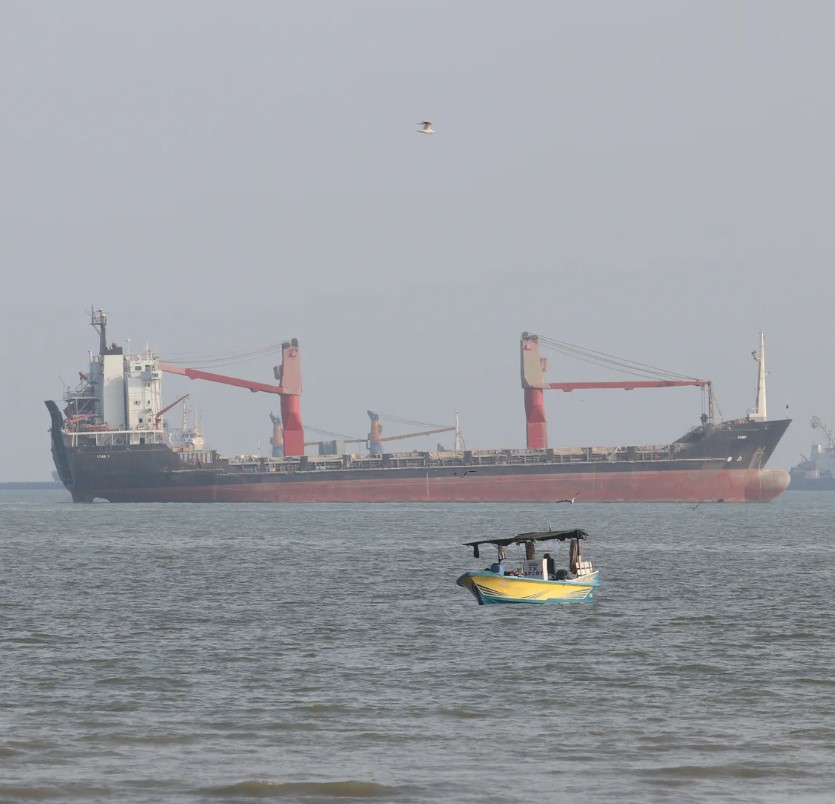
Iran’s Revolutionary Guard says a container ship carrying more than 2,500 containers sank near the Strait of Hormuz after hitting a naval mine, while shipping officials report two Singapore-registered vessels were hit by unknown projectiles.
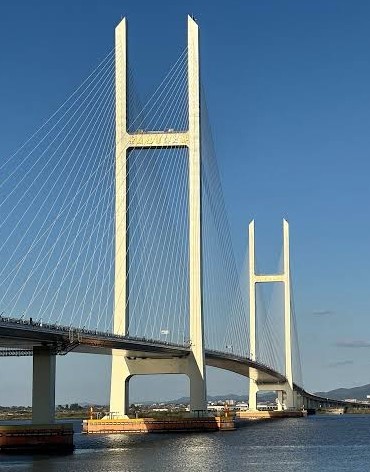
Trucks decked with flags crossed the 3-km New Yalu River Bridge on Thursday as China and North Korea officially opened their most significant land border crossing, 12 years after the bridge was completed.

Hong Kong has added temperature checks and travel declarations for flights from Russia after a lab worker’s death in Siberia.