Congolese medical workers in protective equipment prepare to bury Dr Marie-France Shogogo, who died at an Ebola treatment centre after contracting the virus, in Bunia, Ituri province, on October 31. (Gradel Muyisa Mumbere/Reuters)

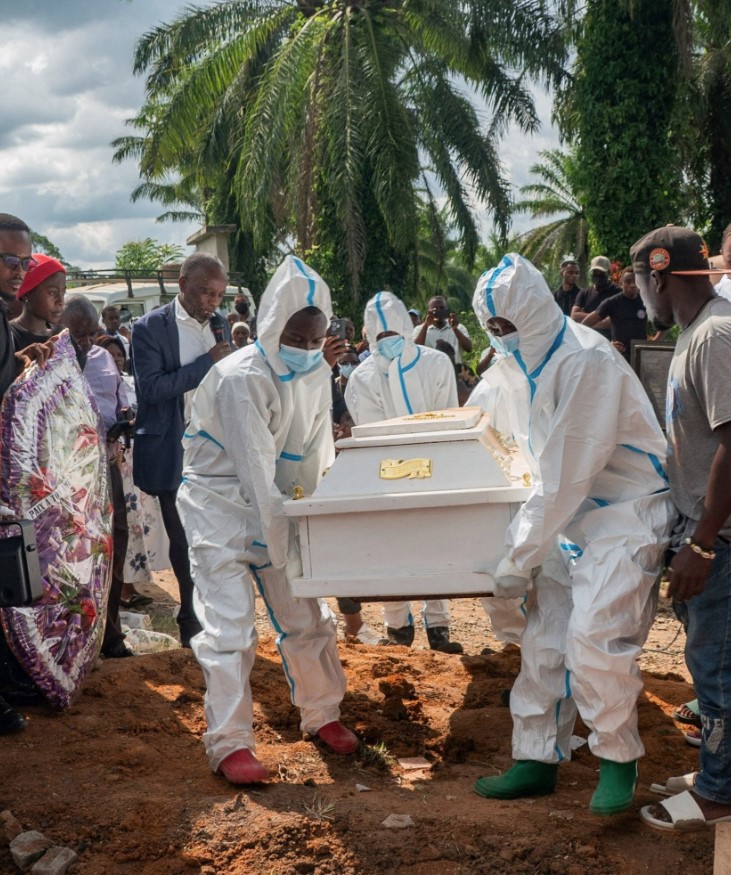
Congolese medical workers in protective equipment prepare to bury Dr Marie-France Shogogo, who died at an Ebola treatment centre after contracting the virus, in Bunia, Ituri province, on October 31. (Gradel Muyisa Mumbere/Reuters)
Africa’s latest Ebola outbreak has killed more than 5,300 people, the vast majority of them in the Democratic Republic of Congo, according to the continent’s top health agency, in an epidemic caused by a rare strain of the virus for which there is no approved vaccine or treatment.
Data shared with AFP by the Africa Centres for Disease Control and Prevention (Africa CDC) on Monday, November 2, put the death toll at 5,376. Of those, 5,372 were in the DRC, and two each were in Kenya and Uganda. A total of 10,444 cases have been confirmed, with a fatality rate of more than 50 percent. Euronews, citing the DRC’s latest data from October 31, described it as the fastest-growing Ebola epidemic on record.
The outbreak began in mid-May, when the DRC declared its 17th Ebola outbreak. Ebola is transmitted through contact with bodily fluids and causes hemorrhagic fever, and AFP noted that the disease has killed more than 15,000 people in Africa over the past 50 years. The response is centred in the east of the country, with recent Reuters images showing burials in Bunia, in Ituri province, and vaccination work in Beni, in North Kivu province.
The outbreak is caused by the Bundibugyo strain, which is far rarer than the Zaire strain behind most past epidemics. Ervebo, the vaccine that exists for Ebola, has proved effective against Zaire, but there is no approved vaccine or specific treatment for Bundibugyo. In recent weeks, clinical trials of Ervebo have begun in this outbreak to test whether it protects against the new strain, and a health worker was photographed administering a dose in Beni on October 16. HNGN reported that officials are testing vaccines in real time rather than after the fact. The WHO has said that early supportive care can improve survival.
The speed of the outbreak’s growth is among its most striking features. As of August 21, the DRC had reported 5,458 confirmed cases and 2,606 deaths, according to HNGN, so both totals have roughly doubled in about ten weeks. The WHO’s October 11 situation report counted 9,066 confirmed cases and 4,381 deaths, a crude case-fatality rate of 48.3 percent. Africa CDC’s latest figures of 10,444 cases and 5,376 deaths are almost 1,000 deaths higher than the WHO count from three weeks earlier, though the figures come from different agencies and dates.
Also Read: Travis Kelce Named Among 64 Victims of $35 Million Ponzi Scheme as Investment Adviser Gets 11 Years
The U.S. Centers for Disease Control and Prevention calls it the second-largest Ebola outbreak on record, behind the 2014 to 2016 West Africa epidemic, which caused about 28,600 cases and more than 11,000 deaths. The two descriptions are not contradictory: West Africa remains larger in total cases and deaths, while “fastest-growing” refers to the pace of the current outbreak.
A CDC analysis published in August found that more than half of confirmed deaths were occurring outside Ebola treatment units, a sign that many patients are dying at home or in the community, where the virus can spread to relatives and burial workers. Health workers have also been among the dead. Reuters photographed the burial on October 31 of Dr Marie-France Shogogo, who died at an Ebola treatment centre after contracting the virus, at a cemetery in Bunia.
The virus has also crossed borders. Uganda recorded 20 cases, almost all involving people who had travelled from the DRC, before being declared Ebola-free by the WHO in August. In October, Kenya recorded its first Ebola case, and it has since confirmed nine infections, including a close family member of the first patient who was already in quarantine. A single case involving a health worker returning from the DRC was reported in France in July.
On October 20, Nigeria confirmed an imported case in Abuja, the first in West Africa in the current outbreak. The patient is a woman who travelled to the capital from Uganda on October 3, with symptoms starting on October 7, according to the WHO. Nigeria’s public health agency said three levels of molecular testing confirmed the Bundibugyo strain, and authorities identified 44 contacts, most of them health workers. Africa CDC’s latest figures record no deaths in Nigeria. The route of infection is disputed. Nigeria’s health ministry said that travel through Uganda does not establish that the infection occurred there and that the location of exposure remains under investigation, while a Ugandan government spokesman rejected the suggestion that Uganda was the source.
Also Read: Six Presumed Dead After Medical Transport Jet Goes Missing Off Nantucket on Bermuda-to-Boston Flight
Africa CDC Director General Jean Kaseya has described the outbreak as the most geographically widespread Ebola outbreak in history, affecting multiple countries across three regions of Africa, and urged the international community to act now. The WHO’s regional director for Africa, Mohamed Janabi, said that Nigeria’s case meant the continent faced a more complex outbreak landscape. Nigeria’s health minister pointed to the country’s experience in 2014, when it contained an Ebola outbreak that caused 19 infections and seven deaths.
What remains unclear is how quickly the outbreak can be brought under control. The reports reviewed do not give recovery figures, the number of contacts being monitored in the DRC, funding for the response, or any results from the vaccine trials, which only began in recent weeks. Those will be among the key indicators to watch, along with whether new cases continue to appear outside the DRC, where the virus has so far reached Uganda, Kenya and Nigeria.
For now, the numbers tell a stark story. Nearly 5,400 people have died and more than 10,000 have been infected in under six months, from an outbreak whose strain has no approved weapons against it. Whether the trial of an existing vaccine can change that, and whether the cases in Kenya and Nigeria can be contained, will shape how this epidemic is remembered alongside the West African outbreak that preceded it.

Congolese medical workers in protective equipment prepare to bury Dr Marie-France Shogogo, who died at an Ebola treatment centre after contracting the virus, in Bunia, Ituri province, on October 31. (Gradel Muyisa Mumbere/Reuters)
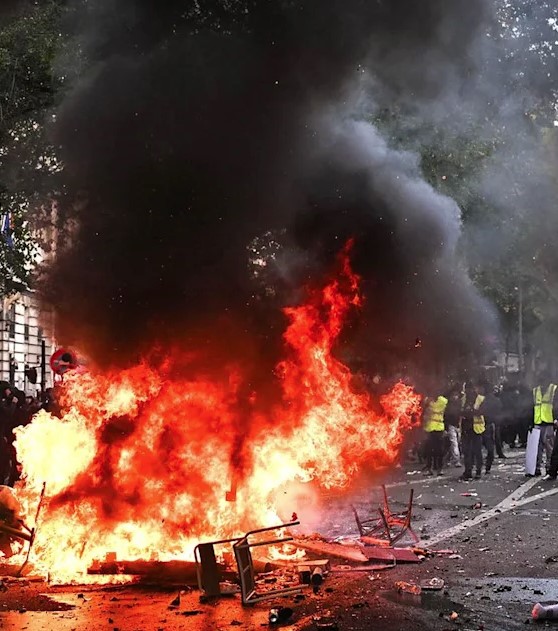
Riot police advance through tear gas near Porte de Charenton in Paris on October 31, 2026, at the end of a march by about 70,000 people on the third consecutive Saturday of nationwide protests over living costs and education.
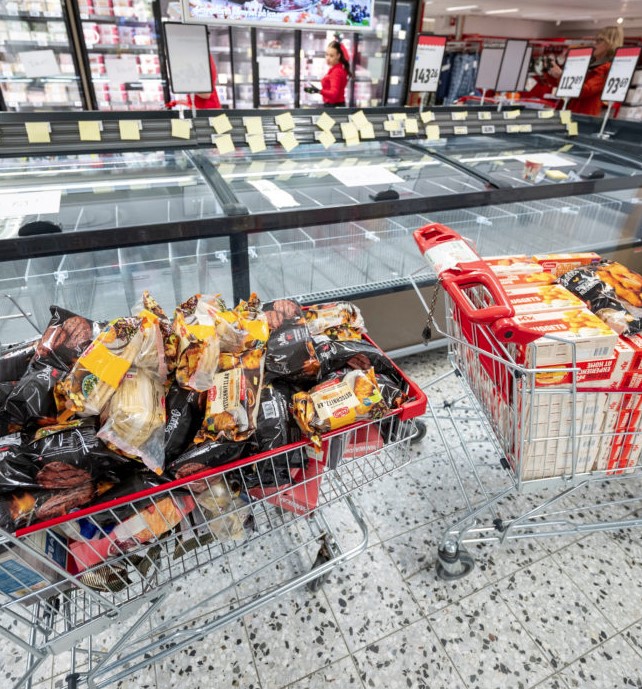
Supermarkets in at least seven European countries reported fridge and freezer temperatures soaring on Monday, November 2, 2026.

Americans vote Tuesday, November 3, in midterm elections that will decide control of Congress and 36 governorships.