Riot police advance through tear gas near Porte de Charenton in Paris on October 31, 2026, at the end of a march by about 70,000 people on the third consecutive Saturday of nationwide protests over living costs and education.

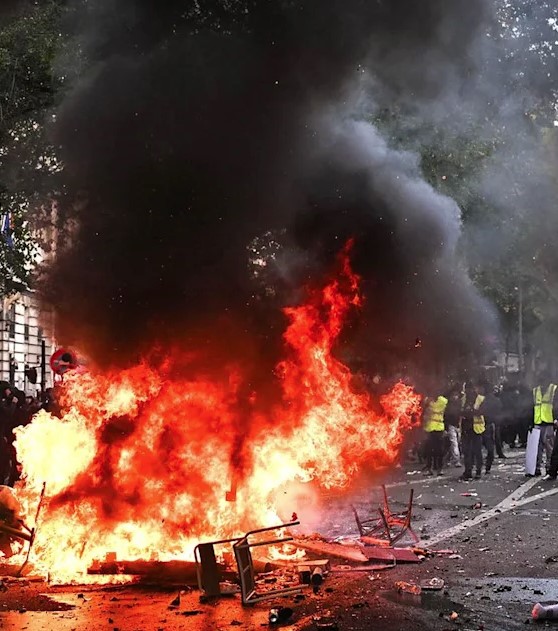
Riot police advance through tear gas near Porte de Charenton in Paris on October 31, 2026, at the end of a march by about 70,000 people on the third consecutive Saturday of nationwide protests over living costs and education.
Paris prosecutors opened an attempted murder investigation on Sunday after Molotov cocktails injured police at the end of a march by about 70,000 people, the third consecutive Saturday of nationwide demonstrations over living costs and education in France.
Hundreds of thousands of people marched across the country on Saturday, October 31, inspired by high school students who started the movement weeks ago. The Interior Ministry reported 565 arrests nationwide by Saturday night. An estimated 320,000 people took part across France, down from about 410,000 the previous weekend, according to reports. Authorities had deployed about 70,000 security personnel to prevent a repeat of the violence seen on October 17.
The day began calmly. Interior Minister Laurent Nuñez said the demonstrations were unfolding “without any notable incidents,” and that police had made 27 arrests by 2 p.m., compared with 217 a week earlier. The Paris march started at Porte de Bagnolet and ended at Porte de Charenton, in the east of the capital. The route had been disputed in court: the Council of State overruled a lower administrative court to allow the march to go ahead along that path, according to CNews. As AP described it, each group carried its own banner, with high school students, climate activists and people angry about the cost of living marching side by side.
Violence flared when the march reached its end. The Paris police prefecture said “a hard core of several hundred rioters” at the rear of the procession attacked police with projectiles, including a Molotov cocktail. One landed on the shield of a mobile gendarmerie unit and set a gendarme alight before colleagues put out the flames, The Epoch Times reported. The prefecture reported five members of the security forces injured, four police officers and one gendarme, three of them burned by Molotov cocktails. Police responded with tear gas, baton charges and water cannons. Paris police recorded 5,745 identity checks and 79 arrests in the capital.
Also Read: France Braces for Nov 5 Strike After Weeks of Cost-of-Living Protests, Riots and Curfews
Paris prosecutors said they opened an investigation for attempted murder over the attacks on security forces. Police also barred people from entering Place de la République and Les Halles, areas popular with young people, from 11 p.m. to prevent further trouble. Nuñez’s ministry said nationwide demonstrations “went well” overall despite the clashes with police, a characterisation that critics may challenge given the injuries.
The scale of the arrests has fallen over the three weekends. The Interior Ministry’s figure of 565 compares with 768 at the end of the previous Saturday. On October 17, the first violent weekend, more than 2,300 people were arrested and nearly 1,000 police and gendarmes were injured. Police have arrested thousands of people over the first two weekends after riots and looting marred the marches. The decline suggests the heavy security presence and the changed character of the marches had an effect, though one violent confrontation was enough to dominate the headlines.
Not all the violence came from one side, AP noted. While the vast majority of protesters have been peaceful, groups of troublemakers routinely target police with fireworks and projectiles, and police tactics, including tear gas, dispersion grenades and water cannons, have resulted in severe injuries. Rights groups have raised concerns about the use of force at previous marches. The French government has vowed a tough response to disorder, while saying it recognises the grievances behind the protests.
The movement began with weeks of demonstrations by high school students against overcrowded classrooms, teacher shortages and underinvestment, and widened to include people angry about rising fuel prices and the cost of living. Left-wing politicians have joined the marches, including Bally Bagayoko, the La France Insoumise mayor of Saint-Denis, who attended in Paris on Saturday. The Epoch Times reported that far-left student unions have called for new blockades of high schools and universities from Tuesday, a step that could extend the protests into the working week. Similar youth-led rallies have been reported elsewhere in Europe, according to AP.
The government now faces a choice between continued policing and a political response. The presidential election is about six months away, and the unrest has become a test of how well the authorities can manage protests while addressing the economic anger driving them. The announced prosecution for attempted murder points to harsher treatment of those who attack officers, while the numbers on the streets show the movement has not faded, even if it has shrunk.
What happens next depends on whether the student unions’ call for blockades is followed, whether turnout falls further, and whether the government offers anything on living costs or school funding. For the moment, the third weekend has ended with fewer arrests than the first two and fewer people on the streets, but with a violent incident that shows the tension is far from over.

Riot police advance through tear gas near Porte de Charenton in Paris on October 31, 2026, at the end of a march by about 70,000 people on the third consecutive Saturday of nationwide protests over living costs and education.
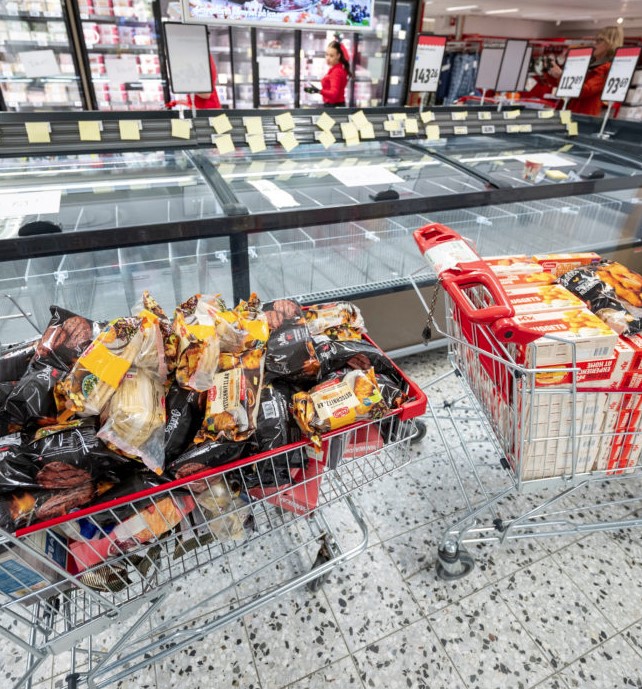
Supermarkets in at least seven European countries reported fridge and freezer temperatures soaring on Monday, November 2, 2026.

Americans vote Tuesday, November 3, in midterm elections that will decide control of Congress and 36 governorships.
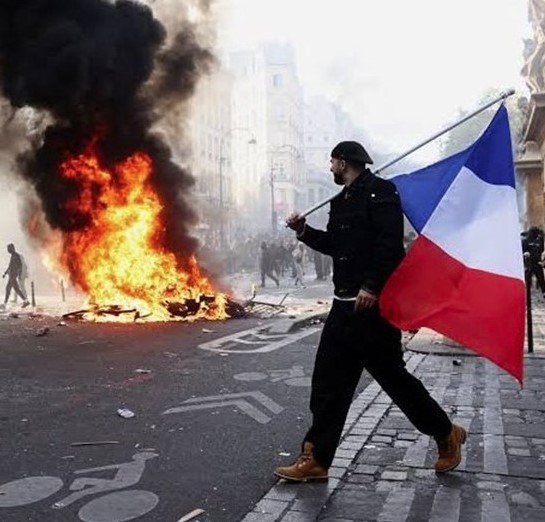
Protesters march in Paris on October 31, 2026, as nationwide demonstrations over the cost of living continued.