Supermarkets in at least seven European countries reported fridge and freezer temperatures soaring on Monday, November 2, 2026.


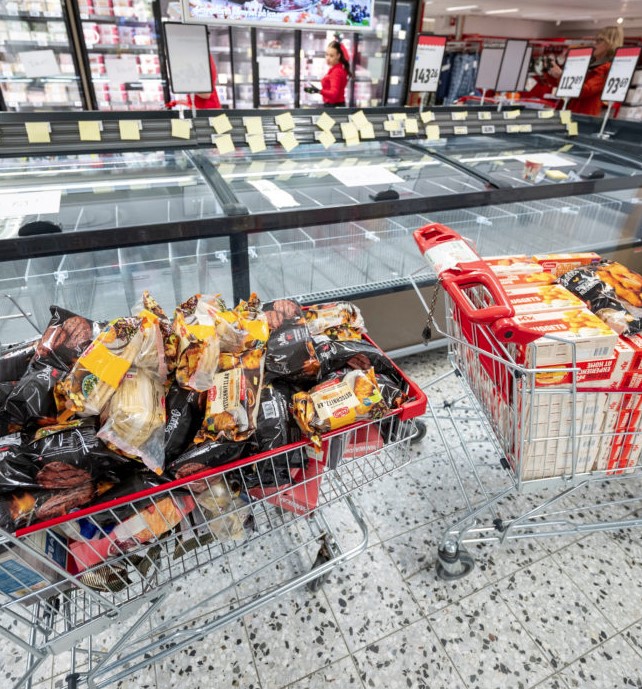
Supermarkets in at least seven European countries reported fridge and freezer temperatures soaring on Monday, November 2, 2026.
Grocery stores in several European countries saw the temperatures in their fridges and freezers soar on Monday, with some retailers confirming they had been hit by a cyberattack similar to one that struck France three weeks ago. The incidents raised fresh concerns about food waste and food security, and about how exposed everyday infrastructure is to hackers.
Supermarkets in Belgium, Estonia, Finland, Luxembourg and Sweden were among those affected, according to early reports, and later accounts added Ireland and the Netherlands to the list. Carrefour Belgium said about 15 of its roughly 700 stores were disrupted, with a spokesman saying there was no other explanation than a cyberattack. An Ikea store in Mons, in southwestern Belgium, said its freezers heated up suddenly in the early hours of Monday. Delhaize, Colruyt and Intermarché also reported technical problems with their fridges in Belgium, and Delhaize said four of its stores in Luxembourg were affected. Colruyt Group said five Spar shops it runs in Belgium had their refrigeration systems attacked.
Belgian outlet Le Soir reported that about 40 Delhaize Proxy stores, 15 Carrefour Shop & Go stores, 15 Intermarché shops and five Spar Q8 service stations were reportedly hit. Belgium’s Centre for Cybersecurity said it was aware of the incident. Sabcobel, a company that manages refrigeration units, said about 20 of the hundreds it manages in Belgium were affected. Delhaize also suspended its ordering systems in Luxembourg as a precaution.
In Sweden, Coop confirmed that six of its roughly 800 stores were hit early Monday. A store belonging to the ICA chain in Sjöbo, in the south, said on Facebook that hackers had set its fridges and freezers to 50°C. Estonia’s public broadcaster ERR reported that at least one supermarket was attacked and its refrigeration units raised to the same temperature. In Finland, irregular temperatures were detected in a few smaller stores belonging to the Kesko group, and an official at the national cyber centre said interference could not be ruled out. Swedish media said the cause was not yet known.
The incident echoes an attack on French retailers on October 11 and 12. Hackers reached the internet-connected refrigeration systems of hundreds of supermarkets overnight, when stores were closed, and raised temperatures to as high as 50°C. Millions of euros of food was spoiled, and some stores reported fires or melted equipment. Intermarché and Netto said about 300 stores were affected, while Coopérative U said 80 of its 2,000 were hit. E. Leclerc said the attack affected one of its refrigeration equipment suppliers. The Paris prosecutor’s cybercrime unit opened an investigation.
How the attackers got in is a central question. Supermarket cold aisles are typically run by control panels that manage a store’s fridges and freezers and can be reached over the internet, which lets maintenance companies adjust them remotely, but also gives hackers a way in. Le Monde reported that in France the attackers lengthened the defrost cycle in freezers from one hour to eight to keep alarms from sounding. Spain’s national cybersecurity institute said in an October 13 update that the French compromises involved controllers from Danfoss, Copeland and Dixell and warned that the attack campaigns were probably still active. Nobody has said the Monday incidents used the same equipment, and investigators have not publicly linked the two waves.
Nobody has claimed responsibility, and authorities have not said who is behind either attack. In France, it was also unclear whether the attackers had used artificial intelligence, and suppliers said some French systems may have been out of date. Retailers have not given a full count of stores or the cost of the losses in this latest wave. Some chains described the cause only as an IT incident.
For shoppers, the immediate effect is empty shelves and discarded stock at the affected stores. For retailers and regulators, the bigger issue is the risk of attacks on systems that most people never think about. If a few commands can turn a freezer into an oven, the cold chain that keeps food safe is only as strong as the weakest remote-access panel. The next steps are the investigations in Belgium and France, any official finding on the attackers’ method, and whether retailers move to lock down remote access to their refrigeration systems.


Riot police advance through tear gas near Porte de Charenton in Paris on October 31, 2026, at the end of a march by about 70,000 people on the third consecutive Saturday of nationwide protests over living costs and education.
Supermarkets in at least seven European countries reported fridge and freezer temperatures soaring on Monday, November 2, 2026.

Americans vote Tuesday, November 3, in midterm elections that will decide control of Congress and 36 governorships.

Protesters march in Paris on October 31, 2026, as nationwide demonstrations over the cost of living continued.