A New Mexico judge ordered Meta to pay the state $25 billion on Wednesday after a jury found the company misled consumers about data privacy, in one of the largest financial penalties in US history.

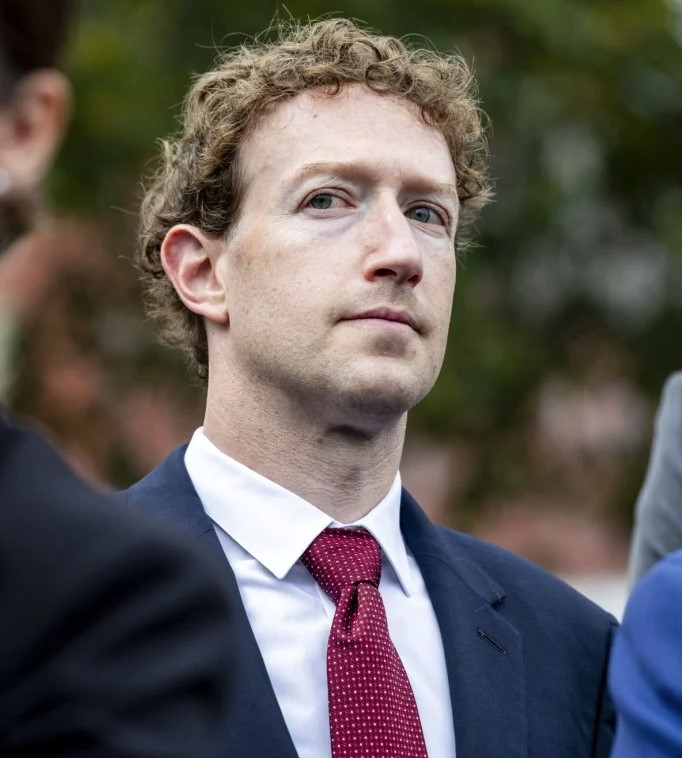
A New Mexico judge ordered Meta to pay the state $25 billion on Wednesday after a jury found the company misled consumers about data privacy, in one of the largest financial penalties in US history.
A New Mexico judge on Wednesday ordered Meta Platforms to pay the state $25 billion after a jury found the company had misled consumers about the privacy of their data, imposing one of the largest financial penalties in US history. Meta said it will appeal.
Judge Francis Mathew of New Mexico’s First Judicial District Court issued the order more than three weeks after a September jury verdict. The jury found that Meta and its leadership made 26 misleading statements, out of 29 examined, on data privacy, hate speech and other subjects, which amounted to more than 43 million violations of the state’s consumer-protection law. At $5,000 per violation, the theoretical total would have exceeded $219 billion, a figure Mathew said state law could have supported before he reduced it to $25 billion.
In his ruling, the judge wrote that Meta’s misrepresentations about users’ control of their data were not isolated incidents but “a systematic pattern of deception” at the core of Facebook’s business model, according to CNN. The order also carries a 15 percent annual interest rate on any amount left unpaid, Mediaite reported.
The case grew out of the Cambridge Analytica scandal. Revelations in 2018 showed that the British political consulting firm had obtained the personal data of as many as 87 million Facebook users through a third-party app, and used it for voter profiling and targeting. New Mexico sued Meta in 2021, according to Reuters, alleging that the company knew third parties had broad access to users’ data and that it tolerated hate speech and other harmful content when it benefited the company financially.
The amount fell between the two sides’ requests. At a hearing on October 1, a lawyer for the state asked the judge to award between $35 billion and $40 billion. Meta urged him in court filings to cap the penalties at $3.45 billion. The final figure of $25 billion is therefore far above what Meta proposed, but below what the state sought.
Meta has rejected the ruling. The company said it will appeal and accused New Mexico’s attorney general of conflating privacy and speech issues, CNN reported. After the jury’s decision in September, Attorney General Raúl Torrez called the verdict a historic victory for children and families and said the ruling should serve as a warning to all technology companies, according to Mediaite. Meta has not said what it will argue on appeal beyond its objection to how the state framed the case.
The penalty comes on top of earlier costs from the same scandal. In 2019, Meta agreed to pay $5 billion to resolve a Federal Trade Commission investigation into its privacy practices, and $100 million to settle claims by the Securities and Exchange Commission that it misled investors about the misuse of user data. In 2022, it agreed to pay $725 million to settle a class-action lawsuit by Facebook users, which was then the largest privacy class-action settlement in US history. Separately, European regulators fined it 1.2 billion euros, or about $1.3 billion, in 2023 over transfers of user data to the United States.
Meta’s recent results show that legal costs are already weighing on its finances. Chief financial officer Susan Li said a $9.9 billion legal charge reduced the company’s third-quarter operating income by 37 percent, according to Storyboard18, even as ad revenue topped $63 billion. The reports did not say which legal matter the charge covered, and it is not clear how much of the $25 billion has already been accounted for.
The ruling is likely to be closely watched elsewhere. Other states have brought their own cases against social media companies, and legal analysts have noted that a penalty of this size under a state consumer-protection law could encourage similar claims. The decision also shows how large penalties can become when courts count each deceptive statement as a violation per affected user, which is how the count reached 43 million.
The appeal will now determine whether the figure stands. Appellate courts can reduce, uphold or overturn penalties of this kind, and large awards are often cut on review, so the final amount Meta pays could be very different from the headline number. For now, the order stands as a landmark statement from a state court about how much it is willing to charge a major technology company for what a jury found to be misleading consumers about their data.

A New Mexico judge ordered Meta to pay the state $25 billion on Wednesday after a jury found the company misled consumers about data privacy, in one of the largest financial penalties in US history.

Christiane Amanpour, 68, announced on Monday that she will leave CNN at the end of June 2027 after 43 years, scaling back her show to once a week from early 2027.

Forensic and police officers examine the burnt Lyon tourist office on October 18, a day after nationwide protests over the cost of living and school conditions turned violent in several French cities.

Tesla’s long-delayed Roadster performed a mid-air “kick flip” using compressed-air thrusters during a livestreamed unveiling at a SpaceX facility in Texas on Thursday.