The Irkutsk Anti-Plague Research Institute, where a laboratory technician died this month, prompting quarantine measures and fears of pneumonic plague.



The Irkutsk Anti-Plague Research Institute, where a laboratory technician died this month, prompting quarantine measures and fears of pneumonic plague.
Russian authorities are working to calm public alarm after the death of a young laboratory technician at a Siberian anti-plague institute set off fears of a pneumonic plague outbreak. Officials insist no plague has been recorded in the Irkutsk region, but the absence of a clear public diagnosis has left room for rumor, and both the World Health Organization and the United States have asked for transparency.
The woman, reported by Radio Free Europe/Radio Liberty to be 28-year-old Darya Shipilova, worked at the Irkutsk Anti-Plague Research Institute of Siberia and the Far East. She was hospitalized on September 29 with severe pneumonia and died in hospital in Shelekhov in the early hours of October 2, according to news reports. A department of the Shelekhov district hospital was closed over a suspected “particularly dangerous infection,” and Governor Igor Kobzev convened an emergency meeting of the regional sanitary commission with Russia’s chief sanitary official, Anna Popova, who travelled from Moscow.
For roughly the first day, regional officials avoided naming the disease, a silence that fuelled speculation across Irkutsk and neighboring regions. Russia’s health watchdog, Rospotrebnadzor, later said the employee’s diagnosis was pneumonia of unknown etiology. It said the situation in Irkutsk and Shelekhov was stable and that no incident involving pathogenic microorganisms had been recorded at the institute. The watchdog added that no other staff member had sought medical help for an infectious illness in the previous 10 days.
Accounts from independent and local outlets have been less reassuring. The Siberian outlet Lyudi Baikala reported that the technician broke a test tube containing pneumonic-plague bacteria on September 25. Other reports said she fell ill after a work trip to Buryatia, near the Mongolian border, while one early account claimed she had returned from Thailand. Russian media also reported that the institute’s staff were confined to the facility and that about 60 employees were in quarantine. None of these claims has been confirmed by officials, and authorities have said no emergency or security breach occurred.
The confusion was deepened by Alexey Tsydenov, head of neighboring Buryatia, who wrote that the woman had died of plague in the Irkutsk region. According to Russian media, he later edited the post to say she had possibly died of plague. He also said the woman had not visited Buryatia and denied any plague outbreak there.
The containment effort has been large. Local media reported that 189 people who had contact with the woman were hospitalized or placed under medical observation, spread across two hospitals and the institute itself. Officials said all identified contacts showed no signs of illness and that early test results were negative. On Tuesday, Russian officials said plague had not been detected among the contacts tested so far, with about 60 percent of the identified group checked. Governor Kobzev said family members and close relatives in quarantine could be discharged within the next week.
Also Read: Russian Daredevil Couple Arrested After Empire State Building Proposal Stunt
International pressure has grown alongside the domestic alarm. After a verification request, WHO chief Tedros Adhanom Ghebreyesus said Russian health authorities told the agency that no plague case had recently been registered in the Irkutsk region. A State Department spokesperson said Washington had seen reports of a fatal case of suspected pneumonic plague and called for transparency. Experts quoted in coverage of the incident have said the lack of detail may be as consequential as the illness itself. There is no public evidence that the institute was developing plague as a weapon or that the death is linked to any offensive biological-weapons program.
The setting adds to the unease. The Irkutsk institute was founded in 1934 to combat plague and later widened its remit to other highly dangerous diseases, including cholera and anthrax. It still studies plague because the bacterium, Yersinia pestis, circulates naturally in wildlife across parts of Siberia and neighboring regions. Russia’s last recorded human case was in 2016, when a child in the Altai Republic fell ill. The pneumonic form can spread between people through the respiratory tract, which is why health officials treat any suspected case with caution. A vaccine exists and is recommended for people who handle live plague cultures.
For now, the central question is unresolved: what killed the technician? Without a publicly confirmed cause of death or an independent account of what happened inside the laboratory, doubts are likely to persist. The coming days should show whether the remaining contact tests come back clear, whether quarantined relatives are released as promised, and whether authorities publish a definitive diagnosis.


Nana Patekar, the veteran actor whose career spanned nearly five decades, died on Thursday at the age of 75.
The Irkutsk Anti-Plague Research Institute, where a laboratory technician died this month, prompting quarantine measures and fears of pneumonic plague.
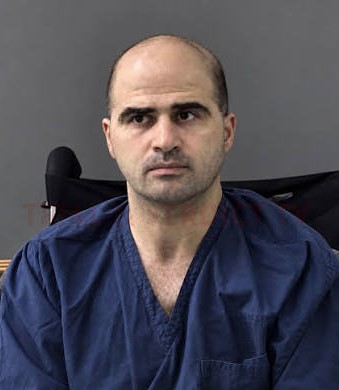
President Trump has approved the execution by firing squad of Nidal Hasan, the former Army major convicted of killing 13 people in the 2009 Fort Hood shooting.

Taylor Swift became the most-awarded artist in VMA history at the 2026 ceremony, dedicating her Video of the Year win to the late Dolly Parton.