Insight into the Growing Incel Culture



There’s a peculiar kind of obscurity in learning that crime has fandom. Over the past few years, a disturbing pattern has emerged across the US: men committing sexual assaults in public, filming themselves doing it, and uploading the footage to online communities where it’s met not with condemnation but with applause.
It has its own vocabulary. Its own inside jokes. Its own economy of views, comments, and “accolades” from other men. What used to be an isolated, shameful crime has become, in dark corners of the internet, a bid for status and understanding why requires looking less at the perpetrators and more at the stature that made this behavior look relevant.
The details of any single case are grim enough on their own. But what makes this moment different from decades of prior sexual violence isn’t the act, it’s the audience. There’s been research that describes a consistent pattern: men filming assaults aren’t only doing it for personal gratification, they’re doing it for engagement, watching view counts and comments the same way any content creator would, and drawing other men into a cycle where the attention itself becomes the reward worth chasing. That’s a fundamentally different phenomenon from a crime committed in private. It’s a crime committed as a performance, for an audience that has been cultivated, algorithmically and socially, to reward exactly this kind of content. One can also say, this behaviour is derived from the teachings of the incel Andrew Tate himself.
Also Read: The Rise of Alpha Males or Trash Men
This didn’t come from nowhere. It’s the same pipeline that produces the “motivational” manosphere content millions of teenage boys consume every day, just at its furthest, most extreme edge. Sociologists who study these communities point to a consistent throughline: isolated, disaffected young men, often already struggling with loneliness and a sense of invisibility, find each other online and discover that a certain kind of provocation, however repugnant to outsiders, reliably generates attention within the group. Criminologists studying the psychology of attention-seeking violence have noted that fame and notoriety function as a kind of currency for some fringe persons, one that can feel more attainable, and more immediately rewarding, than the conventional markers of success that feel out of reach. In an internet economy where visibility is the closest thing many people have to validation, that’s a genuinely dangerous incentive structure to leave unexamined.
What’s especially bleak is how quickly the culture around this content metabolizes real harm into a joke. Victims’ trauma gets flattened into memes, crypto-coin names, and inside references almost as soon as footage circulates, a pattern that mirrors how other forms of online cruelty, harassment campaigns, humiliation content, doxxing, have been absorbed into internet culture as a kind of dark entertainment. The faster something can be turned into a joke, the faster it spreads, and the less anyone seems to reckon with the fact that a real person, often a stranger simply going about her day, is at the center of it.
Also Read: Everyone Is Diagnosing Themselves and No One Is Getting Better
There’s also a structural failure sitting underneath the cultural one. When institutions, whether retail chains, platforms, or law enforcement, treat individual incidents as isolated rather than recognizing a pattern, they leave the door open for exactly this kind of subculture to keep operating. A company facing multiple similar complaints across different locations has more than a public relations problem, it has a systemic one, and failing to connect the dots, or actively resisting doing so in legal proceedings, sends an implicit message that the behavior carries limited consequences. The same is true of platforms that host this content. Every video that stays up, every account that gets to keep monetizing footage of a real assault, is a small signal to the next person considering doing the same thing that the audience is there and waiting.
None of this is to say every person consuming this kind of content is dangerous, or that every lonely, online young man is on a path toward committing violence. Most clearly aren’t. But the ecosystem that makes this content thinkable, that supplies both the audience and the vocabulary for treating real harm as a game, doesn’t require every participant to be an offender. It only requires enough of an audience willing to reward the behavior to make it feel worthwhile to the people considering it. That audience is the actual problem here, arguably more than any individual perpetrator, because audiences are what determine whether behavior like this remains rare and shameful or becomes something worth filming for an audience.
Fixing this isn’t a matter of moderating a few accounts or issuing a corporate statement about safety. It requires platforms willing to treat this kind of content as what it is, evidence of a crime rather than engagement bait, institutions willing to take patterns seriously instead of litigating each incident as an unfortunate one-off, and a broader cultural reckoning with why so many young men have decided that being seen, even for something monstrous, feels better than not being seen at all. Until that changes, the internet will keep doing what it has proven remarkably good at: taking someone else’s worst moment and turning it into someone else’s content.
Also Read: The LHC Doomsday Panic Says More About Us Than About CERN

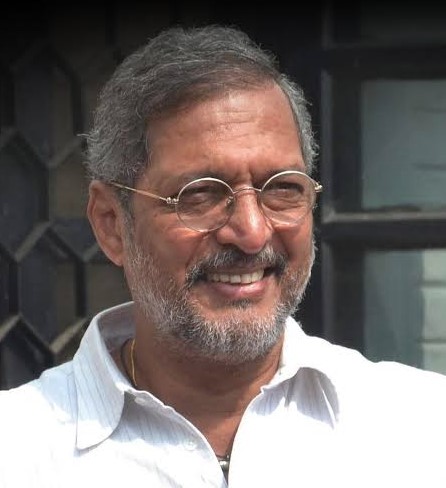
Nana Patekar, the veteran actor whose career spanned nearly five decades, died on Thursday at the age of 75.

The Irkutsk Anti-Plague Research Institute, where a laboratory technician died this month, prompting quarantine measures and fears of pneumonic plague.
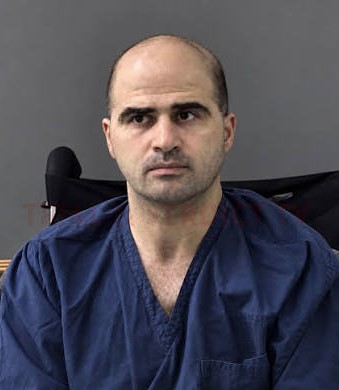
President Trump has approved the execution by firing squad of Nidal Hasan, the former Army major convicted of killing 13 people in the 2009 Fort Hood shooting.
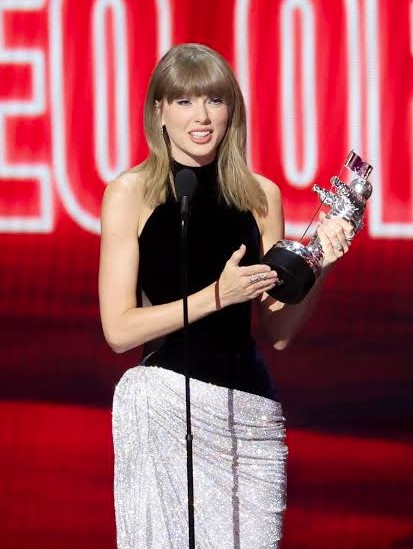
Taylor Swift became the most-awarded artist in VMA history at the 2026 ceremony, dedicating her Video of the Year win to the late Dolly Parton.