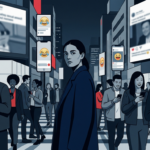
Are All Men Trash?



Somewhere along the way, “motivational content” stopped meaning what it used to mean. It used to conjure images of gym posters and Sunday morning self-help books. Now, for a huge share of young men, it means a very specific genre: fast-cut videos of men in sunglasses, standing next to sports cars, telling other men that weakness is a choice, that emotions are a trap, and that respect is something you take, not earn.
Andrew Tate built an agenda on exactly this formula, and this week, he was arrested again, this time on new UK charges that include rape, sex trafficking, and child exploitation, on top of the human trafficking case already pending against him in Romania. But focusing only on Tate misses the more uncomfortable question sitting underneath his arrest: who did we let become an idol, and why did so many young men choose him?
The numbers are hard to look away from. Research from Hope Not Hate found that 80% of boys aged 16 to 17 in the UK had consumed content from Andrew Tate specifically, and separate research found that 56% of young fathers under 35 approved of him.
This wasn’t a fringe phenomenon confined to dark corners of the internet. It was mainstream, algorithmically pushed content reaching the majority of a generation’s teenage boys, whether they went looking for it or not. UN Women UK’s 2026 campaign against manosphere influence found that nearly 73% of boys aged 11 to 17 regularly encounter this kind of content, and 59% of them say it finds them, through recommendation algorithms, without them ever searching for it in the first place.
Also Read: The Epstein Files Prove That Transparency Promised Is Not Transparency Delivered
That last detail matters more than almost anything else in this conversation. This isn’t a story about boys actively seeking out misogyny. It’s a story about a content algorithm engineered to find them first, then confine them there, bolstering their already fragile teenage egos.
A 2024 study out of Dublin found that TikTok and YouTube’s algorithms significantly amplified manosphere content to accounts registered as male, often within 24 hours, regardless of whether the user had ever searched for anything resembling it. The platforms didn’t just fail to stop this. Their engagement models actively rewarded it, because outrage, grievance, and tribal belonging are extraordinarily good for watch time, and watch time is the only metric that has ever really mattered to the businesses running these platforms.
And the boys these algorithms found were, by nearly every measure, already struggling before they ever encountered a single video. Equimundo’s State of American Men report found that two-thirds of young men aged 18 to 23 feel that “no one really knows” them. A 2025 GQ survey found 43% of men under 35 report feeling lonely often, compared to 35% of older men.
Sociologist Timothy Recuber, who studies digital culture at Smith College, has pointed out that the internet didn’t invent disaffected young men, but it paved the way for them to indulge themselves in incel behaviour and to be told, repeatedly, that their unhappiness isn’t a personal or systemic failure but the fault of feminism, of women, of a world that had supposedly turned against them specifically. When in fact, the reality is often different.
That’s the actual genius, and the actual danger, of figures like Tate. They didn’t present themselves as misogynists first. They presented themselves as guides, packaging contempt for women alongside genuinely appealing content about discipline, fitness, and financial independence. There are three things many lonely young men were already desperate for.
Psychologist Zuhal Alnajar has described this dynamic plainly: these communities offer belonging and validation to men who feel overlooked, and the appeal isn’t purely ideological, it’s emotional. A lonely 15-year-old boy isn’t clicking on a video because he wants to become a misogynist. He’s clicking on it because someone, for the first time in a while, is speaking directly to him like he matters. Misogyny is what comes bundled with belonging, not what’s being sold on the label, and by the time it becomes obvious, the emotional hook is often already set.
Also Read: The LHC Doomsday Panic Says More About Us Than About CERN
The consequences of bundling aren’t abstract. A 2024 study cited by researchers found that the more boys in a given school engaged with online misogyny, the more the girls and female staff at that same school reported experiencing seuxual discrimination, a statistical relationship that held even after accounting for school size.
Refuge, the UK domestic abuse charity, has explicitly linked manosphere content to real-world violence, noting that while the online rhetoric might feel one step removed from physical harm, some corners of these communities actively discuss and encourage violence against women and girls. This isn’t a hypothetical slippery slope dreamed up by worried parents. It’s a documented pipeline, from algorithm, to content, to attitude, to behavior, one that researchers are only now beginning to properly quantify.
There’s also a quieter cost that gets less attention: what this content does to the boys consuming it, separate from anyone else. Movember Foundation research found two-thirds of young men regularly engage with masculinity influencers, and UN Women reports that those who actively engage with this content often experience higher rates of worthlessness and nervousness, not lower. The promise of the manosphere is control and confidence. The actual outcome, for many, is a deeper entrenchment in the same isolation that drew them in, now dressed up as strength.
So when a figure like Tate gets arrested, there’s a temptation to treat it as the end of the story, as though removing one man solves a problem that was never really about one man to begin with. It won’t. The economic and emotional conditions that made him appealing to millions of boys are still fully intact. The loneliness is still there. The algorithms are still optimized for exactly the same kind of content. And there is already a long line of other “motivational” figures, some more careful with their language, some less openly criminal, ready to fill the exact same role he’s leaving behind, ready-made and waiting for the same recommendation engines to hand them the microphone.
The harder, less satisfying question isn’t “how do we get rid of Andrew Tate.” It’s “why do so many boys need someone like him in the first place, and what would it actually take to give them something better.” Until that question gets a real answer, from parents, from schools, from platforms that profit off this content, and from men willing to be present in ways these influencers only pretend to be, the manosphere won’t shrink because one of its loudest voices is behind bars. It’ll just wait for the algorithm to hand the microphone to whoever’s next.
Until we get rid of the supposed “Alpha Males”, they will unequivocally and evidently overturn young boys into “Trash Men”, which not only is detrimental to our society but also to the future of Mankind itself.
Also Read: The “Deinfluencing” Trend Is Fashion’s Guilty Conscience, Not a Real Fix


Nana Patekar, the veteran actor whose career spanned nearly five decades, died on Thursday at the age of 75.
The Irkutsk Anti-Plague Research Institute, where a laboratory technician died this month, prompting quarantine measures and fears of pneumonic plague.

President Trump has approved the execution by firing squad of Nidal Hasan, the former Army major convicted of killing 13 people in the 2009 Fort Hood shooting.
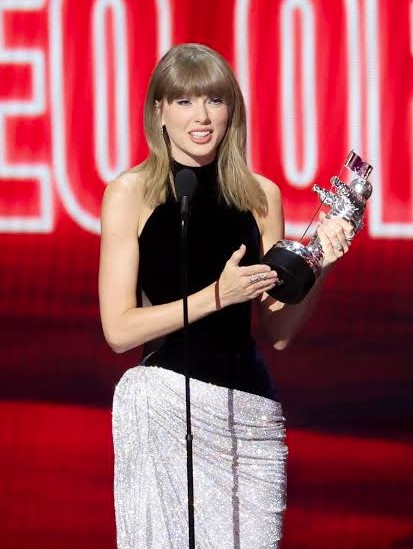
Taylor Swift became the most-awarded artist in VMA history at the 2026 ceremony, dedicating her Video of the Year win to the late Dolly Parton.