Redacted Epstein file document with unredacted victim information, DOJ 2026 …



More than a year after Congress passed the Epstein Files Transparency Act with rare bipartisan backing, the American public finds itself no closer to a full accounting of who enabled Jeffrey Epstein and who looked away.
What has emerged instead is a pattern familiar to anyone who has watched powerful institutions manage a scandal rather than resolve one: partial releases timed to blunt outrage, redactions that conveniently protect the influential while exposing the vulnerable, and a Justice Department that insists it has done enough even as a federal judge keeps finding otherwise.
The numbers alone tell a damning story. The Justice Department released 3.5 million pages of documents tied to Epstein, but much of what federal authorities released was heavily redacted, and the department withheld another 2.5 million pages. That is not transparency.
That is triage. And when Judge Emmet Sullivan ruled that the Trump administration had until Thursday to release and unredact information in the Epstein files, the government vowed to fight the ruling instead of simply complying. The Justice Department ultimately declined to release additional unredacted records, telling the judge it had already adequately complied with the law, even as the scale of what remained unreviewed made that claim hard to credit.
What makes this especially hard to defend is the direction of the redactions. A review of the documents found numerous examples of the Justice Department failing to redact names of publicly identified victims of sexual abuse, alongside names of private individuals who had never previously been made public.
Meanwhile, the names that consistently disappear behind black bars belong to the men in Epstein’s orbit. The documents at the center of the July order include eight emails with either the sender or recipient blacked out, a draft indictment with the names of potential co-conspirators obscured, and a 2019 email naming several co-conspirators whose identities were redacted. Victims exposed, associates shielded. That is close to the opposite of what a transparency law is supposed to achieve.
Read More: Conor McGregor’s UFC Return Draws Muted Buzz, Reviving Questions Over Promotion’s Star Power
The Justice Department’s public defense has not aged well either. Acting Attorney General Todd Blanche told Fox News in April that his department had released everything it could and was withholding nothing that should be public. Months later, the same department was still resisting a court order to release more, and its own filing conceded it had likely violated the transparency statute by withholding names and explanations it was legally required to provide. That gap between assurance and action helps explain why trust in this process has collapsed across the political spectrum. It is worth remembering that the Transparency Act itself was a bipartisan product, driven by lawmakers from opposite ends of the aisle who agreed on very little else.
Democratic Representative Ro Khanna of California and Republican Representative Thomas Massie of Kentucky co-authored the law and later formally requested to review the unredacted files themselves to check the government’s compliance. That coalition did not form out of partisan opportunism. It formed because the scale of Epstein’s abuse, and the number of powerful people who brushed against it, demanded an answer neither party alone could credibly deliver.
The credibility problem extends beyond the documents themselves and into the testimony surrounding them. In June, Lesley Groff, who worked as Epstein’s executive assistant for eighteen years, gave an eight-hour interview to the House Oversight Committee in which she said she never met any of the girls and young women brought in to give Epstein massages, never learned their ages, and never personally handed anyone money on his behalf. Within weeks, multiple survivors, several speaking on the record, told reporters a starkly different story.
They described meeting Groff repeatedly, including inside Epstein’s New York townhouse during years she claimed she had no access to it, and said she personally verified their ages, screened new recruits over the phone, handled their passport applications, and handed out cash in white envelopes. One survivor recalled Groff asking pointed questions about a new girl’s appearance, origin, and age before she was brought in. Congressional Democrats on the committee have since said the discrepancies are precisely why Groff should have been made to testify under oath, and one lawmaker warned that if she misled Congress she should correct the record or face criminal exposure for knowingly making false statements to federal lawmakers, itself a crime. The committee has said it is now comparing her transcript against the survivors’ accounts.
That is the pattern that keeps repeating across this saga. The people closest to Epstein describe ignorance so total it strains belief, while the women who survived his abuse describe an operation that ran in plain view of the very assistants and associates now claiming they saw nothing.
Read More: A New Cold War Is Coming
Ghislaine Maxwell remains the only person prosecuted in the United States in connection with Epstein’s trafficking, and the Justice Department continues to maintain that it lacks sufficient evidence to charge anyone else, even as its own document reviews keep surfacing new names and new questions. Congress, for its part, has kept pulling at the thread. The House Oversight Committee has subpoenaed a billionaire investor with Epstein ties over deposition testimony and non-disclosure agreements, and New Mexico’s attorney general has said the Justice Department is withholding critical information related to Epstein’s Zorro Ranch property, where some of the alleged abuse is said to have occurred.
None of this requires assuming guilt where none has been proven. Appearing in a flight log or a redacted email is not evidence of a crime, and it is fair to note that no Epstein associate beyond Maxwell has faced criminal charges tied to the trafficking allegations, despite years of scrutiny. But the public was never promised a verdict.
It was promised visibility, the ability to judge for itself what the documentary record actually shows. Selectively withholding that visibility does not protect the innocent. It protects the powerful from scrutiny while survivors watch their own private details handled more carelessly than the reputations of the men who surrounded their abuser.
There is also a harder truth buried in all of this, one that should trouble people regardless of which political figures happen to be implicated in any given week. Institutions rarely fail a single victim through a single decision.
They fail through years of small accommodations: an assistant who does not ask questions, a bank that keeps processing wire transfers, a university that quietly removes a donor’s name rather than examine how his money was earned, a prosecutor’s office that settles for a lenient plea deal in 2008 rather than pursue the network. The Epstein files, released in fragments and fought over in court, are ultimately a record of exactly how many of those small accommodations it took to let one man operate for as long as he did.
The Epstein Files Transparency Act was supposed to close this chapter by finally telling the truth about who failed whom.
Instead it has become a case study in how a transparency law can be honored in letter while being violated in spirit. Congress wrote a law with teeth. It is now up to the courts, persistent reporting, and the public’s refusal to look away, to make sure those teeth are actually used.
Read More: The LHC Doomsday Panic Says More About Us Than About CERN


Two critical vulnerabilities in PHP, found with the help of AI models and dubbed PHP2Shell, prompted emergency patches and temporary website shutdowns around the world this week.
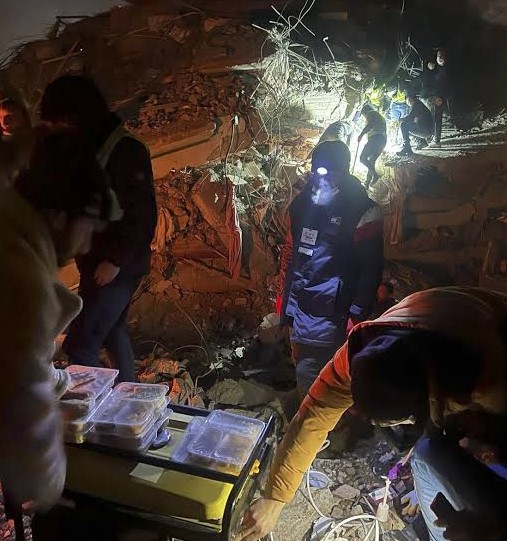
A magnitude 7.0 earthquake struck a remote, high-altitude area of northern Tibet on Thursday night, killing at least 16 people and collapsing more than 300 houses, according to Chinese state media.
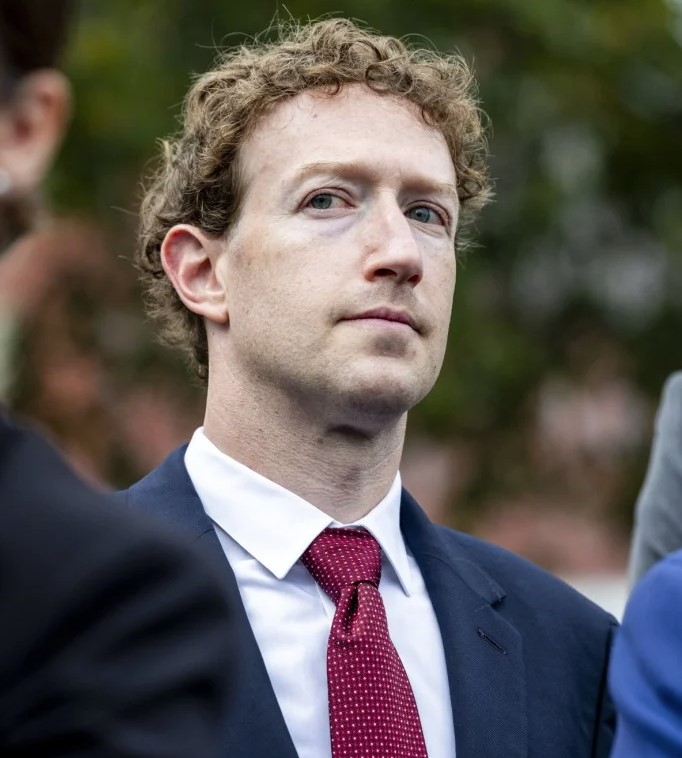
A New Mexico judge ordered Meta to pay the state $25 billion on Wednesday after a jury found the company misled consumers about data privacy, in one of the largest financial penalties in US history.
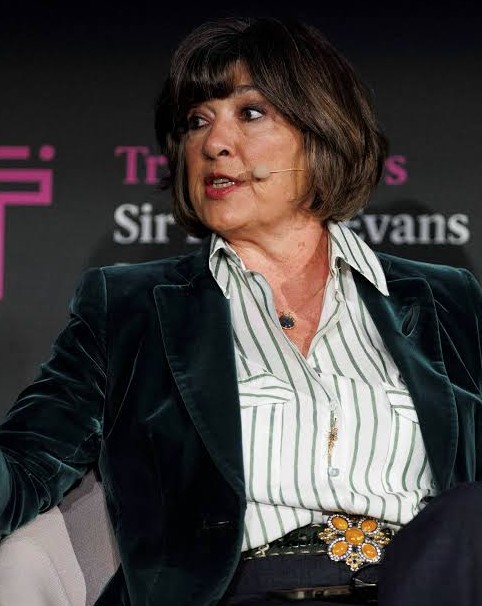
Christiane Amanpour, 68, announced on Monday that she will leave CNN at the end of June 2027 after 43 years, scaling back her show to once a week from early 2027.