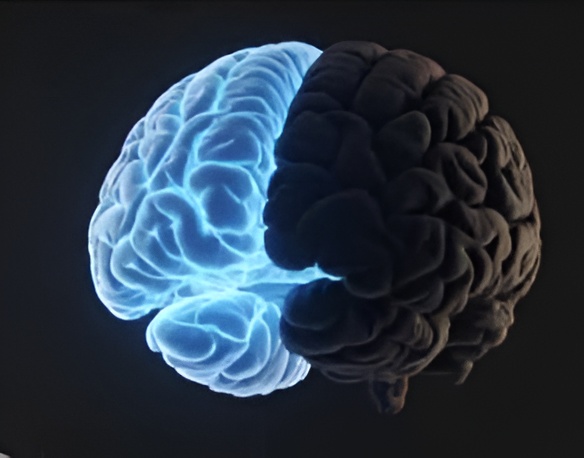
Feeling frozen between two options isn’t a lack of willpower. Psychologists say it’s a predictable response to fear, overload, and the pressure to find a “perfect” answer that doesn’t exist.



There’s a particular kind of stuck that doesn’t look like stuck from the outside. You’re not lying in bed unable to get up. You’re not avoiding the decision entirely. You’re actively working on it, making lists, weighing options, talking it through with anyone who’ll listen, and still, somehow, no closer to an answer than you were a week ago. Psychologists have a name for this: analysis paralysis, sometimes called decision paralysis or choice overload. And understanding what’s actually happening underneath it tends to be far more useful than simply willing yourself to “just decide already.”
The first thing worth knowing is that this isn’t a personal failing. Analysis paralysis isn’t a diagnosis, and it doesn’t mean something is wrong with you. It’s a well-documented cognitive pattern that shows up when the brain’s processing capacity gets exceeded by the demands of a decision, particularly one that feels high-stakes or irreversible. Psychologist Barry Schwartz described this dynamic in his research on what he called the “paradox of choice,” the counterintuitive finding that more options often make people less satisfied and more anxious, not more free. Being stuck between two choices, rather than ten, might seem like it should be simpler. But when both options feel significant and mutually exclusive, that narrowness can make the pressure feel even more concentrated.
Also Read: The “Deinfluencing” Trend Is Fashion’s Guilty Conscience, Not a Real Fix
Underneath the surface, a few specific psychological mechanisms tend to be doing the work. Fear of regret is one of the biggest. When you commit to one path, you’re not just choosing that option, you’re closing off the other one, and some part of the brain treats that loss as something to actively avoid. This is closely tied to what researchers call the fear of making the “wrong” choice, often rooted in a belief that there’s a single correct answer waiting to be discovered if you just think hard enough. In reality, most meaningful decisions in life, a job change, a relationship, a move, don’t have a provably correct answer at the time you’re making them. They only look clearer in hindsight, once you’ve lived out whichever path you picked.
Perfectionism plays a similar role. When the goal quietly shifts from “make a reasonable decision” to “make the perfect decision,” the bar becomes impossible to clear, because perfect information about an uncertain future doesn’t exist. This is often compounded by decision fatigue, the well-documented tendency for decision quality to decline the more choices a person has already made that day. If you’re weighing a major life decision after a full day of smaller ones, work emails, what to cook, whose text to answer, you’re doing it with a depleted mental resource, not a fresh one.
It’s also worth noting that not everyone experiences this the same way. Schwartz’s research distinguishes between “maximizers,” people who feel compelled to explore every option before choosing, and “satisficers,” who are comfortable choosing something that’s good enough and moving on. Maximizers tend to make objectively good decisions but often feel worse about them, because the habit of continuing to compare against the road not taken doesn’t switch off just because a decision has been made. If you tend to research a decision even after you’ve made it, quietly checking whether you chose correctly, that’s a recognizable maximizer pattern, not evidence that you chose badly.
Also Read: The LHC Doomsday Panic Says More About Us Than About CERN
So what actually helps? A few approaches show up consistently across research on the topic. Setting a firm deadline for the decision, even an artificial one, tends to work because it interrupts the open-ended information gathering that keeps the loop going. Deliberately limiting how many people you ask for input can help too. Gathering one or two trusted perspectives is useful; gathering ten often just adds more competing opinions to reconcile, which recreates the same overload the decision already involved. Some people find it useful to imagine advising a friend in their exact situation, a small shift in perspective that tends to cut through the self-directed anxiety that makes personal decisions harder to see clearly than other people’s.
It also helps to notice what you’re actually optimizing for. A lot of stuck decisions involve two options that are strong in different ways rather than one clearly better and one clearly worse, which is exactly why they’re hard. In those cases, the useful question often isn’t “which one is objectively best,” it’s “which set of trade-offs am I more willing to live with.” That reframing doesn’t make the decision easy, but it does make it answerable, which a search for the single perfect option never quite is.
One more thing worth saying plainly: if indecision is showing up constantly, across small and large decisions alike, and it’s accompanied by ongoing anxiety, low motivation, or a persistent sense of dread around choosing anything at all, that’s worth mentioning to a doctor or therapist. Indecision on its own isn’t a mental health condition, but it can be a symptom that shows up alongside anxiety, depression, or other conditions worth having properly assessed, rather than something to just push through alone.
Being stuck between two choices tends to feel, in the moment, like a uniquely personal kind of stuck. It rarely is. It’s one of the most well-studied patterns in decision psychology, with fairly consistent mechanics behind it and fairly consistent ways through it. The goal was never to eliminate the discomfort of choosing. It’s to stop mistaking that discomfort for a sign you’re doing something wrong.
This is a sensitive topic for some readers, and if indecision is tied to broader anxiety or mental health struggles you’re personally experiencing, it may help to talk to a mental health professional who can offer support tailored to your situation.


Two critical vulnerabilities in PHP, found with the help of AI models and dubbed PHP2Shell, prompted emergency patches and temporary website shutdowns around the world this week.
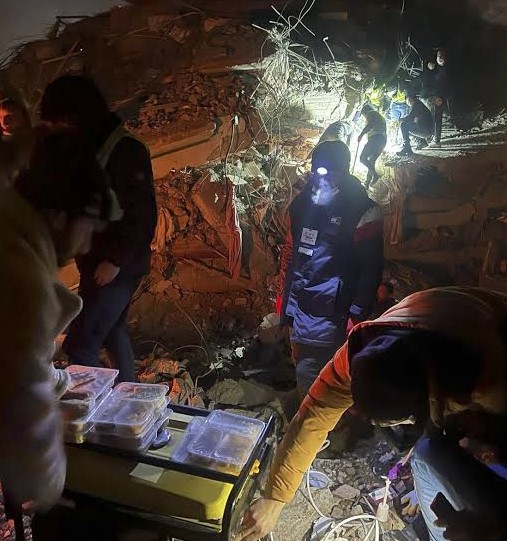
A magnitude 7.0 earthquake struck a remote, high-altitude area of northern Tibet on Thursday night, killing at least 16 people and collapsing more than 300 houses, according to Chinese state media.
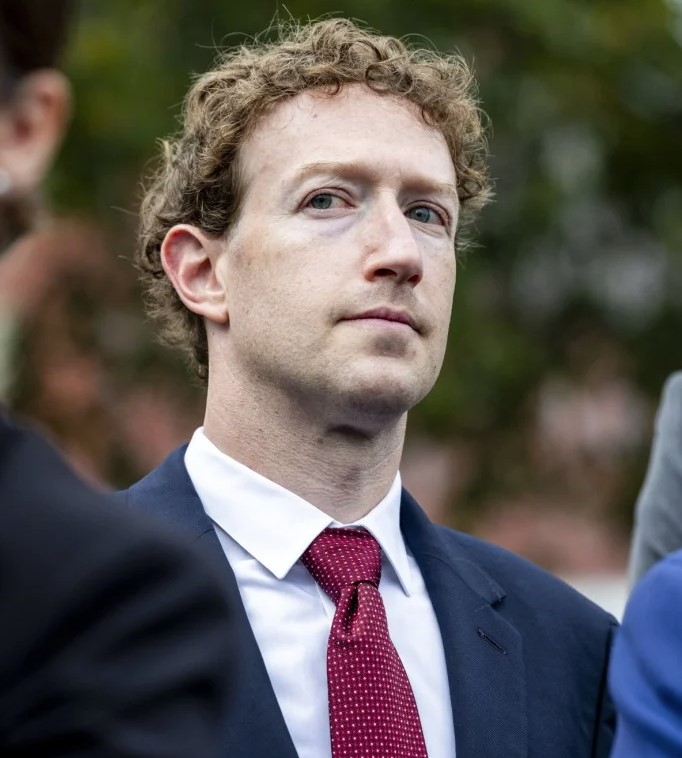
A New Mexico judge ordered Meta to pay the state $25 billion on Wednesday after a jury found the company misled consumers about data privacy, in one of the largest financial penalties in US history.

Christiane Amanpour, 68, announced on Monday that she will leave CNN at the end of June 2027 after 43 years, scaling back her show to once a week from early 2027.