
Emergency services at the site of a collision between a Renfe AVE and an Iryo train on the Madrid-Seville high-speed line in Toledo province on October 28, 2026, which killed at least 69 people.



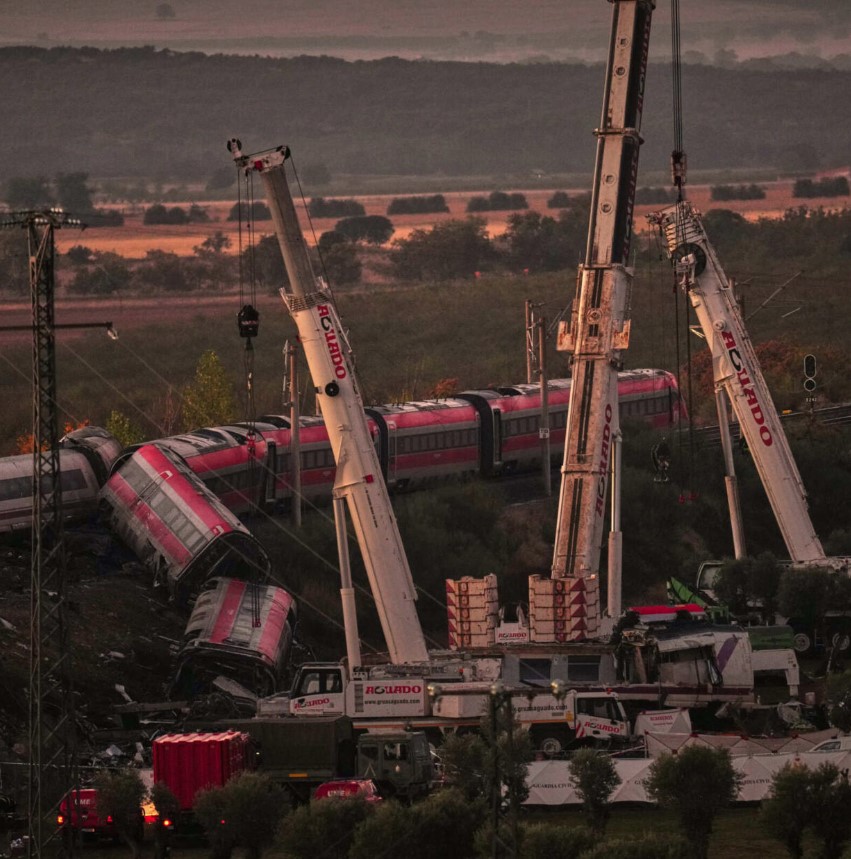
Emergency services at the site of a collision between a Renfe AVE and an Iryo train on the Madrid-Seville high-speed line in Toledo province on October 28, 2026, which killed at least 69 people.
A decision by Spain’s rail control centre to let a high-speed train resume its journey after a computer failure is at the centre of the investigation into a collision on the Madrid-Seville line that killed at least 69 people, according to officials. Transport Minister Óscar Puente called the order “inexplicable.”
The accident happened at 8:53 a.m. on Wednesday, October 28, at kilometre 118 of the line, near Urda and Los Yébenes in Toledo province, about 150 kilometres south of Madrid. A Renfe AVE train ran into the back of an Iryo train that was stationary on the same track. Both trains were travelling from Madrid to Seville. It is the deadliest high-speed train crash in Spain since 2013, when 80 people were killed in a derailment in Galicia.
Euronews reconstructed the sequence in the minutes before the collision. At 8:30 a.m., it reported, a computer fault disabled the LZB system, the automatic train-control technology on the line, forcing several trains to stop. The crash came after Adif, the state-owned infrastructure manager, authorised the AVE to resume its journey. The company has not publicly detailed what information the controllers had at that moment. Communications records, traffic logs and the black-box data from both trains will be crucial to reconstructing the decisions taken in those minutes, according to the report.
Puente said preliminary findings point to an order from the controllers that allowed one train to proceed despite a safety failure that had halted a train further ahead. He argued that the AVE should never have been allowed to resume under those conditions. “We have suffered two terrible high-speed rail tragedies in a single year,” he said, according to ABC News. These are preliminary statements from the government, and the formal findings of the investigation have not been published.
The crash is the second major high-speed rail disaster in Spain this year. In January, two trains collided near Adamuz in Córdoba province after one derailed, killing 46 people according to Euronews. That accident involved trains from the same operators, Iryo and Renfe, and investigators focused on a broken rail joint and on earlier reports of problems with the infrastructure there. Spain’s train drivers’ union, SEMAF, had warned of wear on the tracks months before, and later called a nationwide strike to demand safety assurances. The causes of the two accidents appear to be different, with January’s linked to track and Wednesday’s to a decision in the control centre, and the investigations are separate.
A court has ordered a restriction on access to a two-kilometre section of the line around the crash site, one of the first measures taken. An independent technical investigation will examine what caused the collision and make recommendations to improve rail safety. As in January, a judicial inquiry is also under way, which means the evidence will be examined for both safety lessons and possible legal responsibility.
Rescue teams worked at the site through the day, and the toll of at least 69 dead is based on figures given by officials to ABC News on Wednesday. Numbers can change as identifications are completed. Passengers on the stationary Iryo train, which had been halted because of the earlier fault, described feeling “a huge crash,” an American tourist told ABC. Spain observed a minute of silence for the victims, and King Felipe visited a hospital where some of the injured were being treated, Euronews reported.
The disaster raises uncomfortable questions for a country that has built Europe’s largest high-speed rail network, with more than 1,900 miles of track, and has long treated it as a point of national pride. Two crashes within a year have prompted debate about maintenance, staffing and the procedures that apply when automatic systems fail. The January crash was the first with deaths on a Spanish high-speed line since the network opened in 1992, a record that Wednesday’s collision has now ended for the second time in a single year.
The government has promised a transparent investigation, and the focus now turns to the control centre’s recordings. Investigators will want to know who authorised the AVE, what they were told, whether procedures for a failed train-control system were followed, and whether the line’s safety rules are adequate for situations like this one. Until those questions are answered, officials have urged caution about assigning blame beyond the preliminary statements.
For the families of the victims, those answers will matter most. For the rail network, they will determine whether passengers can trust a system that has now suffered two serious accidents in under ten months. The next milestones are the investigation’s preliminary report, any criminal findings from the court, and decisions on when the line, one of Spain’s busiest, returns to normal service.


Americans vote Tuesday, November 3, in midterm elections that will decide control of Congress and 36 governorships.
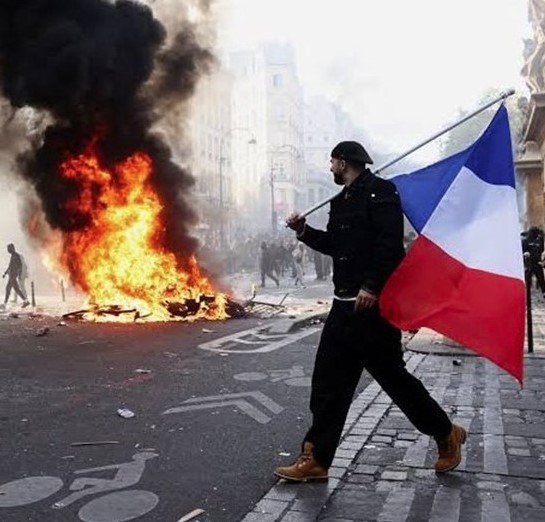
Protesters march in Paris on October 31, 2026, as nationwide demonstrations over the cost of living continued.
Emergency services at the site of a collision between a Renfe AVE and an Iryo train on the Madrid-Seville high-speed line in Toledo province on October 28, 2026, which killed at least 69 people.

Binance, the world’s largest crypto exchange by trading volume, suspended deposits and withdrawals on Thursday after a security incident that it estimates had an impact of about $6.3 billion.