
Authorities closed six Delhi metro stations and restricted traffic on more than 20 stretches on Monday as opposition parties marched to the Supreme Court over a controversial revision of voter lists.


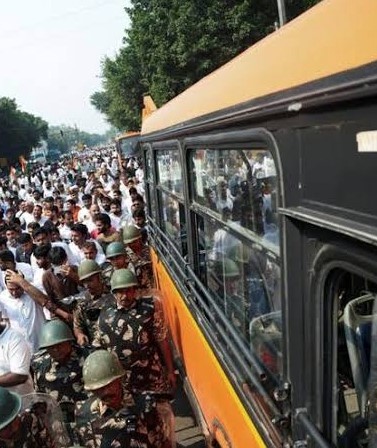
Authorities closed six Delhi metro stations and restricted traffic on more than 20 stretches on Monday as opposition parties marched to the Supreme Court over a controversial revision of voter lists.
Authorities in Delhi closed six metro stations and imposed traffic restrictions on Monday as opposition parties began marching to the Supreme Court, escalating days of unrest over a revision of India’s voter lists that critics say favours the ruling Bharatiya Janata Party. The Election Commission and the BJP reject that charge.
The six stations were shut for “security reasons” between 6 a.m. and 4 p.m., according to the Delhi Metro Rail Corporation, while police set up diversions and barricades along more than 20 stretches of road across central and New Delhi. Delhi Traffic Police warned that conditions could change through the day depending on the situation on the ground.
The main opposition Congress party announced the march to the Supreme Court to submit a memorandum to the Chief Justice, demanding an end to what it calls “vote theft” and the resignation of Chief Election Commissioner Gyanesh Kumar. Congress leader Rahul Gandhi said on X that young people, opposition parties and civil society groups would walk with the party.
At the centre of the dispute is the revision of electoral rolls, formally known as the Special Intensive Revision. According to Election Commission data cited by Reuters, about 130 million names have been deleted during the verification exercise. These include 28 million people who had died, 63 million who had relocated and 30 million who could not be traced. The Commission has denied favouring any party and says voters who were wrongly removed can re-enrol. The BJP has accused its rivals of trying to undermine democracy by wrongly questioning legitimate electoral processes.
Opposition parties and supporters of a youth movement known as the “cockroach” movement have taken to the streets almost daily this month to demand Kumar’s resignation. Over the weekend, police detained thousands of protesters in Delhi, including leaders of the Cockroach Janta Party (CJP), as supporters tried to march and were stopped by thousands of security personnel who locked down central Delhi, Reuters reported. The movement had earlier staged a sit-in lasting weeks at Jantar Mantar, a long-standing protest site, to press Education Minister Dharmendra Pradhan to quit over exam paper leaks.
The CJP said on Monday that its leaders were meeting Delhi Police to demand a date for a peaceful protest. Spokesperson Saurav Das said the group had left it to police to name a date and time but would give them a 24-hour ultimatum, after which it threatened to announce a new protest call.
The unrest has also reached the legal community. The Supreme Court Bar Association moved the Supreme Court over the detention of lawyers and the suspension of internet services during the protests, LiveLaw reported on Monday. The filing adds a civil liberties dimension to a dispute that began as a row over the accuracy of voter lists.
The current protests follow weeks of mobilisation by the INDIA bloc, which earlier announced a month-long “Save Democracy March” including district-level demonstrations and a march to the Election Commission. Opposition leaders have accused the Commission of enabling “vote chori”, while the poll body has said no deletion can be made online by any member of the public and that its decisions on the exercise were taken unanimously. Those competing accounts have not been reconciled, and neither side has shown signs of backing down.
Delhi’s response, the closure of stations and the lockdown of central areas, reflects how seriously authorities view the risk of large crowds converging on the capital’s institutions. Opposition figures have described the detentions as an attack on the right to protest, while officials have framed the restrictions as necessary to maintain order. The Supreme Court, which the opposition is now approaching directly, is likely to face questions both on the voter list revision itself and on how protests against it are being policed.
What happens next depends on three things: whether the Supreme Court agrees to hear the opposition’s petition, how Delhi Police respond to the CJP’s ultimatum, and whether the Election Commission offers any change in how the revision is carried out. For now, the capital remains tense, and the dispute over who gets to vote, and who decides, is moving from the streets to the courts.


Hurricane Isaias made landfall near Destin, Florida, on Friday night as a Category 2 storm with 105 mph winds, leaving widespread damage, flooding and power outages across the northern Gulf Coast.
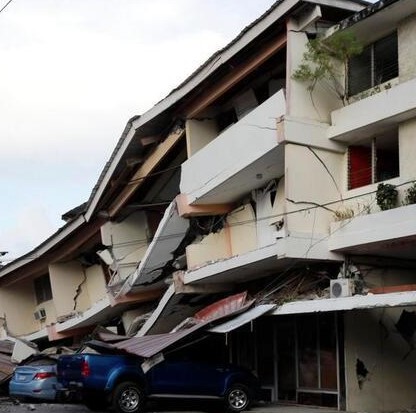
A magnitude 7.7 earthquake struck southern Panama on Friday, partially collapsing the San Juan Bautista cathedral in Penonomé and injuring at least 27 people, authorities said.
Authorities closed six Delhi metro stations and restricted traffic on more than 20 stretches on Monday as opposition parties marched to the Supreme Court over a controversial revision of voter lists.
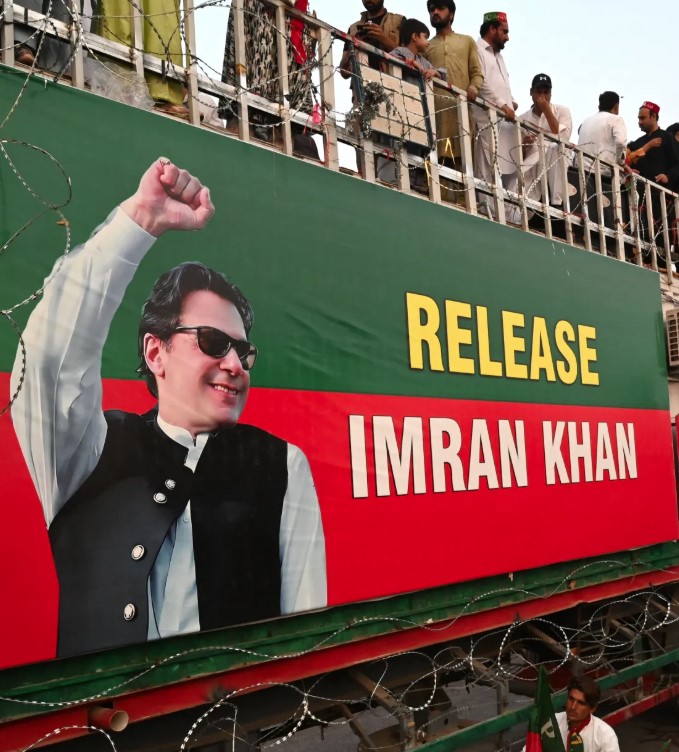
The federal government imposed an emergency and governor’s rule in Khyber Pakhtunkhwa on Sunday, citing the provincial government’s alleged disengagement from counterterrorism efforts. PTI has rejected the move.