A magnitude 7.7 earthquake struck southern Panama on Friday, partially collapsing the San Juan Bautista cathedral in Penonomé and injuring at least 27 people, authorities said.

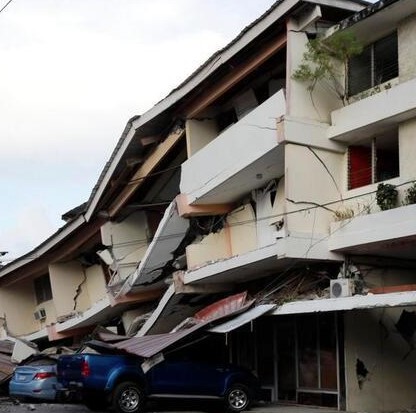
A magnitude 7.7 earthquake struck southern Panama on Friday, partially collapsing the San Juan Bautista cathedral in Penonomé and injuring at least 27 people, authorities said.
A magnitude 7.7 earthquake struck southern Panama on Friday, partly collapsing a cathedral, damaging government buildings and injuring at least 27 people, according to the US Geological Survey (USGS) and Panamanian authorities. No deaths had been confirmed in the latest reports, though officials cautioned that the picture could change as rescue teams reach more remote communities.
The USGS placed the epicentre close to Panama’s southern tip, about 12 kilometres west-southwest of the remote community of Pitaloza Arriba. The agency first registered the quake at magnitude 8.0 before revising it down, and some outlets cited slightly lower figures. Panama’s geological institute reported the earthquake as magnitude 7.2. Tremors were felt more than 100 miles away in Panama City, where buildings shook and residents ran into the streets.
A second strong earthquake, of magnitude 6.6, followed about two and a half hours after the first. Seismologists at the University of Panama recorded dozens of aftershocks, though many were too weak to be felt, and local media later put the number above 100.
Damage was concentrated in the central provinces of Veraguas, Herrera and Los Santos, said Omar Smith of Panama’s National Civil Protection Service, who added that none had been reported in the capital. In Penonomé, in Coclé province about 150 kilometres from Panama City, the San Juan Bautista cathedral in the main square was partially collapsed and cracked, according to President José Raúl Mulino, who also confirmed damage to the governor’s office building and the Dos Continentes hotel. Footage from the city showed part of a hotel facade falling onto a car and a statue of Simón Bolívar lying broken on the ground. Authorities also reported severe damage in Santiago. The governor’s palace in Coclé suffered significant structural damage, though staff were evacuated safely.
Mulino said on Friday evening that authorities had not documented anyone killed, and warned that the situation could change in the coming hours or days. The injured, at least 27 across five provinces according to local reports, were taken to schools, health centres and hospitals, said Malitzie Rivera, deputy director of Panama’s civil protection service. One person was struck by debris from a partially collapsed structure in Penonomé. Patients were evacuated outside hospitals as a precaution.
The earthquake also disrupted travel and daily life. Tocumen International Airport in Panama City, one of Latin America’s busiest hubs with more than 20 million passengers last year, temporarily suspended operations after the first tremor and reopened Friday afternoon. Panama’s education ministry ordered schools closed.
Tsunami alerts were issued across the region. The US Tsunami Warning Center flagged threats for Panama and for Ecuador, Colombia, Nicaragua, Guatemala, Mexico, El Salvador, Costa Rica and Peru. The warning for the eastern Pacific was later lifted, and no significant tsunami was reported.
Earthquakes of this size are rare in Panama. The last major quake to cause widespread damage in the country struck in 1991, when a magnitude 7.4 earthquake centred in nearby Costa Rica killed 23 people, injured 559 and left thousands homeless in the border region of Bocas del Toro. Panama sits along the Ring of Fire, the arc of volcanoes and fault lines around the Pacific Basin where most of the world’s earthquakes occur. Friday’s quake is at least the fourth above magnitude 7.0 in Latin America this year, following earthquakes in Venezuela in June and in Colombia in August.
Authorities have asked residents in the affected provinces to avoid damaged buildings and to expect further aftershocks, which are common after a quake of this size. Engineers are expected to assess the cathedral and other public buildings before any decision on repairs or demolition is made, and officials have said the full extent of the damage in isolated areas may take days to establish.
For now, the immediate priorities are checking on communities that are hardest to reach, treating the injured and inspecting structures that may be unsafe. The absence of confirmed deaths from a quake of this strength has been described by some officials as fortunate, but the figures remain preliminary and are likely to be revised as assessments continue.

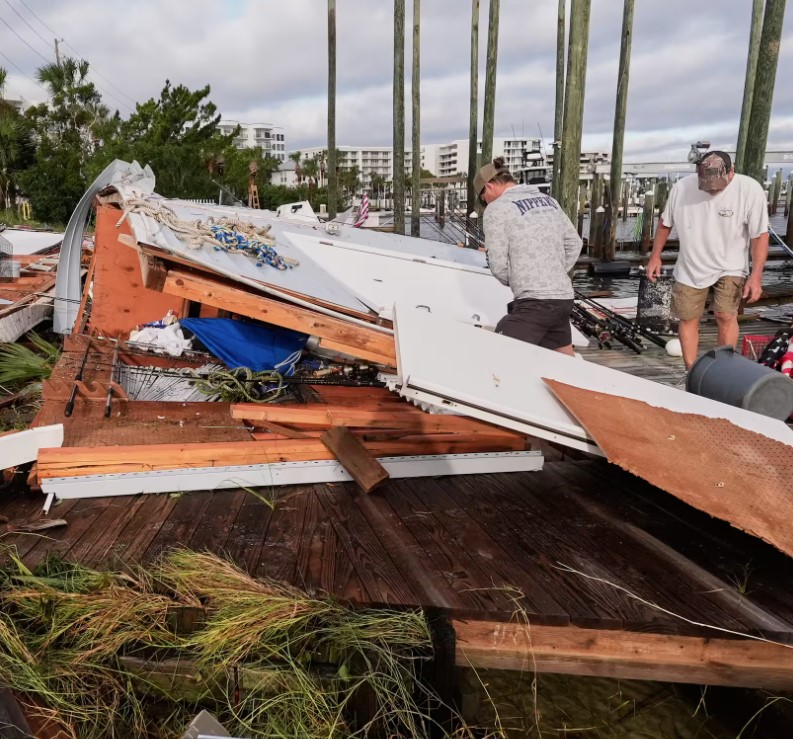
Hurricane Isaias made landfall near Destin, Florida, on Friday night as a Category 2 storm with 105 mph winds, leaving widespread damage, flooding and power outages across the northern Gulf Coast.
A magnitude 7.7 earthquake struck southern Panama on Friday, partially collapsing the San Juan Bautista cathedral in Penonomé and injuring at least 27 people, authorities said.
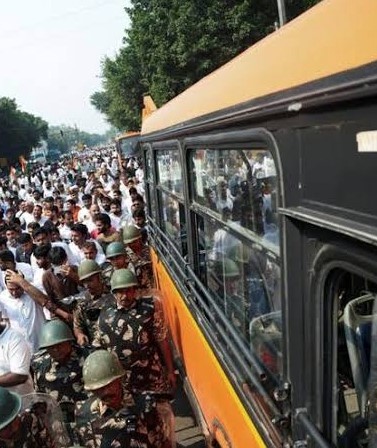
Authorities closed six Delhi metro stations and restricted traffic on more than 20 stretches on Monday as opposition parties marched to the Supreme Court over a controversial revision of voter lists.

The federal government imposed an emergency and governor’s rule in Khyber Pakhtunkhwa on Sunday, citing the provincial government’s alleged disengagement from counterterrorism efforts. PTI has rejected the move.