Google has introduced Googlebook, a new category of laptops built on the Android platform, combining mobile convenience with desktop-class power and OS-level Gemini AI.



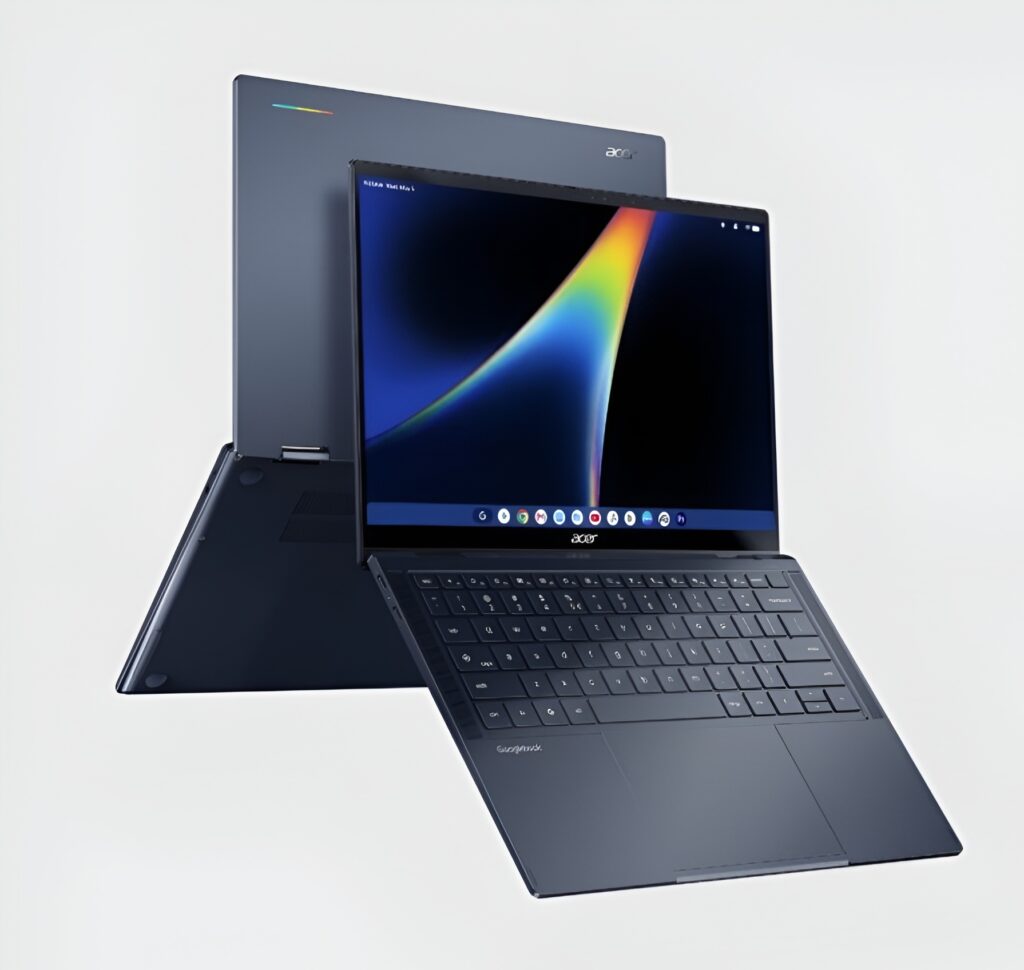
Google has introduced Googlebook, a new category of laptops built on the Android platform, combining mobile convenience with desktop-class power and OS-level Gemini AI.
Google has officially introduced Googlebook, a new lineup of laptops built on a shared Android foundation, marking the company’s latest attempt to blur the line between mobile and desktop computing and expand the Android ecosystem well beyond phones, tablets and foldables.
Announced through Google’s developer blog this week, Googlebook brings together high-performance hardware from a roster of established laptop manufacturers, including HP, Dell, Lenovo, Acer and Asus, all building machines around the same core Android platform. The devices are positioned to combine the convenience typically associated with mobile devices and desktop-level processing power, featuring high-resolution OLED touchscreens, dedicated physical keyboards, precision trackpads, all-day battery life, and Gemini Intelligence built directly into the operating system. According to Google, the goal is to let users move fluidly between quick, on-the-go interactions on their phone and longer, more immersive sessions on a Googlebook, without switching between fundamentally different software ecosystems, an experience Google is framing as a distinctly more integrated alternative to owning separate mobile and desktop platforms with little functional overlap between them.
For app developers, Google is framing Googlebook as a significant new distribution opportunity rather than a separate platform requiring a rebuilt app from scratch. Apps that already use Android’s adaptive layout system, technology designed to let a single codebase scale cleanly across phones, tablets, foldables and now laptops, are described as “primed” to work well on Googlebook with minimal additional engineering. Google Play will highlight apps optimized for the new devices through dedicated badging, enhanced search placement and featured spots on curated store homepages, while developers who meet a higher bar of quality can also enroll in the company’s Apps Experience Program, which offers an improved revenue-sharing rate designed to incentivize investment in the new form factor. Google is also promoting a seamless setup experience, where users transferring their existing Android apps to a new Googlebook will see their most relevant, optimized apps prominently surfaced for easy installation from day one, an approach clearly aimed at minimizing friction for users switching from their phone to a new laptop for the first time.
On the technical side, Google is pushing developers toward what it calls “desktop fundamentals” rather than simply stretching existing phone interfaces across a larger screen, an approach the company argues produces a noticeably worse experience for users accustomed to genuine desktop software. That includes adopting multi-pane layouts that reorganize content into functional sections as window size changes, supporting free-form resizable windows rather than fixed screen dimensions, and building for higher information density and more precise input methods like a mouse or trackpad rather than touch alone. Google’s guidance also emphasizes typography and spacing decisions suited to larger displays viewed from a greater distance than a typical phone screen, along with explicitly defined click targets meant to reduce misclicks during precision pointer input, details the company frames as easy to overlook when developers are primarily accustomed to designing for touch-first mobile interfaces.
Beyond layout, Google’s tools support multi-instance app windows, letting users open multiple copies of the same app side by side, along with drag-and-drop functionality for moving files, text and images between windows, right-click context menus, hover states, and customizable keyboard shortcuts, all features standard to desktop operating systems but historically absent from Android’s mobile-first design language. Developers are also being given the ability to customize their app’s window frame directly, including styling the caption bar with custom backgrounds, search fields or tabs, while still respecting the underlying system-level window controls users expect to remain consistent across apps.
Also Read: Apple’s Foldable iPhone Fixed the Crease. It Didn’t Fix the Real Problem
Google also highlighted a feature called “Continue On,” designed to let users start a task on one device, such as writing a note or reading a document on their phone, and pick it up seamlessly on their Googlebook without losing their place, preserving details like scroll position or open tabs in the process, with optional web-based fallbacks built in to keep the transition smooth even when an app isn’t installed on both devices. Early developer adopters cited in Google’s announcement pointed to this kind of cross-device continuity as one of the more compelling reasons to invest in the new platform. Ryan Shea, an Android engineering manager at note-taking app Notability, said the company’s existing investment in supporting tablets and foldables gave its team a head start when adapting to Googlebook, since much of its layout logic already relied on the same adaptive design principles Google is now pushing more broadly. “We had already been targeting first-class experiences for tablets and foldables,” Shea said. “So by the time Googlebook came along, scaling Notability up to a laptop-class experience was mostly turning a dial we had already built.” He added that the head start freed the team to focus specifically on features that only make sense on a larger screen, including the phone-to-laptop handoff functionality and a refined side-by-side study experience within the app itself.
To support developers building for the new devices, Google is offering a desktop emulator within Android Studio, allowing developers to test free-form window resizing, multi-instance behavior, and mouse, trackpad and keyboard interactions directly from their existing development workstation without needing physical Googlebook hardware on hand. The company is also promoting AI-assisted tooling meant to speed up the process of converting older, mobile-only app layouts into more flexible, adaptive designs suited to larger screens, describing a dedicated “adaptive skill” that can be installed through Google’s command-line developer tools to help automate parts of that refactoring process.
The launch positions Googlebook as a notable expansion of Google’s hardware ambitions, extending Android’s reach into a laptop category long dominated by Windows and Chrome OS, and setting up a more direct contest with Microsoft and Apple over how mobile-first software ecosystems translate into full desktop computing experiences. The partnership model, relying on established third-party hardware manufacturers rather than a single Google-built device, also echoes the broader strategy Android has long used in the smartphone market, betting that a wide range of price points and hardware configurations across multiple brands will help the platform reach a larger and more varied customer base than a single flagship device could achieve on its own.
Whether Googlebook succeeds in carving out meaningful market share will likely depend heavily on developer adoption in the coming months, as the value proposition for consumers rests significantly on how many of their favorite Android apps genuinely take advantage of the platform’s larger screens and desktop-oriented features, rather than functioning as little more than an oversized phone interface stretched awkwardly across additional pixels. For now, Google appears to be betting that the sheer scale of the existing Android developer ecosystem, combined with tooling designed to make the transition to desktop-class experiences relatively painless, will be enough to convince developers the investment is worthwhile before consumer demand for the category has been fully proven.


Hurricane Isaias made landfall near Destin, Florida, on Friday night as a Category 2 storm with 105 mph winds, leaving widespread damage, flooding and power outages across the northern Gulf Coast.

A magnitude 7.7 earthquake struck southern Panama on Friday, partially collapsing the San Juan Bautista cathedral in Penonomé and injuring at least 27 people, authorities said.

Authorities closed six Delhi metro stations and restricted traffic on more than 20 stretches on Monday as opposition parties marched to the Supreme Court over a controversial revision of voter lists.

The federal government imposed an emergency and governor’s rule in Khyber Pakhtunkhwa on Sunday, citing the provincial government’s alleged disengagement from counterterrorism efforts. PTI has rejected the move.