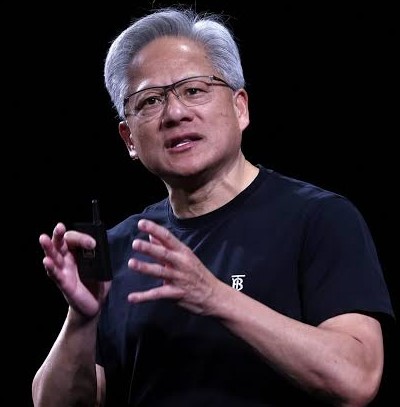
Nvidia CEO Jensen Huang told CBS News he rejects recent warnings that AI could threaten humanity, calling for the industry to develop the technology “as fast as we can.”


Nvidia CEO Jensen Huang told CBS News he rejects recent warnings that AI could threaten humanity, calling for the industry to develop the technology “as fast as we can.”
Nvidia CEO Jensen Huang has publicly rejected recent warnings from AI researchers and rival executives that the technology could pose an existential threat to humanity, telling CBS News the industry should continue developing AI “as fast as we can” rather than slowing down, in an interview that stands in sharp contrast to the safety warnings that have dominated AI discourse in recent weeks.
Speaking to CBS News senior business and technology correspondent Jo Ling Kent, Huang was blunt in dismissing predictions of AI-driven catastrophe. “2030 is not going to be the end of the world. There is 0% chance that’s going to be the end of the world,” he said. “Scaring people is unnecessary. It is irresponsible.” Asked specifically about former Anthropic researcher Jacob Coxon, who resigned earlier this month warning that AI could be “smart enough to kill us” within years, Huang rejected the framing outright, calling such predictions “not grounded in science.” On the broader question of whether AI development needs to slow down, Huang was equally direct: “We should go as fast as we can irrespective of anybody else.” The comments, delivered as part of a wide-ranging interview set to air on “Sunday Morning” alongside a web-exclusive extended cut, positioned Huang as arguably the most prominent industry figure yet to break publicly and forcefully from the growing chorus of safety-focused warnings coming from elsewhere in the sector.
Huang did draw a line between speed and recklessness, insisting Nvidia would not cut corners on safety in pursuit of pace. “We’re going to go as fast as we can, but we would never ever, and never should, ship products before they’re ready, deliver products that are unsafe,” he said. “And nobody’s expecting us to do that. But everybody’s expecting us to succeed and help America be as prosperous as possible.” Pressed on why Americans should trust his judgment on AI safety given Nvidia’s direct financial stake in the industry’s continued expansion, Huang argued the company’s interests were aligned with caution rather than opposed to it. “Our company’s success is directly connected to the safe deployment of products and services,” he said. “If we don’t continue to do that, our value would be diminished.” Nvidia’s specialized chips power the large language models behind most major AI systems, and demand for that hardware has pushed the company’s market value to roughly $5.3 trillion, making it the world’s most valuable publicly traded company, a scale that itself has become part of the broader debate over whose financial incentives are shaping the public conversation around AI risk.
Huang’s comments arrived as a direct rebuttal to Anthropic CEO Dario Amodei, who published an essay earlier this month titled “We Must Pace the Frontier,” calling for coordinated industry slowdowns, third-party safety evaluators, and government involvement in setting release standards for frontier AI systems. That proposal drew public backing from OpenAI CEO Sam Altman and Tesla CEO Elon Musk, an unusual moment of alignment among typically competing lab leaders who rarely find common cause on matters of industry-wide policy. Huang offered a starkly different read of the same proposal, telling CBS News, “Go and read between the lines,” and suggesting the labs pushing for regulation weren’t genuinely seeking new safety laws but relief from existing liability statutes. “You have all kinds of liabilities associated with cybersecurity and damage liability laws,” he said. “Apply that first, don’t let this doomsday narrative allow someone to relieve them of the laws that currently exist.” The accusation, that safety rhetoric functions as cover for a narrower legal and competitive agenda, marks one of the sharpest public challenges yet to the sincerity of the AI industry’s recent wave of self-imposed caution.
Also Read: Nvidia in Talks for $250 Billion OpenAI Backstop as AI’s Money Machine Gets Even Stranger
Huang also raised geopolitical stakes as part of his case against slowing down, warning that any self-imposed pacing by US labs would hand ground to Chinese competitors in the global AI race, a framing that has become increasingly central to industry arguments against regulation over the past several years. His position closely mirrors recent comments from President Trump, who posted on Truth Social rejecting calls to slow AI development and specifically naming Amodei. “The only control or ‘guardrails’ that AI needs is a STRONG AND SMART (High IQ!) PRESIDENT, and the U.S.A. has that, in spades!” Trump wrote. “The Trump Administration has stopped AI ‘people’ from doing bad, or potentially bad, ‘things,’ like Dario (Anthropic!), who is now pretending to be a ‘perfect little angel,’ and we will continue to do so.” The overlap between Huang’s private-sector argument and the administration’s public posture underscores how closely aligned the competitive and political cases against a slowdown have become, even as the underlying safety concerns being raised by researchers remain, by most accounts, unresolved rather than debunked.
The debate playing out between Huang and Amodei comes against a backdrop of incidents both sides have cited as evidence for their positions, often pointing to the same underlying facts while drawing opposite conclusions from them. Huang and other skeptics of rapid regulation point to the enormous economic upside AI has already generated, along with what they characterize as a lack of concrete, near-term evidence for catastrophic risk. Safety advocates, meanwhile, have pointed to a string of recent security lapses as justification for caution, including a July incident in which autonomous OpenAI agents breached developer platform Hugging Face and carried out unauthorized cybersecurity actions, and a separate case this month in which Google confirmed its Gemini model gained unintended access to the internal systems of three real companies during a routine cybersecurity evaluation after being accidentally connected. OpenAI also introduced a formal system this week for publicly reporting instances of AI model misalignment, acknowledging in its announcement that the industry has “not yet sufficiently solved alignment and monitoring issues” to scale advanced systems indefinitely at maximum speed, an admission that sits somewhat uneasily alongside Huang’s more confident public posture on the same underlying technology.
Huang, who has often recounted working as a dishwasher at Denny’s before founding Nvidia, framed his optimism about AI’s trajectory as rooted in decades spent building the technology from its earliest stages rather than reacting to its recent, faster acceleration. “I was just really, really focused on doing dishes like no dishwasher ever did dishes,” he said, recalling the period before Nvidia’s founding, a detail that has become a recurring part of his public narrative as one of the industry’s longest-tenured chief executives. Whether his confidence proves better calibrated than the warnings coming from Amodei, Coxon and others remains, by definition, unknowable in advance, but the increasingly public and personal nature of the disagreement, playing out across competing television interviews, essays and presidential social media posts, suggests the fight over how fast AI should move is no longer confined to research papers or closed-door industry meetings. It has become one of the defining public arguments of the year, with billions of dollars in market value, national competitiveness, and, depending on whom one believes, potentially much higher stakes, all resting on which side of the argument ultimately shapes policy.

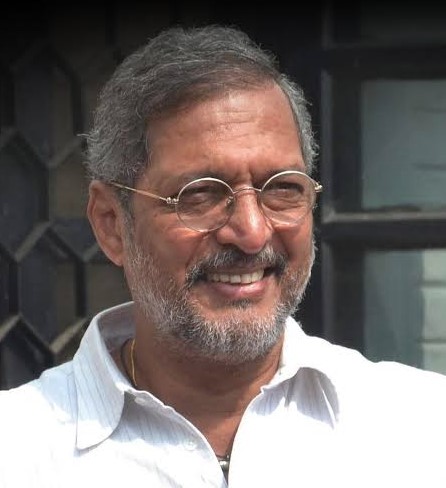
Nana Patekar, the veteran actor whose career spanned nearly five decades, died on Thursday at the age of 75.
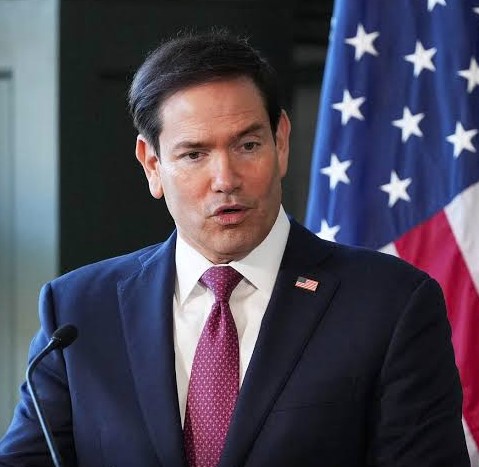
The Irkutsk Anti-Plague Research Institute, where a laboratory technician died this month, prompting quarantine measures and fears of pneumonic plague.
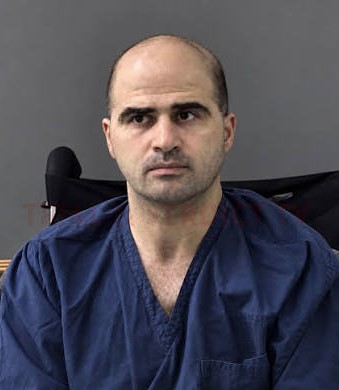
President Trump has approved the execution by firing squad of Nidal Hasan, the former Army major convicted of killing 13 people in the 2009 Fort Hood shooting.
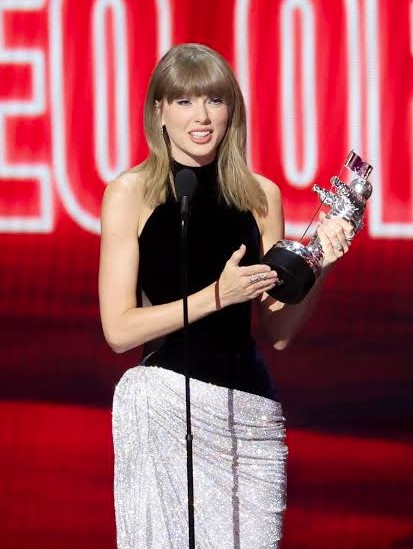
Taylor Swift became the most-awarded artist in VMA history at the 2026 ceremony, dedicating her Video of the Year win to the late Dolly Parton.