Supporters of Gadi Eisenkot’s Yashar party react to exit poll results in Tel Aviv. Israel’s election left neither Netanyahu’s bloc nor Eisenkot’s opposition bloc with the 61 seats needed to govern.


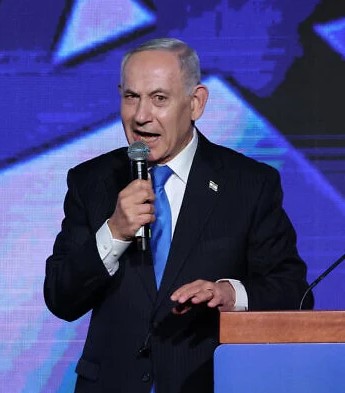
Supporters of Gadi Eisenkot’s Yashar party react to exit poll results in Tel Aviv. Israel’s election left neither Netanyahu’s bloc nor Eisenkot’s opposition bloc with the 61 seats needed to govern.
Israel’s parliamentary election has produced no clear winner. With nearly 90 percent of ballots counted, neither Prime Minister Benjamin Netanyahu’s right-wing and ultra-Orthodox bloc nor the opposition bloc led by former military chief Gadi Eisenkot has reached the 61 seats needed for a majority in the 120-seat Knesset, setting up weeks of coalition negotiations and possibly another election.
According to the latest tallies reported by Israeli and international media, Netanyahu’s bloc is on course for about 53 seats and the opposition bloc led by Eisenkot for about 48. Arab-led parties, which belong to neither bloc, are projected to win around 19 seats, with the Joint List at 12 and Ra’am at 7, according to figures published by the Jerusalem Post from the Central Elections Committee. Netanyahu will remain caretaker prime minister until a new government is formed. Final results had not been certified at the time of writing, and individual seat counts can still shift by a seat or two as the last ballots are counted.
The vote on Tuesday, October 27, was Israel’s first since the Hamas-led attack of October 7, 2023, and was widely seen as a referendum on Netanyahu’s handling of that attack, the war in Gaza and the conflicts with Lebanon and Iran. It followed the dissolution of the Knesset on July 17 after months of coalition strains, during which the government repeatedly came close to collapse. Early exit polls had suggested a closer race. One by Channel 12 put Netanyahu’s bloc at 52 seats and Eisenkot’s at 49, and other early projections gave the Netanyahu bloc as many as 56. As real ballots were counted, the opposition bloc dipped, but Netanyahu’s bloc remained well short of a majority, a pattern that has led analysts to caution against reading too much into early projections.
Likud is still the largest single party, with about 26 seats in the latest count, followed by Eisenkot’s Yashar party. The other parties in Netanyahu’s bloc, United Torah Judaism, Shas, Otzma Yehudit and Religious Zionism, are projected at between six and eight seats each. In the opposition bloc, the Democrats, led by Yair Golan, are expected to win about eight seats and Avigdor Liberman’s Yisrael Beytenu about seven. The ruling bloc has lost a significant number of seats compared with its representation in the outgoing Knesset, CNN’s live coverage reported, citing a figure of 18. That drop is the clearest sign of the voters’ mood, even if it did not translate into a clear opposition majority.
Netanyahu stressed that the results were not final. “We are still waiting for the real results that we will receive within the next 48 hours,” he said, adding that Likud is the biggest party in Israel. He told his far-right partners Itamar Ben Gvir and Bezalel Smotrich that “we are together and we are staying together,” and described the moment as a “historic, one-time opportunity” to defeat Iran “once and for all,” according to the Times of Israel. He also criticised what he called criminal political investigations into him, and said it was a “shame” that some parties were willing to cooperate with Arab parties.
Eisenkot said voters had expressed no confidence in the Netanyahu government and vowed to bring change. Golan said the Netanyahu bloc had lost and that the opposition, counting the Arab parties, reached 65 seats. That arithmetic is contested within the opposition. The Jerusalem Post reported that some opposition figures are reluctant to rely on Arab parties to form a government, a position that complicates any attempt to build a majority without Netanyahu. Ra’am leader Mansour Abbas told Channel 12 he was interested in joining Eisenkot’s bloc, and criticised Netanyahu. Whether Eisenkot’s allies would accept Arab parties in a governing coalition, or only as outside support, is among the central unanswered questions.
Arab turnout may have been decisive. The Joint List said preliminary figures showed that Arab voters played a key role in keeping Netanyahu’s coalition short of a majority. Likud, for its part, said it was handing the police, the Shin Bet security service and the Central Elections Committee “hundreds of testimonies and pieces of evidence” regarding what it called election theft in many Arab polling stations. The reports reviewed did not substantiate that claim, and no official finding of fraud has been announced. Israeli election authorities typically investigate such complaints, and they rarely change the outcome, but the allegations show how contested the result is likely to become.
The path to a government is difficult. A unity government of Netanyahu and Eisenkot looks unlikely, since Eisenkot has rejected serving under Netanyahu, including in a rotation arrangement. Other options include smaller parties switching sides, a minority government supported from outside, or another election, which would be the latest in a long series of repeated votes in recent years. Israel has never had a single party win an outright majority, and coalition-building is the norm, but this result is unusually tight. The White House has not decided whether to intervene in the coalition talks, an American official told the Times of Israel, a reminder of how closely Washington follows Israeli politics, particularly while the war with Iran continues.
The next steps are procedural. Once final results are certified, Israel’s president will consult party leaders and assign one of them the task of forming a government, normally the person with the best chance of reaching 61 seats. That candidate usually has 28 days, with a possible extension, to complete the process. If no one succeeds, the president can hand the task to another candidate, and failure again would send the country back to the polls. During that period, Netanyahu remains in office with full powers as caretaker, a status that critics say should limit major decisions and supporters say changes little in practice.
The timing matters because Israel is fighting on several fronts. The war with Iran is in its eighth month, the situation in Gaza and Lebanon remains unresolved, and the Houthis in Yemen are attacking Saudi Arabia, which adds regional pressure. A drawn-out coalition fight could slow decisions on those issues, or push leaders to take positions designed to win over potential partners. Observers also point out that the ultra-Orthodox parties, which sit in Netanyahu’s bloc, have their own demands on military service and funding, and these are likely to feature in any negotiation.
Whatever the outcome, the election shows a divided electorate. A government led by Netanyahu would face a narrower mandate than before, while an opposition government would depend on a coalition of parties with sharply different views on security, religion and the place of Arab citizens in public life. How the talks develop, and whether the Arab parties are included, will shape both Israel’s domestic politics and its approach to the wars it is fighting. For now, the only certainty is that the count is not over, and the negotiations have only just begun.

Supporters of Gadi Eisenkot’s Yashar party react to exit poll results in Tel Aviv. Israel’s election left neither Netanyahu’s bloc nor Eisenkot’s opposition bloc with the 61 seats needed to govern.

After the Novig campaigns and the SYRN holiday ad that recreates Cindy Lou Who, critics say Sydney Sweeney’s approach to advertising has become a repetitive cycle of provocation and silence.

Two critical vulnerabilities in PHP, found with the help of AI models and dubbed PHP2Shell, prompted emergency patches and temporary website shutdowns around the world this week.
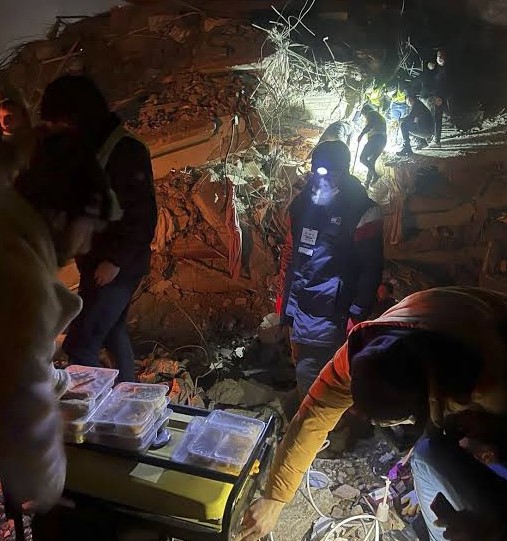
A magnitude 7.0 earthquake struck a remote, high-altitude area of northern Tibet on Thursday night, killing at least 16 people and collapsing more than 300 houses, according to Chinese state media.