Flights in and out of Riyadh have been suspended after repeated strikes on King Khalid International Airport, which Saudi authorities say killed at least 12 people and wounded more than 300.

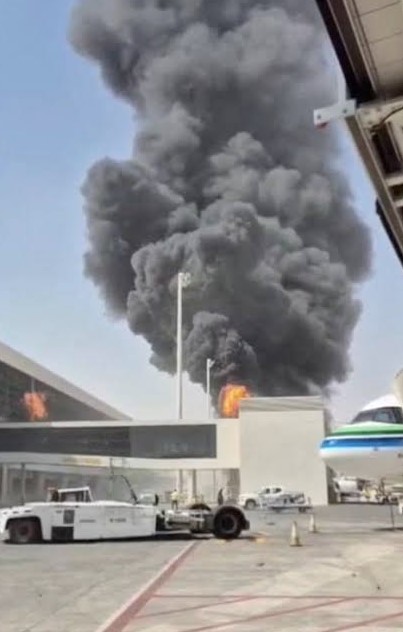
Flights in and out of Riyadh have been suspended after repeated strikes on King Khalid International Airport, which Saudi authorities say killed at least 12 people and wounded more than 300.
A series of Houthi attacks on civilian airports in Saudi Arabia has killed at least 12 people and wounded more than 300, according to Saudi authorities, shutting down air traffic at Riyadh and marking the deadliest strike on Saudi soil in more than a decade. The Saudi-led coalition has vowed a decisive response, while the United States says it is weighing whether to join retaliatory action.
The worst of the violence hit King Khalid International Airport in Riyadh over the weekend, where Saudi officials said some of the wounded were in serious condition. The attacks came in waves. On Thursday, Saudi civil aviation authorities said three Saudi nationals, including a pilot, were killed when the airport and an aircraft were struck. A larger strike followed on Saturday, and a further attack on Sunday killed a Pakistani national and injured 11 others, Saudi Arabia said. On Monday, the kingdom reported that King Fahd International Airport in Dammam, in the Eastern Province, was also targeted, with a drone intercepted before it could cause damage. Casualty figures vary slightly between outlets and may overlap across incidents, as authorities continue to update their tallies.
Flights in and out of Riyadh have been suspended, and several carriers had already cancelled services after earlier strikes during the week. The US, Canadian, German and Spanish embassies in Saudi Arabia warned their citizens to avoid the airport, the US Federal Aviation Administration cautioned American airlines about extreme risks in Saudi airspace, and Australia advised travellers to reconsider travel to the kingdom altogether. For a capital that serves as one of the Middle East’s busiest aviation hubs, the shutdown carries consequences well beyond Saudi Arabia, disrupting connections for passengers and cargo moving across the region.
The Houthis renewed their warning to airlines, airport workers and travellers against using Saudi airports, saying the kingdom bore responsibility for failed interceptions. The Saudi-led coalition described the Riyadh strike as a war crime and said it is carrying out a wide-ranging operation against the Houthis in Yemen. Yemen’s military separately claimed that about 900 Houthi fighters had been killed in that offensive, a figure that has not been independently verified and that should be treated cautiously, as claims of battlefield losses from either side in this conflict have often proved difficult to confirm. The Houthis have said their strikes are retaliation for Saudi-led attacks on Yemen.
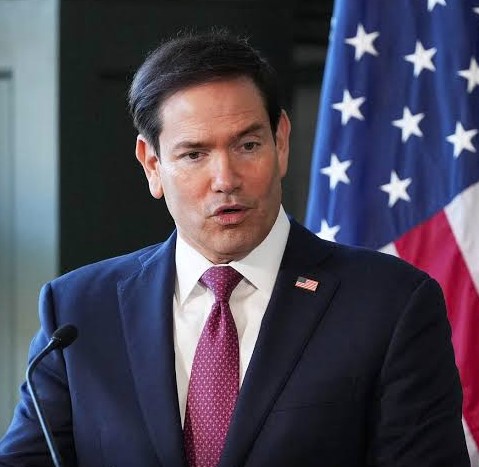
Reaction from abroad was swift. Pakistan’s Prime Minister Shehbaz Sharif condemned the attack and reaffirmed Islamabad’s commitment to Saudi security under the two countries’ defence pact, a notable pledge given that a Pakistani citizen was among the dead. Saudi Arabia, Egypt, Pakistan and Turkey jointly demanded an immediate halt to the Houthi attacks. A United Nations envoy called the strikes on civilian airports a “grave escalation.” US Secretary of State Marco Rubio said Washington strongly condemns the attacks, adding to a chorus of statements from governments that have repeatedly urged restraint while the violence has continued to widen.
Also Read: Saudi Arabia Says Houthi Drone Strike Hit Medina Power Station Supplying Prophet’s Mosque
President Donald Trump has said he is unhappy about Houthi strikes on civilians in Saudi Arabia and indicated on Saturday that he was evaluating whether the United States should join Saudi strikes against the group. No decision had been announced as of Monday. The question carries weight because Riyadh has so far appeared to avoid all-out war with the Houthis, and the airport attacks are expected to increase pressure on Saudi Arabia’s allies to provide military support. Any American involvement would bring Washington directly into a conflict that is already entangled with the wider regional war.
Iran, which backs the Houthis, denied directing the attacks and urged peace talks with Saudi Arabia. The denial comes as the wider war involving Iran, Israel and the United States enters its eighth month, with oil prices rising on the escalation and fresh incidents reported near the Strait of Hormuz, including attacks on two ships that left two Indian sailors missing. Energy markets have been especially sensitive to any sign that Saudi infrastructure, including the facilities that support its aviation and energy sectors, could be disrupted for an extended period.
The airport strikes follow weeks of mounting tension between Riyadh and the Houthis. Earlier this autumn, Saudi officials said a drone had been intercepted near Mecca, and a strike on a power transformer in Medina was attributed to the Houthis by the coalition, though the group denied involvement in both. A photograph from September 19 shows black smoke rising from the fuel storage area of King Khalid International Airport, indicating the site had been affected by an earlier incident. The current escalation follows the collapse of a roughly four-year truce that had largely held since a UN-brokered ceasefire in April 2022, after the Houthis declared a blockade on Saudi shipping in July and moved to control key points along the Bab al-Mandeb coastline.
The humanitarian cost inside Yemen remains severe. According to United Nations data, more than 22 million people in Yemen require humanitarian assistance, with 18.3 million facing acute food insecurity, figures that aid groups say could worsen as the fighting intensifies. Attacks that draw the most international attention tend to be those striking Saudi territory, but the toll on Yemeni civilians from years of war, and from the renewed fighting, continues largely out of the spotlight.
For now, Riyadh’s main airport remains closed to traffic, the Saudi military response is under way, and both sides are showing little sign of stepping back. The next moves, from Saudi Arabia’s campaign in Yemen to a possible US decision on joining it, will determine whether this week’s attacks mark a peak or the opening of a wider war in the Gulf.

Flights in and out of Riyadh have been suspended after repeated strikes on King Khalid International Airport, which Saudi authorities say killed at least 12 people and wounded more than 300.

Nana Patekar, the veteran actor whose career spanned nearly five decades, died on Thursday at the age of 75.
The Irkutsk Anti-Plague Research Institute, where a laboratory technician died this month, prompting quarantine measures and fears of pneumonic plague.
President Trump has approved the execution by firing squad of Nidal Hasan, the former Army major convicted of killing 13 people in the 2009 Fort Hood shooting.