True connection begins not with answers, but with the willingness …



There is a peculiar kind of ache that visits us in the presence of people we love, or wish to love better. We stand before them, our intentions auspicious, our hearts genuinely inclined toward generosity, and still we falter. We want to help. We want to matter to them in some small, durable way. And yet their inner lives remain sealed to us, guarded by a silence that no amount of affection seems able to breach. We offer gestures. We offer words. We offer time. And still we wonder, privately, whether any of it landed where it was meant to land.
This is not a failure of love. It is the quintessence of the human condition itself, that we are each sealed vessels, carrying private cargo that no one else can fully inventory. We assume that closeness grants us access, that enough years spent beside someone will eventually translate into fluency in their needs. But intimacy is not the same as comprehension. A person can share your bed, your table, your surname, for what feels like a perpetuity, and still remain, in some essential chamber of themselves, unknown to you.
I have come to believe that this opacity is not a flaw to be corrected but a condition to be honored.
We are not meant to read one another like open manuscripts. We are meant, instead, to ask, to listen, to revise our assumptions again and again, humbly, without the arrogance of certainty. The tragedy is not that we cannot know what others want. The tragedy is that we so often stop trying, mistaking our own guesses for gospel.
Also Read: Why Modern Dating Sucks (You’re Not Alone)
So what does everybody really want, if it is not the specific thing we imagine we ought to provide? I suspect it is something far less exotic than we assume, and far harder to deliver. People do not primarily want our solutions. They do not want our advice, however well reasoned, or our resources, however generously extended. What they want, in the main, is to be witnessed. They want the ineffable experience of being seen clearly, without correction, without agenda, without the subtle pressure to perform gratitude for the help being offered.
Consider how rarely this happens. Consider how often our attempts at kindness are really attempts at resolution, at tidying another person’s mess so that we might feel useful, so that our own discomfort at their suffering might be relieved. This is not malice. It is merely the shortcut our minds take when faced with someone else’s pain, because their pain is opaque to us and our own need to act is not. We would rather do something, anything, than sit inside the discomfort of not knowing what is needed. And so we offer the wrong gift, dressed beautifully, delivered with sincerity, and still somehow missing the mark.
The corrective, I think, is not cleverness. It is not some sharpened intuition that allows us to divine what others secretly crave. The corrective is patience, and a willingness to be told we were wrong. It requires that we relinquish our need to be the hero of another person’s story, and instead take up the humbler post of companion, walking alongside them while they narrate, however haltingly, what they actually require. This is unglamorous work. It offers no immediate benediction, no round of applause. But it is, I would argue, the only honest way toward genuine solicitude.
There is also a stubborn myth we must dismantle, the myth that closeness is achieved once and then persists in perpetuity, unmaintained. We tell ourselves that because we understood a friend’s needs last year, we understand them still. But people are not fixed. Their griefs evolve, their appetites shift, their old wounds heal over and new ones open in places we never thought to check. What was auspicious counsel a decade ago may be entirely useless, even harmful, today. To love someone well is to keep re-asking the question, to treat every act of care as provisional rather than settled, because the person in front of us is not the same person we last studied.
This is where language fails us most acutely, and where humility must take its place.
We speak of “knowing” someone as though it were a destination, a credential earned and then held permanently. But knowing another human being is closer to tending a garden than to filing a document. It requires constant, unglamorous attention. It requires us to notice when the soil has changed, when the light no longer falls the way it used to, when what once made someone flourish has quietly stopped working. Nobody wants to be loved according to an outdated blueprint. Everybody wants to be loved according to who they are becoming.
And perhaps this is the real quintessence of it all, that what everybody wants is not a specific offering but a specific posture from us: attentiveness without agenda, presence without the compulsion to fix, curiosity that does not curdle into diagnosis. We do not need to solve one another. We need only to remain, faithfully, in the practice of asking, listening, and adjusting our understanding as new information arrives. This is slower than we would like. It is less sanguine, less triumphant, than swooping in with the perfect gesture. But it is, in the end, the only form of kindness that actually reaches its target with any regularity.
I do not think this diminishes the value of grand gestures. There is a place for generosity that is sweeping and immediate. But even the grandest gesture, offered without genuine attention to the person receiving it, can miss entirely, landing as noise rather than comfort. The smaller, quieter practice, the discipline of simply asking someone what they need and believing their answer even when it surprises us, does more enduring good than any single act of largesse ever could.
So the next time we find ourselves standing before someone we love, uncertain of how to help, perhaps the wisest course is not to search harder for the perfect answer. Perhaps it is to admit, plainly, that their mind remains somewhat impenetrable to us, and to ask them, with real curiosity, to let us in a little further. Not once, but again and again, for as long as the relationship endures. That, more than any singular act of generosity, may be the truest expression of care we are capable of offering one another. And it may be, in the final accounting, precisely what everybody really wants.
Follow Zeeshan Ali for his personal insights on Medium
Disclaimer: The views and opinions expressed in this article are solely those of the author and do not necessarily reflect the official views, editorial position, or policies of PubHerald, its editors, management, or affiliates. This article is published as an opinion piece to encourage discussion and diverse perspectives.


The GBU-43/B Massive Ordnance Air Blast bomb, the largest non-nuclear weapon in the US arsenal, is among the options reportedly drawn up for possible renewed strikes on Iran, according to CNN. The report has not been independently verified.

Iran’s Revolutionary Guard says a container ship carrying more than 2,500 containers sank near the Strait of Hormuz after hitting a naval mine, while shipping officials report two Singapore-registered vessels were hit by unknown projectiles.

Trucks decked with flags crossed the 3-km New Yalu River Bridge on Thursday as China and North Korea officially opened their most significant land border crossing, 12 years after the bridge was completed.
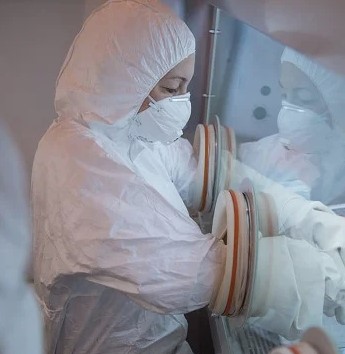
Hong Kong has added temperature checks and travel declarations for flights from Russia after a lab worker’s death in Siberia.