Forbes’ 2026 World’s Billionaires list, tallied using stock prices as of March 1, counted a record 3,428 billionaires worldwide with combined wealth of 20.1 trillion dollars, an increase of four trillion dollars over the previous year. Within that count, Forbes identified at least 86 billionaires whose fortunes are tied substantially to artificial intelligence, worth a combined 2.9 trillion dollars, and 45 of them crossed the billion dollar threshold for the first time in the past year alone.
No other single technology category has produced new fortunes at that pace in the history of the ranking.
The scale of the AI wealth event becomes clearer when set against the wider list. The United States accounted for the largest share of new billionaire wealth, with a record 989 billionaires and 15 of the world’s 20 richest individuals, while China, including Hong Kong, followed with 610 and India ranked third with 229.
AI linked fortunes now represent roughly one seventh of all billionaire wealth on the planet, a proportion that would have sounded implausible three years ago when generative AI was still a novelty rather than an economic force.
Read More: The LHC Doomsday Panic Says More About Us Than About CERN
Elon Musk sits at the top of that pyramid, and his trajectory illustrates how quickly AI adjacent wealth can move. Musk sat at number one on the March snapshot with an 839 billion dollar fortune, and in June 2026 he became the first trillionaire in history following SpaceX’s record breaking IPO.
The listing itself was staggering in scope. The IPO of SpaceX, whose holdings include xAI, raised a record 85.7 billion dollars for the company and generated unprecedented wealth for its employees and founder. By early July, Musk’s fortune had already shown how volatile AI linked paper wealth can be. He crossed a trillion dollars in net worth on June 12 following the listing, dropped below that level after a share price decline, and stood at approximately 997 billion dollars in early July 2026.
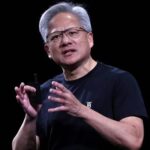
Jensen Huang’s rise tells a different but equally dramatic story, one rooted less in a single event than in years of compounding demand. Huang’s net worth jumped from 4.7 billion dollars in 2020 to 162.5 billion dollars, propelled by Nvidia’s explosive rise amid the AI boom. Nvidia’s chips sit underneath nearly every major AI system now in commercial use, which means Huang’s fortune has grown not from a single product launch but from being the default supplier to an entire industry.
Other beneficiaries of the infrastructure boom include Peter Salanki of CoreWeave, Michael Hsing of Monolithic Power Systems, and Toby Neugebauer of Fermi America, entrepreneurs whose businesses supply the data centers and hardware that AI models depend on rather than the models themselves.
The model builders occupy a stranger position in this story, because their wealth is still largely theoretical, tied to funding rounds rather than public share prices. OpenAI closed a 122 billion dollar funding round at an 852 billion dollar valuation in March, the largest in Silicon Valley history.
Sam Altman and Dario Amodei run the two labs most responsible for the current wave of enterprise and consumer AI adoption, and both companies remain private, which means the personal wealth of their leadership is harder to verify than a chip maker’s stock price. That opacity is itself part of the story.
Billions of dollars in AI linked value currently sit inside companies that have not yet had to prove their business models to public markets.
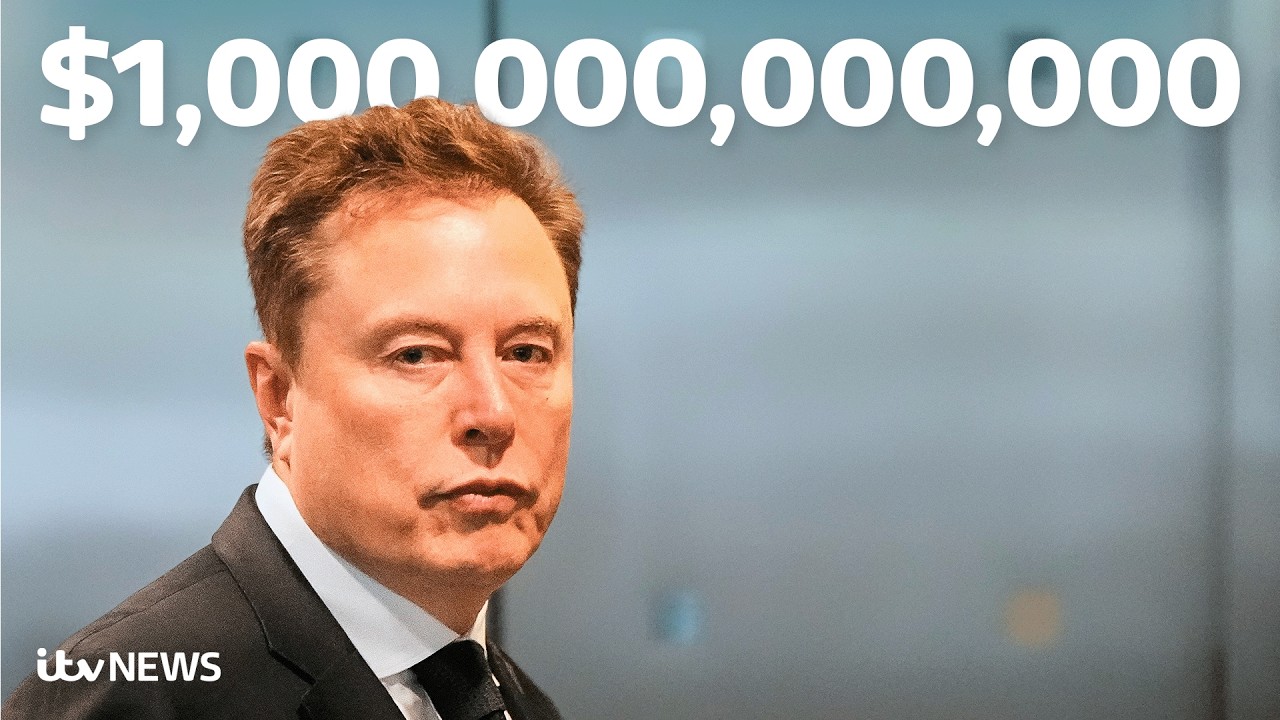
How Elon Musk Just Became a Trillionaire
Not every AI billionaire built an empire over years. Some were made in a single afternoon. Shares of Cerebras soared roughly 68 percent on May 14 in what Bloomberg called the year’s biggest initial public offering, giving the chipmaker a market value of about 67 billion dollars at the open, and the company ended its first week of trading worth roughly 60 billion dollars. Co-founder and CEO Andrew Feldman and hardware chief Sean Lie became billionaires that day, with Feldman’s stake landing at 3.2 billion dollars and Lie’s at 1.7 billion dollars. The irony is hard to overstate. Cerebras had been spending about 8 million dollars a month when it nearly ran out of cash in 2019, according to Feldman himself, and it took seven years and one withdrawn IPO filing before the company finally crossed the billion dollar line. Near collapse and a ten figure fortune sat only a handful of years apart.
Michael Truell’s story compresses that same arc even further. Truell dropped out of MIT in 2022 with three classmates to found Anysphere, the company behind the AI coding assistant Cursor, and within three years had built what Forbes now estimates as a 1.3 billion dollar personal fortune. Anysphere reached a 29.3 billion dollar valuation by November 2025, on the back of a company many consider the fastest growing SaaS startup in history.
Read More: How Anthropic Quietly Proved Its Own AI Would Kill to Avoid Being Shut Down
Then, in a twist that underscores how fluid AI wealth has become, Cursor itself changed hands. SpaceX agreed to acquire Cursor in an all stock deal valued at roughly 60 billion dollars, announced June 16, 2026, giving xAI an instant foothold with millions of developers. Truell’s upside is now tied directly to how well SpaceX and xAI execute rather than to the cash he might otherwise have banked, a reminder that even AI fortunes built in record time can still be paper wealth pending someone else’s performance.
The competitive pressure underneath these fortunes is intensifying rather than easing. Bloomberg has reported that OpenAI and Anthropic are working on software that could eliminate the need for specialized applications from other companies, directly competing with many of the newly minted billionaires building on top of their models.
That dynamic sets up an uncomfortable possibility for the second wave of AI wealth. The same labs that made infrastructure players rich in the first phase of the boom may end up undercutting the application layer builders who came after them, inside the space of a single year rather than a decade.
Geography is also shifting in ways that complicate the Silicon Valley centric narrative. Surge AI founder Edwin Chen, who supplies data labeling and human feedback services that large language models depend on for training, emerged as the wealthiest AI newcomer at 18 billion dollars, having kept more than 75 percent ownership by avoiding large venture rounds.
Liu Debing, cofounder of the Chinese AI firm Z.ai, built a 9.1 billion dollar fortune after his company’s Hong Kong listing in January 2026, evidence that AI linked wealth creation is no longer confined to the United States.
The cultural signal that this wealth has become real, and not just a set of impressive numbers on a spreadsheet, is showing up in an unlikely industry. Venture capitalists, board directors, early employees of SpaceX and other AI companies, and bankers preparing for anticipated IPOs are now channeling fresh wealth into private aviation, turning it into an early beneficiary of the AI boom.
Aviation lawyer Amanda Applegate, who handles aircraft purchase agreements, said business at her firm has jumped 25 percent this year, and Jetnet data shows flights through shared ownership programs rose 11.8 percent globally in the first five months of 2026 compared with the same period the year before. Flexjet executive D.J. Hanlon described a customer base skewing younger, driven by self-made first generation wealth from the same tech IPOs reshaping the billionaire rankings.
What emerges from all of this is a wealth creation event with no clean historical precedent. Oil built fortunes over generations. The personal computer and the internet each took a decade or more to mint their first wave of billionaires.
AI is producing them in months, sometimes in a single trading session, and it is doing so simultaneously across infrastructure, model building, and application layers, in Silicon Valley, in Texas, and now in Hong Kong. The open question, one this column will keep returning to, is whether the institutions meant to tax, regulate, and absorb that wealth can move at anything close to the same speed.
Read More: How Michael Truell Built Cursor, and Why SpaceX Wanted It